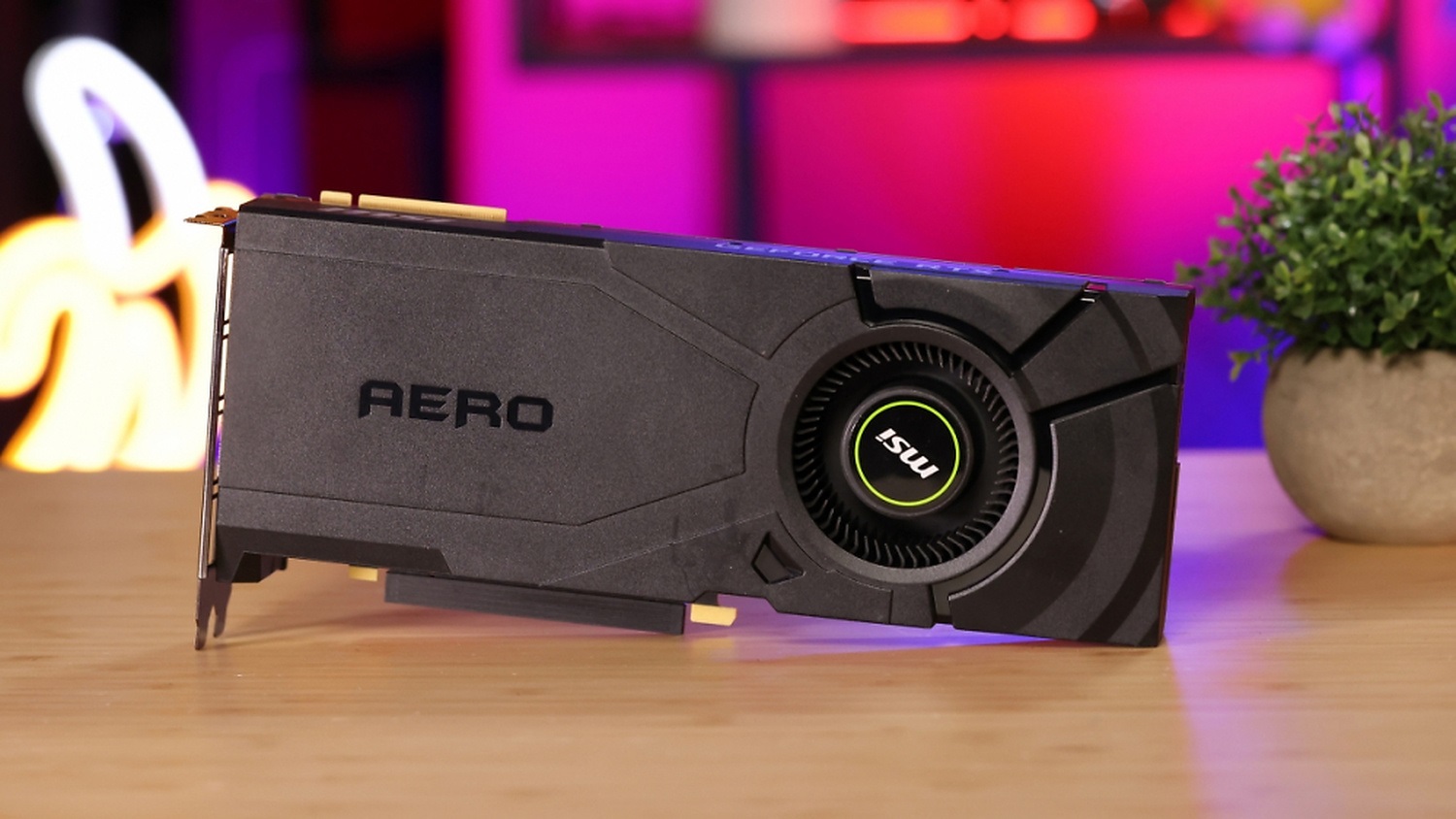
GeForce RTX 2080 Ti with 22GB VRAM Shows Big Gains in 4K Gaming Tests
A heavily modified GeForce RTX 2080 Ti with 22GB of VRAM has shown just how much extra graphics memory can matter in today’s demanding PC games, especially at 4K resolution. While the standard RTX 2080 Ti launched with 11GB of GDDR6 memory, this custom version doubles that capacity by replacing the original 1GB memory modules with 2GB Samsung GDDR6 chips.
The RTX 2080 Ti may be several generations old, but it remains an interesting GPU for performance testing because it was NVIDIA’s first flagship RTX graphics card. When it launched, 11GB of VRAM was considered more than enough for high-end gaming. Today, however, modern AAA titles are far more memory-hungry, and even some newer graphics cards with 8GB of VRAM can struggle with texture-heavy games, ray tracing, and high-resolution settings.
Recent testing shows that doubling the RTX 2080 Ti’s VRAM does not automatically improve performance in every game. At 1440p resolution with DLSS set to Quality mode, the 22GB version often performed close to the original 11GB card. However, some games clearly benefited from the larger memory pool.
Flight Simulator 2024 saw around a 29% improvement at 1440p, with stronger low frame rates and smoother overall performance. Spider-Man 2 also responded well to the additional VRAM, delivering roughly 22% higher average FPS. These results suggest that games with large open worlds, detailed assets, and heavy streaming demands can benefit significantly from having more graphics memory available.
Other titles, including Cyberpunk 2077, Assassin’s Creed Black Flag Resynced, Gears of War: E-Day, and several others, showed little to no meaningful improvement at 1440p. This makes sense, as not every game exceeds the 11GB VRAM limit at that resolution, especially when upscaling technologies are enabled.
The real difference appeared at 4K.
When the resolution was increased to 4K, with DLSS set to Performance mode and frame generation enabled where supported, the 22GB RTX 2080 Ti began to separate itself from the standard 11GB model. Flight Simulator 2024 delivered nearly 73% higher performance, while Spider-Man 2 gained around 64%, pushing the game past the 60 FPS mark.
Dragon Age: The Veilguard also saw a major uplift at 4K, improving by around 68%. Cyberpunk 2077, which showed no improvement at 1440p, gained roughly 14% at 4K. Even Gears of War: E-Day, which remained unchanged at 1440p, posted a 21% improvement at the higher resolution.
The benchmark results highlight an important point for PC gamers: VRAM does not always boost average FPS, but when a game runs out of available graphics memory, performance can drop sharply. In those cases, more VRAM can improve frame rates, reduce stutter, and deliver smoother frame pacing.
Benchmark results from the test included:
Flight Simulator 2024:
RTX 2080 Ti 11GB: 31 FPS at 1440p, 30 FPS at 4K
RTX 2080 Ti 22GB: 40 FPS at 1440p, 52 FPS at 4K
Improvement: 29% at 1440p, 73% at 4K
Assassin’s Creed Black Flag Resynced:
RTX 2080 Ti 11GB: 32 FPS at 1440p, 60 FPS at 4K
RTX 2080 Ti 22GB: 33 FPS at 1440p, 62 FPS at 4K
Improvement: 3% at 1440p, 3% at 4K
Cyberpunk 2077:
RTX 2080 Ti 11GB: 35 FPS at 1440p, 42 FPS at 4K
RTX 2080 Ti 22GB: 35 FPS at 1440p, 48 FPS at 4K
Improvement: 0% at 1440p, 14% at 4K
Dragon Age: The Veilguard:
RTX 2080 Ti 11GB: 31 FPS at 1440p, 16 FPS at 4K
RTX 2080 Ti 22GB: 32 FPS at 1440p, 27 FPS at 4K
Improvement: 3% at 1440p, 68% at 4K
F1 2025:
RTX 2080 Ti 11GB: 58 FPS at 1440p, 66 FPS at 4K
RTX 2080 Ti 22GB: 59 FPS at 1440p, 68 FPS at 4K
Improvement: 1% at 1440p, 3% at 4K
Spider-Man 2:
RTX 2080 Ti 11GB: 36 FPS at 1440p, 39 FPS at 4K
RTX 2080 Ti 22GB: 44 FPS at 1440p, 64 FPS at 4K
Improvement: 22% at 1440p, 64% at 4K
Gears of War: E-Day:
RTX 2080 Ti 11GB: 21 FPS at 1440p, 14 FPS at 4K
RTX 2080 Ti 22GB: 21 FPS at 1440p, 17 FPS at 4K
Improvement: 0% at 1440p, 21% at 4K
Indiana Jones and The Great Circle:
RTX 2080 Ti 11GB: 79 FPS at 1440p
RTX 2080 Ti 22GB: 82 FPS at 1440p, 62 FPS at 4K
Improvement: 3% at 1440p
Pragmata:
RTX 2080 Ti 11GB: 59 FPS at 1440p, 72 FPS at 4K
RTX 2080 Ti 22GB: 60 FPS at 1440p, 73 FPS at 4K
Improvement: 1% at 1440p, 1% at 4K
The frametime data was also important. In games that needed more memory, the 22GB card delivered a smoother experience, not just higher average frame rates. This is often where VRAM limitations become most noticeable, as insufficient memory can cause hitching, stuttering, texture pop-in, and uneven pacing.
The additional VRAM also helped outside of gaming. AI workloads completed faster on the 22GB card compared to the standard 11GB version, showing that larger memory capacity can benefit compute-heavy tasks as well as games.
Overall, the modded RTX 2080 Ti 22GB proves that VRAM capacity has become increasingly important for high-resolution gaming. At 1440p, the gains are game-dependent and often limited. At 4K, however, the extra memory can make a dramatic difference in newer titles that push beyond the limits of older GPU configurations.
For gamers, the takeaway is clear: GPU power still matters, but VRAM is now a major factor in long-term performance. As modern PC games continue to demand larger memory buffers, graphics cards with higher VRAM capacities are likely to age better, especially for players targeting 4K resolution, high-resolution textures, ray tracing, and future AAA releases.