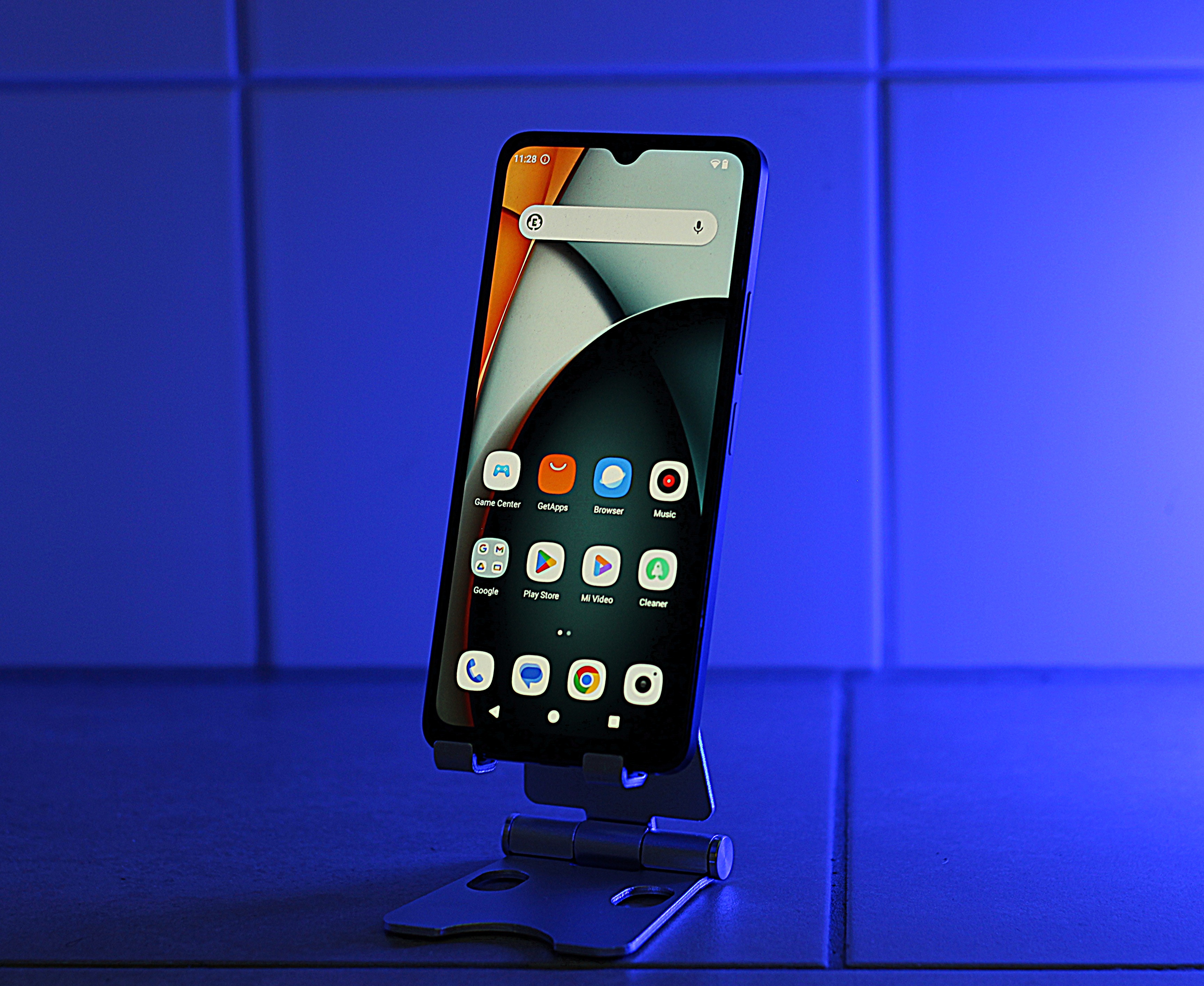
The Xiaomi Redmi A3 emerges as an evolved version of the previously introduced Redmi A2, showing advancements in key connectivity and design aspects. While MediaTek’s entry-level SoC continues to power the device, users can expect a smoother and more current user experience with this new model.
The Redmi A3’s design transformation is evident at first glance. Xiaomi has gifted the Redmi A3 with a larger display by altering the phone’s dimensions, which now stretch longer and wider, albeit with a smaller height profile. Despite the growth in screen real estate, the device maintains a similar weight to its prior iteration. Though the screen is encircled by noticeable bezels, they are deemed reasonable for the device’s price segment.
The rear of the Redmi A3 showcases a sizeable circular camera module, bringing a touch of elegance to the budget-friendly device. Offered in sophisticated shades including dark green, black, and a muted blue, the phone’s finish, while prone to smudges, exudes a refined charm. Even with the Redmi A3’s sturdy construction, users should note that excessive pressure on the display might induce visible distortion due to the nature of the liquid crystal screen.
In terms of pricing, the Redmi A3 commands a slight premium over its antecedent, starting around $130 for the 3 GB RAM and 64 GB internal storage variant, with the 4 GB RAM with 128 GB storage model reaching upwards of $150. Nevertheless, savvy consumers may find retailers offering the device at more competitive rates.
The introduction of a USB-C port is a significant step up from the micro-USB featured on the A2, allowing for a broader range of contemporary charging and data transfer solutions. Despite the modern touches, the Redmi A3 stops short of incorporating NFC capabilities, which could be a disappointment for those seeking contactless transactions and connectivity.
Storage expandability remains a strength, as the Redmi A3 includes a dedicated microSD card slot. Even with a high-performance reference card like the Angelbird V60, the phone’s reader showed respectable, though not exceptional, speeds, indicating a limitation in harnessing the upper echelons of available microSD card speeds. Nevertheless, for a budget handset, these transfer rates are impressive and stand above average for the price category.
Xiaomi’s Redmi A3 positions itself as a suitable contender within the affordable smartphone sphere, making strides in design and functionality that are sure to appeal to users looking for a reliable gadget without breaking the bank. While it may not offer every feature found on pricier models, the refinements present in the Redmi A3 highlight Xiaomi’s commitment to elevating the user experience within its budget lineup.