Why Some Laptops in 2026 Still Use Barrel Chargers Alongside USB-C
USB-C has become the go-to charging port for modern laptops, tablets, phones, handheld gaming devices, and countless accessories. On paper, it promises one simple dream: a single cable and charger for almost everything. In everyday use, however, things are not always that simple.
Even in 2026, some laptops still ship with a traditional round barrel charger, and there are practical reasons why manufacturers continue to include it. While USB-C charging is convenient and widely supported, it is not always as universal or reliable as many people expect.
The main issue is that USB-C describes the connector shape, not a guarantee that every charger, cable, and device will work perfectly together. Behind that small reversible plug is a system of power standards, voltage levels, and communication protocols. For a laptop to charge properly over USB-C, the charger and the device need to negotiate the correct power profile through USB Power Delivery, often called USB-C PD.
If that negotiation does not happen correctly, charging may be slow, unstable, or fail completely. This can happen when using low-quality chargers, older power adapters, or accessories that do not fully support the required USB-C PD standard. Some cheaper USB-C devices are designed around a basic 5V power supply and do not handle more advanced power negotiation properly.
Another challenge is that not all USB-C chargers support the same voltage and wattage combinations. A charger that works well with a smartphone may not provide enough power for a high-performance laptop. Similarly, a compact USB-C charger might support 30W or 45W output, while many laptops require 65W, 100W, 140W, or more for full-speed charging.
Cables add another layer of confusion. Just because a cable has USB-C connectors on both ends does not mean it can safely carry high power. Some cables are limited to lower wattages, while others are designed for higher-output charging. Using the wrong cable can reduce charging speed or prevent a laptop from charging properly under load.
This is where the traditional barrel connector still has an advantage. A barrel charger usually provides a fixed voltage and is designed specifically for the device it ships with. There is no complicated negotiation process and far less uncertainty about whether the charger will deliver the correct amount of power. You plug it in, and it works.
For laptop makers, cost can also play a role. Adding full USB-C Power Delivery charging support requires additional circuitry, validation, and safety considerations. In some budget or specialized devices, a barrel connector may still be the more affordable and straightforward option.
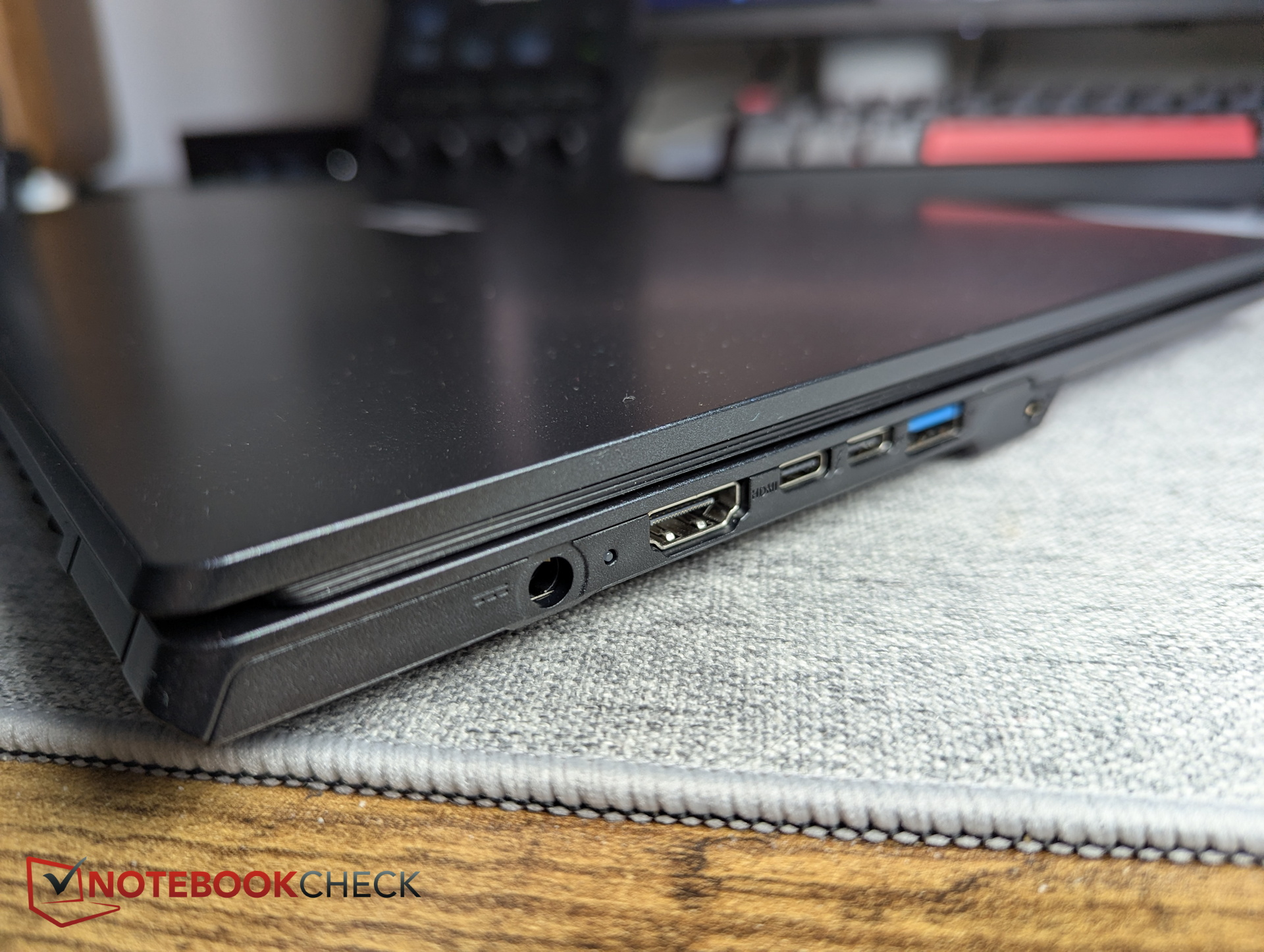
That said, the argument becomes less about cost when a manufacturer includes both USB-C charging and a barrel charging port in the same laptop. In that case, the barrel connector is not simply a cheaper alternative. It acts as a dependable fallback for users who want maximum reliability, especially when traveling, working in demanding environments, or using power-hungry hardware.
This does not mean USB-C is a bad standard. In fact, USB-C remains one of the most useful upgrades in modern electronics. It reduces cable clutter, supports fast charging, enables data transfer, and can even connect displays and docks through a single port. For many people, USB-C is the most convenient way to charge a laptop.
However, the continued presence of barrel chargers shows that USB-C is not always a perfect one-size-fits-all solution. Compatibility still depends on the charger, cable, power profile, and device implementation. Until those variables become more consistent, a dedicated power adapter can still offer peace of mind.
For laptop buyers, the best setup may be a device that supports both options. USB-C charging gives flexibility when using universal chargers, docking stations, or power banks. A barrel charger provides a reliable backup when full performance and stable power delivery matter most.
In short, laptops still use barrel chargers in 2026 because reliability, cost, compatibility, and power requirements continue to matter. USB-C is the future of charging, but the old-school barrel connector has not disappeared because it still solves a real problem: simple, predictable power when you need it.