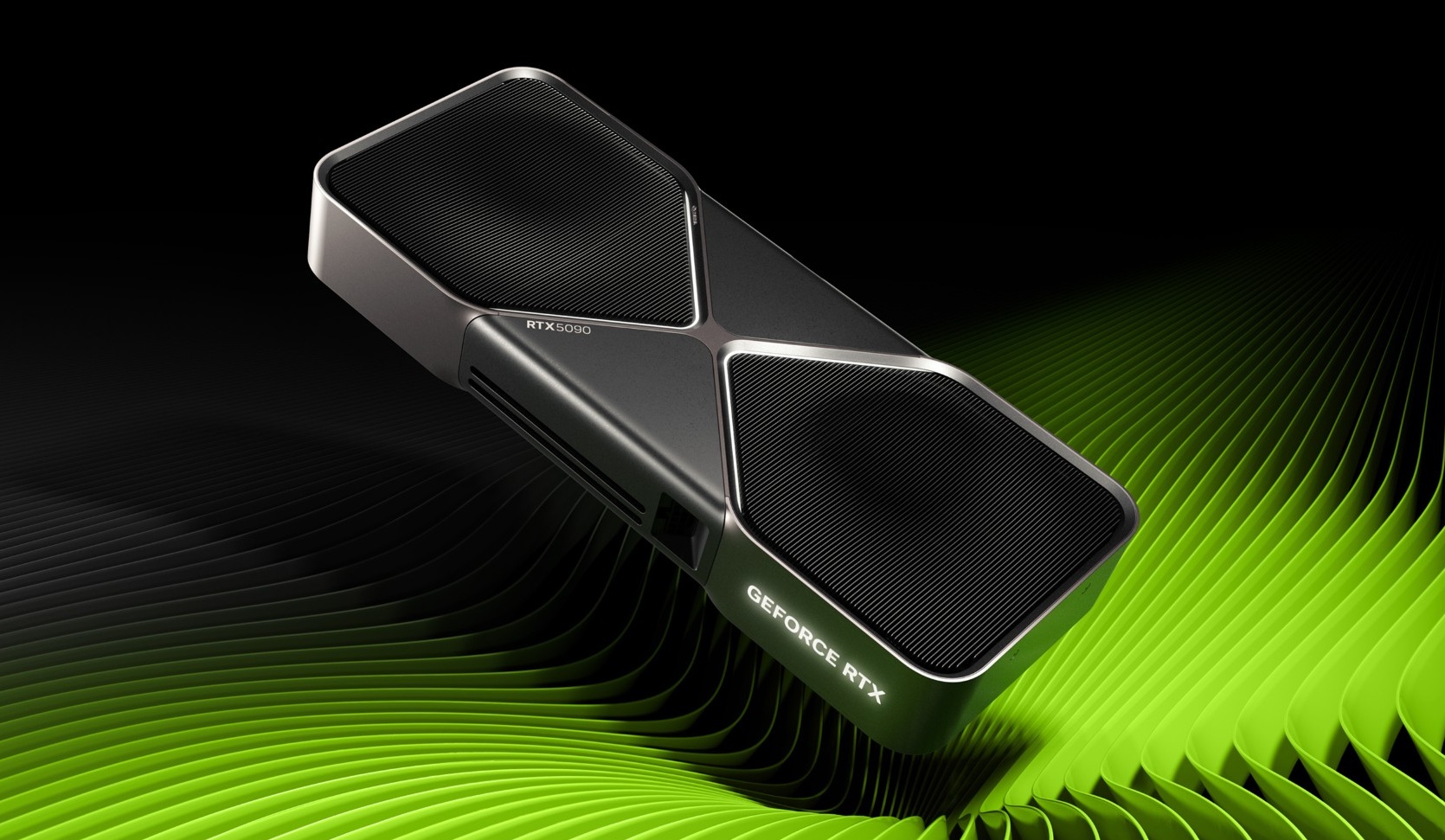
NVIDIA has recently unveiled the groundbreaking design of its “Founders Edition” GeForce RTX 5090 GPU, taking the graphics card world by storm. At first glance, creating such a sophisticated and compact design seemed like a pie-in-the-sky idea, but NVIDIA has successfully pulled it off. The new RTX 5090 boasts an innovative 3D Vapor Chamber, a clever Blow-Through Cooler Design, and an airtight liquid metal interface, contributing to its stellar performance.
The unboxing of the GeForce RTX 5090 FE edition has left enthusiasts and experts pleasantly surprised by its design and dimensions. Significantly, the FE model is both “SFF-compliant” and features a sleek two-slot design. NVIDIA’s magic formula here is the impressive reduction in the model’s size by up to 40%, a testament to their cutting-edge engineering prowess.
In a fascinating behind-the-scenes video, NVIDIA’s engineers divulged their journey of innovation in crafting the new FE model. Initially, the team deemed the task of shrinking the GPU’s size almost insurmountable due to advanced new components. The engineers recounted the evolution of the cooling design, from the inception of the GeForce series to the latest Blackwell series, even mentioning an experimental “triple-fan” FE model that occupied four slots but was ultimately set aside due to design challenges.
Motivated by these experiences, NVIDIA embarked on creating a “Two-Thirds” configuration, which involved shrinking the PCB size dramatically from previous generations. This didn’t scare off the engineering team; instead, they adopted a modular approach for the RTX 5090, segmenting the PCB into a “multi-layer” system. This intricate design includes the main board, a PCIe daughter board, an I/O daughter board, and a flexible PCB that unites all layers.
This partitioned PCB design compelled NVIDIA to diverge from conventional industry standards, especially since typical display connectors like the DP 2.1 are crafted for a single-layer PCB. To bridge the divided PCB sections, NVIDIA cleverly employed glass fibers within the substrates. Notably, an airtight seal around the GPU die complements NVIDIA’s high-efficiency liquid metal interface, ensuring exceptional thermal dissipation.
Another standout feature of the RTX 5090 is the 3D Vapor Chamber, which NVIDIA cites as a pivotal component in achieving this innovative design. The chamber, lined with copper heat pipes, enhances the fluid dynamics and heat transfer efficiency. This setup utilizes a 3D fin-stack to boost airflow and maximize cooling for the axial fans.
Additional touches like an angled power receptacle enhance usability by offering more room within PC cases. The repositioning of DP and HDMI interfaces along with the “thumbprint-proof” I/O shield demonstrates NVIDIA’s attention to detail, resulting in a finely tuned design for the RTX 5090.
In summary, the GeForce RTX 5090 FE model is a testament to NVIDIA’s innovative capabilities, pushing the boundaries of possibility in GPU design. Enthusiasts and industry experts alike eagerly anticipate the GPU’s performance in real-world scenarios. It’s a clear indicator that with creativity and tenacious engineering, the seemingly unattainable can indeed become a reality.