Total War: Warhammer 40,000 Hands-On Preview: Galactic Warfare Looks Ambitious and Brutal
Total War: Warhammer 40,000 is shaping up to be one of the most ambitious entries in the strategy series yet, moving the franchise from fantasy battlefields into the grim darkness of the far future. A recent hands-on demo offered an early look at how the game is adapting massive real-time battles, faction identity, and grand strategy to a setting filled with super-soldiers, alien warbands, orbital fleets, and planet-spanning warfare.
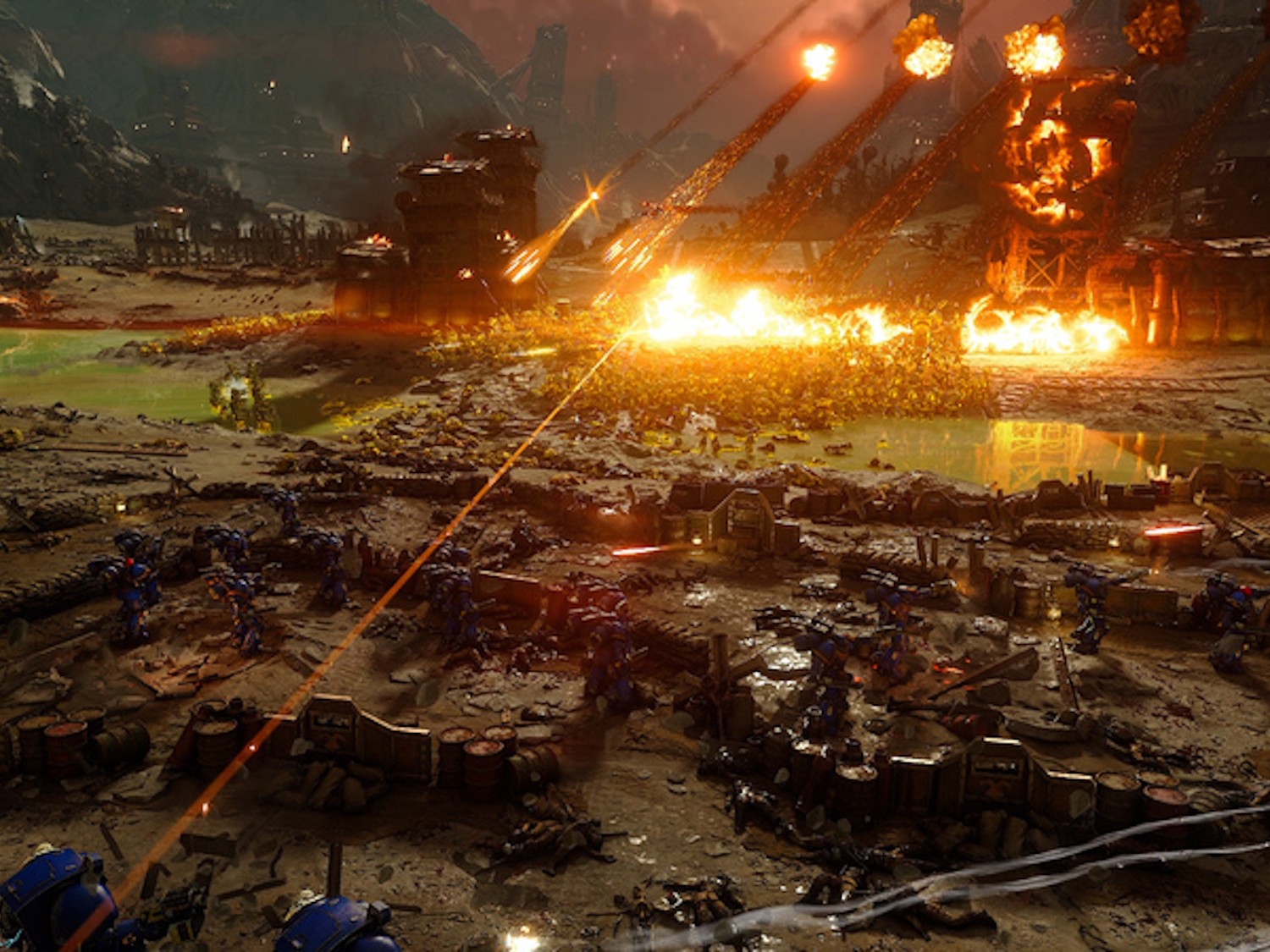
The demo featured three main sections: a short battle tutorial, a limited glimpse of the campaign map, and a larger skirmish filled with diverse units. Across each scenario, the playable side was the Space Marines, facing off against the savage and chaotic Orks. Even in this limited slice, the shift from swords and monsters to bolters, heavy weapons, vehicles, and futuristic battlefield tactics was immediately noticeable.
At launch, Total War: Warhammer 40,000 is expected to include four starting factions: Space Marines, Orks, Imperial Guard, and Eldar. Each faction appears designed around a dramatically different combat philosophy, which could make the game feel fresh across multiple campaigns.
The Space Marines operate as an elite, highly durable force built around smaller squads of powerful units. Rather than relying on overwhelming numbers, they excel through discipline, advanced weaponry, and the ability to hold key positions under pressure. In contrast, the Orks are all about aggression, volume, and close-range brutality. Their strength comes from swarming the battlefield, pushing forward relentlessly, and turning combat into a chaotic melee.
The Eldar, meanwhile, are expected to focus on speed, precision, and battlefield mobility. Their agility should give them the tools to strike quickly, reposition often, and punish slower enemies. The Imperial Guard will likely bring a more traditional military structure to the game, with large formations, armored support, and overwhelming firepower playing a major role.
That variety is exciting, but it also raises one of the biggest questions surrounding the game: balance. Creating fair and satisfying matchups between factions this different will be a serious challenge. A small squad of elite Space Marines, a tide of Ork warriors, a mobile Eldar strike force, and an Imperial Guard army built around numbers and firepower all demand very different systems to function properly. If handled well, this could become one of the most replayable Total War games to date. If not, certain factions may feel too dominant or too fragile depending on the situation.
One of the biggest changes in Total War: Warhammer 40,000 is the scale of the campaign. Instead of being confined to a single continent or planet, the game expands into entire solar systems. This creates room for a much broader strategic layer, where planets, space fleets, and ground armies all play a role in the war effort.
Space fleets are more than just background decoration. They can directly influence ground battles through powerful abilities, including targeted orbital strikes. This adds a new tactical dimension to engagements, as commanders must consider not only what is happening on the battlefield, but also what support may be available from above. The presence of orbital firepower could dramatically change how players approach fortified positions, clustered enemy units, or desperate last stands.
The real-time battle system also appears to be undergoing major changes. One of the most important additions is a dynamic cover system. In a universe where ranged weapons dominate much of the fighting, positioning matters more than ever. Infantry left exposed in open terrain can be punished quickly, making cover, movement, and line of sight essential parts of battlefield strategy.
This is a significant shift for the series. Previous Total War: Warhammer games often leaned heavily on powerful legendary lords and hero units capable of turning the tide of battle almost single-handedly. In Total War: Warhammer 40,000, those larger-than-life characters seem to take a less dominant role, at least based on the early demo. The focus appears to be moving toward squad tactics, combined arms, battlefield positioning, and the intelligent use of faction strengths.
That change could make battles feel more grounded and tactical, despite the massive sci-fi setting. Players may need to think more carefully about where to deploy units, when to advance, how to protect infantry, and when to call in devastating support from orbit. It is not simply a matter of throwing the strongest hero into the center of the enemy line and watching the chaos unfold.
The early impression is promising. Total War: Warhammer 40,000 looks like a bold evolution of the formula, combining the series’ traditional grand strategy foundation with the scale and violence of futuristic warfare. The move to solar systems, the inclusion of space fleets, the importance of cover, and the wildly different faction identities all suggest a game with huge potential.
There are still major questions left unanswered, especially around balance, campaign depth, and how well the new systems will hold up across long playthroughs. But even from this early demo, the foundation is intriguing. If the final game can deliver on its galactic ambitions, Total War: Warhammer 40,000 could become a standout strategy release when it arrives next year.