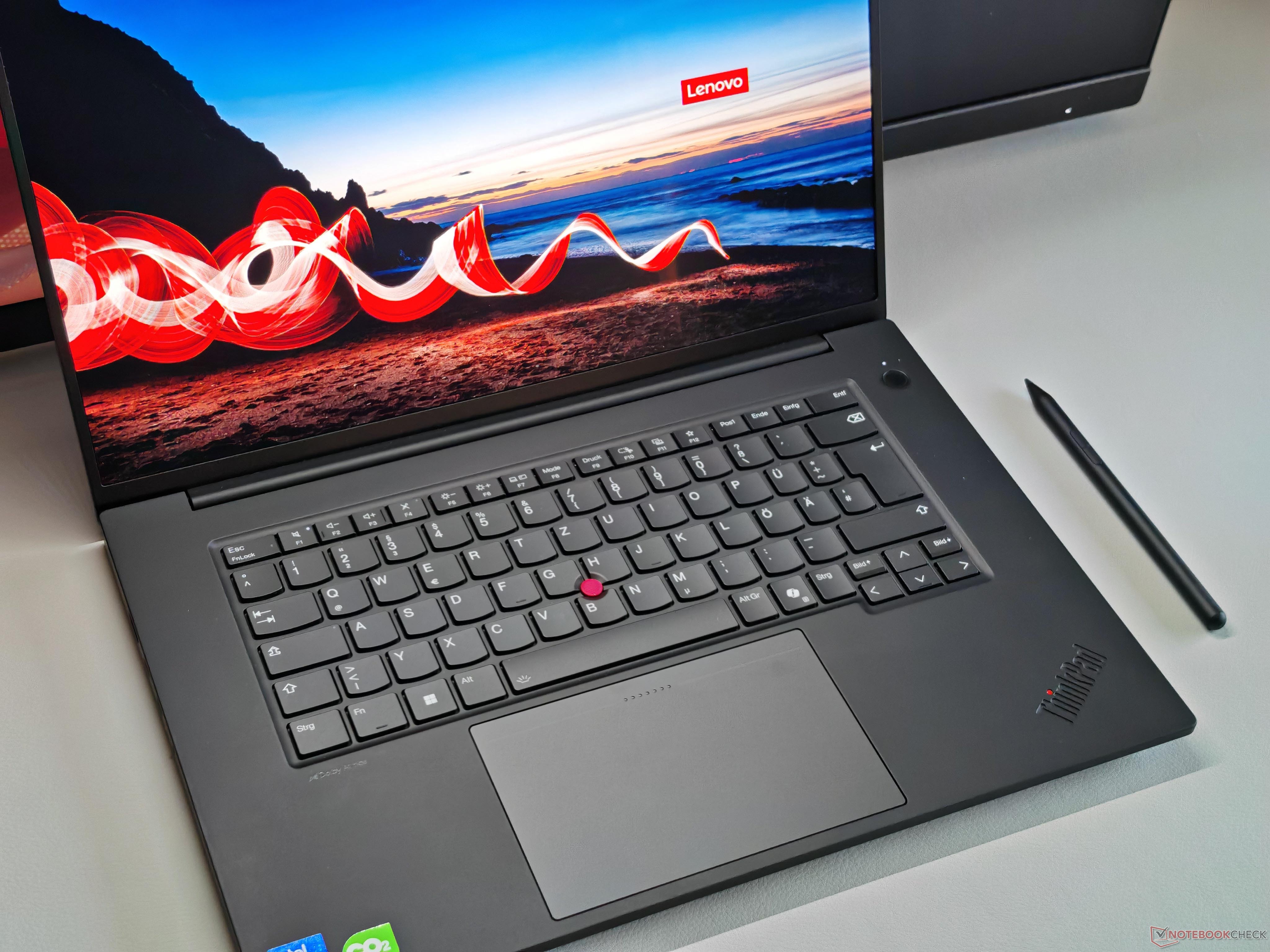
Lenovo has taken plenty of heat in recent years for letting ThinkPad quality drift, especially around two areas longtime fans care about most: the keyboard feel and the display choices. With the new ThinkPad T1g Gen 8 and its workstation sibling, the ThinkPad P1 Gen 8, Lenovo makes a strong case that it still knows how to build a truly premium ThinkPad when it wants to. The end result is a polished, high-end business laptop that feels like a return to form—and arguably one of the best ThinkPads available right now.
A starting price close to €3,000 sets expectations sky-high, and the ThinkPad T1g Gen 8 largely meets them. The 16-inch design looks modern and relatively slim, but the real story is the rigidity. Both the base and the lid feel very stable, and overall fit and finish comes across as the kind of “no doubts” build quality executives and enterprise buyers expect at this price level.
The keyboard is the big win. Key travel remains 1.5 mm, but the typing feel is described as crisp and precise—close to the classic ThinkPad keyboards many users still compare everything against. For most people it’ll be a genuine highlight of the machine. The one potential drawback is simple: there’s no dedicated number pad, which could matter if you live in spreadsheets all day.
Lenovo also modernizes the input hardware in a way that may divide traditionalists. The haptic touchpad no longer includes dedicated TrackPoint buttons. Even so, it reportedly works well in daily use, and the practical advantages of a haptic implementation can outweigh the change once you adjust.
Where the ThinkPad T1g Gen 8 really leans into “premium” is connectivity and internal expandability. Thunderbolt 5 is already on board, and you also get a modern Wi‑Fi 7 module. Storage fans will appreciate support for installing up to two PCIe 5.0 SSDs, which keeps the laptop relevant for demanding workflows and large project files.
Memory takes a newer path: it uses a replaceable CAMM2 module. That’s good news for serviceability, but it comes with a key limitation—capacity tops out at 64 GB. For many business users, 64 GB is plenty, but for certain workstation-class tasks, heavy virtual machine setups, or memory-hungry content creation, that ceiling could be a dealbreaker.
A couple of business features are also missing. There’s no 5G option for always-on connectivity away from Wi‑Fi, and no SmartCard reader, which some corporate environments still rely on for authentication and secure access.
Performance is strong, powered by an Intel Core Ultra 7 255H paired with an NVIDIA GeForce RTX 5070. While this isn’t positioned as the absolute fastest configuration in its category, it still delivers solid results for a high-end business laptop that can cross into workstation territory for GPU-accelerated tasks.
Display options are where the story gets a bit more complicated. The reviewed configuration includes an optional Tandem OLED panel, which brings high brightness and a much better experience in bright environments thanks to the matte finish reducing reflections. The trade-off is that the image can look slightly grainy, attributed to the combination of the matte surface and the touch layer. Battery life is described as good overall, but there’s a clear warning for buyers: the base display option is a 1080p, 60 Hz panel, and that feels underwhelming given the premium starting price.
Taken as a whole, the ThinkPad T1g Gen 8 lands as a highly capable all-rounder aimed at well-funded business buyers—especially since real-world configurations can quickly climb beyond €4,000. If Lenovo carries over the same strengths—sturdy build, truly excellent keyboard feel, and modern ports—into more of the ThinkPad range, it could be a sign of better things to come for the lineup.