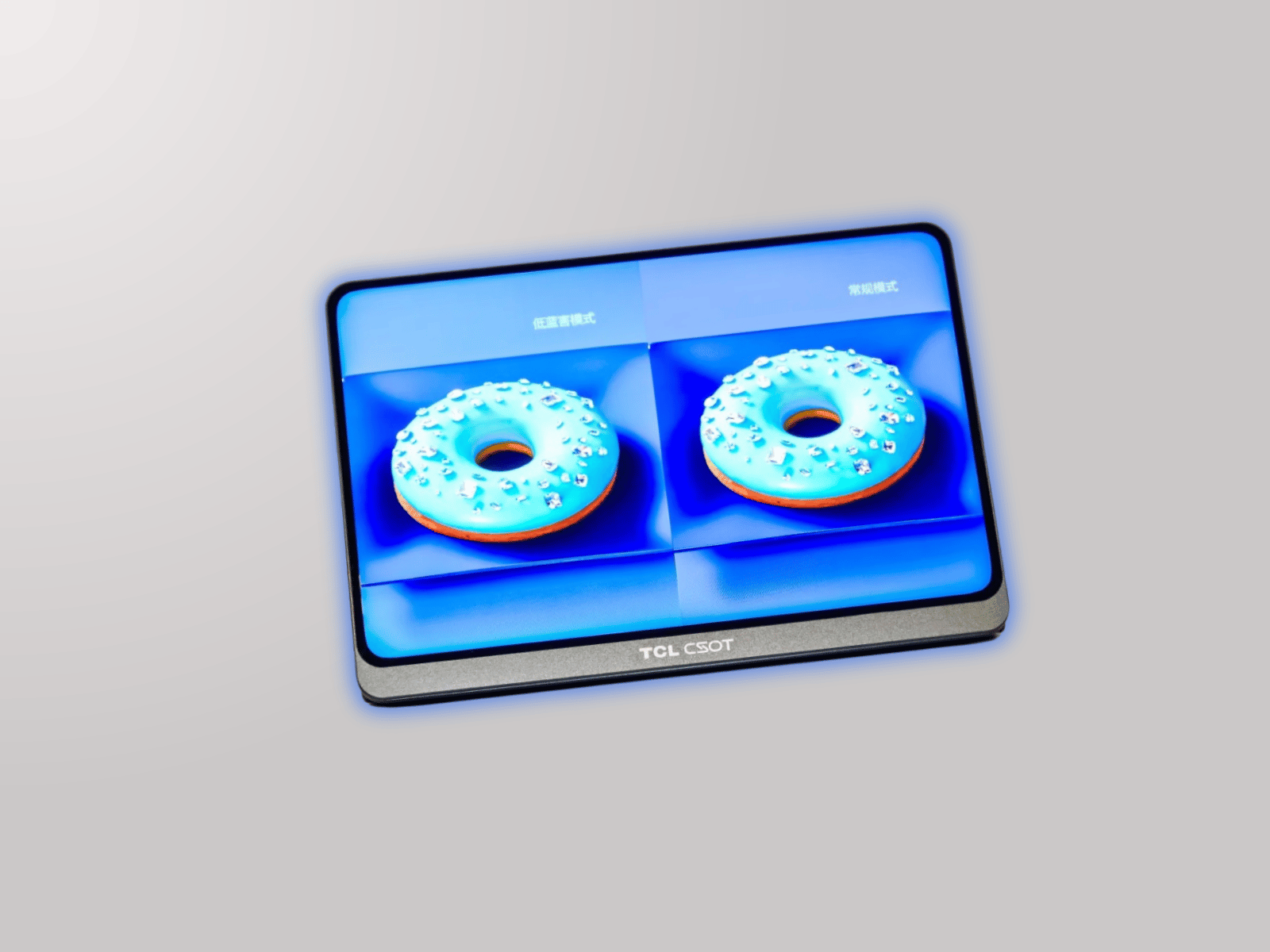
TCL CSOT has introduced three prototype OLED tablet displays that could point to the next major upgrade in tablet screen technology. Unveiled during the DTC 2026 event in China, the new panels all measure 10.95 inches and use an advanced RGBX pixel structure designed to improve key areas such as color accuracy, power efficiency, and eye comfort.
Unlike traditional OLED displays that rely on red, green, and blue subpixels, TCL CSOT’s new RGBX design adds a fourth subpixel. This extra element allows each display to be tuned for a specific purpose, giving tablet makers more flexibility depending on whether they want richer colors, longer battery life, or reduced blue light exposure.
All three prototype OLED panels share the same core specifications. Each has a 10.95-inch screen size, a resolution of 2,456 x 1,536 pixels, and a pixel density of around 265 pixels per inch. While these specs are suitable for modern tablets, the real highlight is how each panel uses the fourth subpixel differently.
The first display is built for improved color performance. It adds a deep-red subpixel to the standard RGB layout, allowing the panel to deliver a wider and more vivid color range. TCL CSOT says this version supports two color modes. In standard mode, it can cover 89% of the BT.2020 color space, while the wide-gamut mode increases coverage to 95%. This could make the display especially appealing for media consumption, digital art, photo editing, and video work where accurate and vibrant colors matter.
The second OLED panel focuses on reducing power consumption. This version uses an additional blue subpixel based on phosphorescent technology. According to TCL CSOT, enabling its low-power mode can cut display power use by 20% compared with the standard mode while maintaining the same brightness level. For tablets, where the screen is often one of the biggest sources of battery drain, this improvement could help extend usage time for streaming, reading, gaming, and productivity tasks.
The third display is designed with eye comfort in mind. It includes an extra light-blue subpixel and supports both standard and eye-care modes. TCL CSOT claims that the eye-care mode significantly lowers the panel’s blue light hazard metric from 5% to just 0.5%. This could be useful for users who spend long hours reading, studying, watching videos, or working on a tablet, especially in low-light environments.
For now, these 10.95-inch OLED tablet displays remain in the prototype stage. TCL CSOT has not confirmed when mass production will begin, and no tablet manufacturers have announced products using the new panels yet. Still, the technology shows where future tablet screens may be headed: brighter colors, smarter power use, and more comfortable viewing.
If TCL CSOT can bring these RGBX OLED panels to commercial devices, future tablets could offer more specialized display options tailored to different types of users, from creative professionals and entertainment fans to students and productivity-focused buyers.