SK Hynix CEO Warns Memory Shortages Could Peak in 2027 as AI Demand Surges
The global memory chip market may be heading into one of its toughest periods yet. SK Hynix CEO Kwak Noh-jung has warned that 2027 could become the worst year in the industry’s history for memory supply shortages, with demand expected to outpace production capacity well into the next decade.
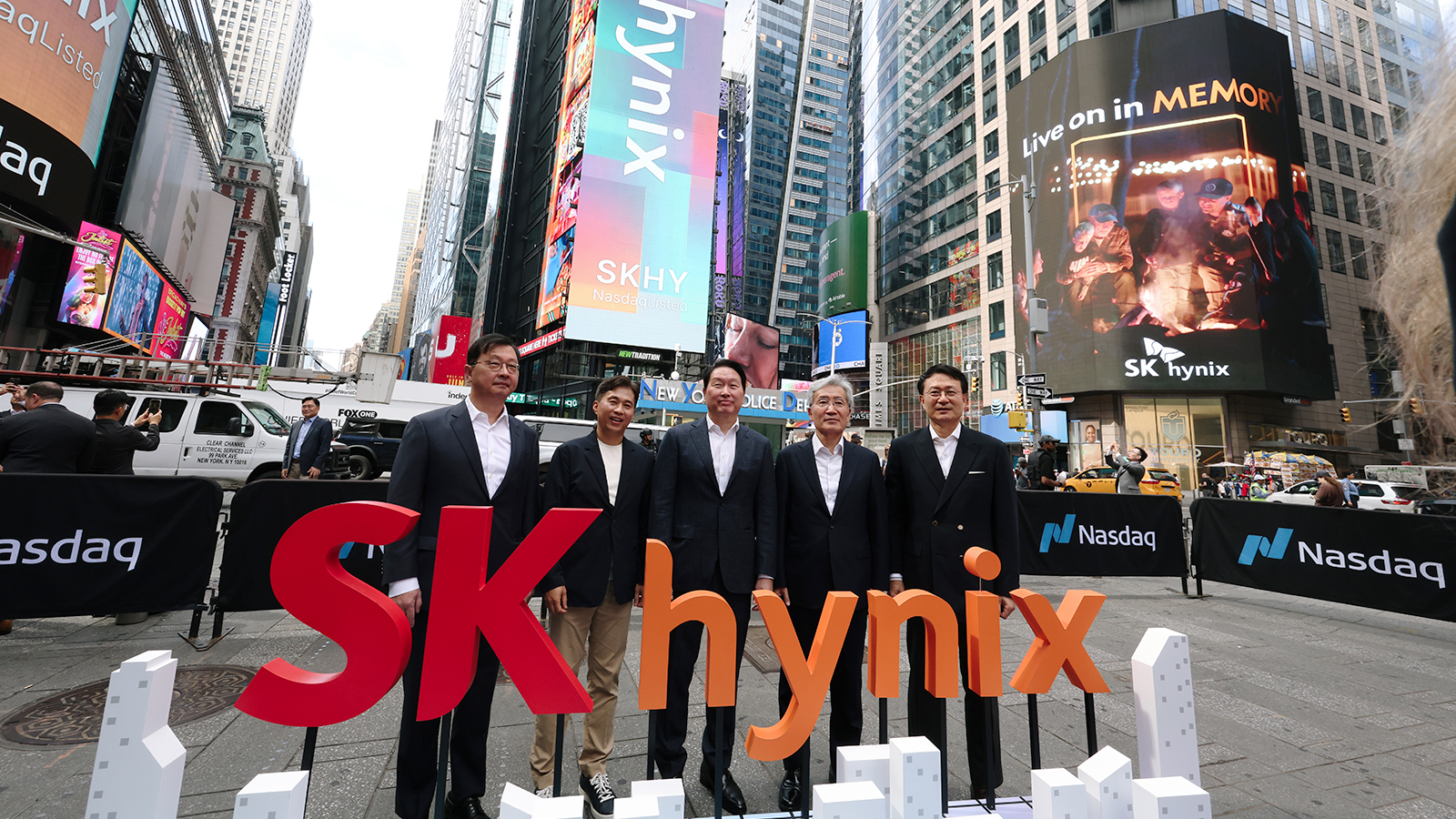
The warning comes as SK Hynix celebrates a major milestone with the trading debut of its American Depositary Receipts on Nasdaq, marked in Times Square. While the occasion highlights the company’s growing global presence, its leadership is also sending a clear message: the memory industry is under enormous pressure, and relief may not arrive anytime soon.
According to Kwak, the company expects next year to be the most difficult period ever from a supply perspective. Even with aggressive expansion plans, SK Hynix believes it may struggle to keep up with the soaring demand for DRAM, NAND, and high-bandwidth memory used in artificial intelligence systems.
The biggest driver behind the shortage is the rapid rise of AI infrastructure. Data centers, AI accelerators, and advanced computing platforms require massive amounts of premium memory, especially HBM, which has become essential for training and running large AI models. As AI companies secure long-term supply agreements, memory manufacturers are being forced to prioritize their most advanced and profitable products.
SK Hynix has played a central role in this shift. The company, once facing severe financial challenges around 25 years ago, has since transformed into one of the world’s most important memory suppliers. After joining SK Group in 2012, it pushed deeper into advanced memory development and became a leader in HBM technology. Today, HBM sits at the center of the AI hardware boom, powering servers and accelerators used across the global technology industry.
This focus on premium memory is changing the entire semiconductor supply chain. Major memory producers are increasingly directing capacity toward HBM and advanced LPDDR products, while more mainstream memory types such as DDR5, DDR4, and entry-level mobile RAM receive less priority. That shift is helping memory companies increase revenue and profit, but it is also creating serious challenges for the consumer electronics market.
PCs, smartphones, game consoles, graphics cards, laptops, and other devices are already being affected by rising memory prices. If the shortage worsens in 2027, consumers could see even higher prices across a wide range of electronics. Manufacturers may also face tighter component availability, which could lead to delayed product launches or reduced production volumes.
Other major memory companies have also indicated that supply conditions will remain tight. Industry executives have suggested that the current shortage is only the beginning, with DRAM and NAND demand expected to remain strong for years. Some suppliers are reportedly able to meet only a portion of total market demand, especially as AI-related orders continue to grow.
The shortage is also opening the door for Chinese memory manufacturers to expand quickly. Companies focused on DRAM and NAND production are increasing capacity to serve domestic demand, especially as global supply remains constrained. This could gradually reshape competition in the memory market, particularly in lower-cost and mainstream segments.
To respond to the demand surge, SK Hynix is preparing major long-term investments. The company is planning new fabrication facilities and capacity expansions in South Korea, while also considering potential projects in the United States, Japan, and Southeast Asia. These investments could help ease future shortages, but building advanced chip manufacturing facilities takes years, meaning the impact may not be felt immediately.
The broader message is clear: the AI boom is no longer just affecting high-end servers and data centers. It is now influencing the entire memory market, from enterprise hardware to everyday consumer devices. As companies race to secure advanced memory supply, the industry is entering a period where production capacity may struggle to match demand for several years.
With 2027 now expected to be a critical pressure point, SK Hynix’s warning highlights the scale of the challenge ahead. Memory chips have become one of the most important foundations of modern technology, and as artificial intelligence continues to expand, the fight for supply is likely to intensify. For businesses, device makers, and consumers, the coming years could bring higher prices, tighter availability, and a new era of competition in the global semiconductor market.