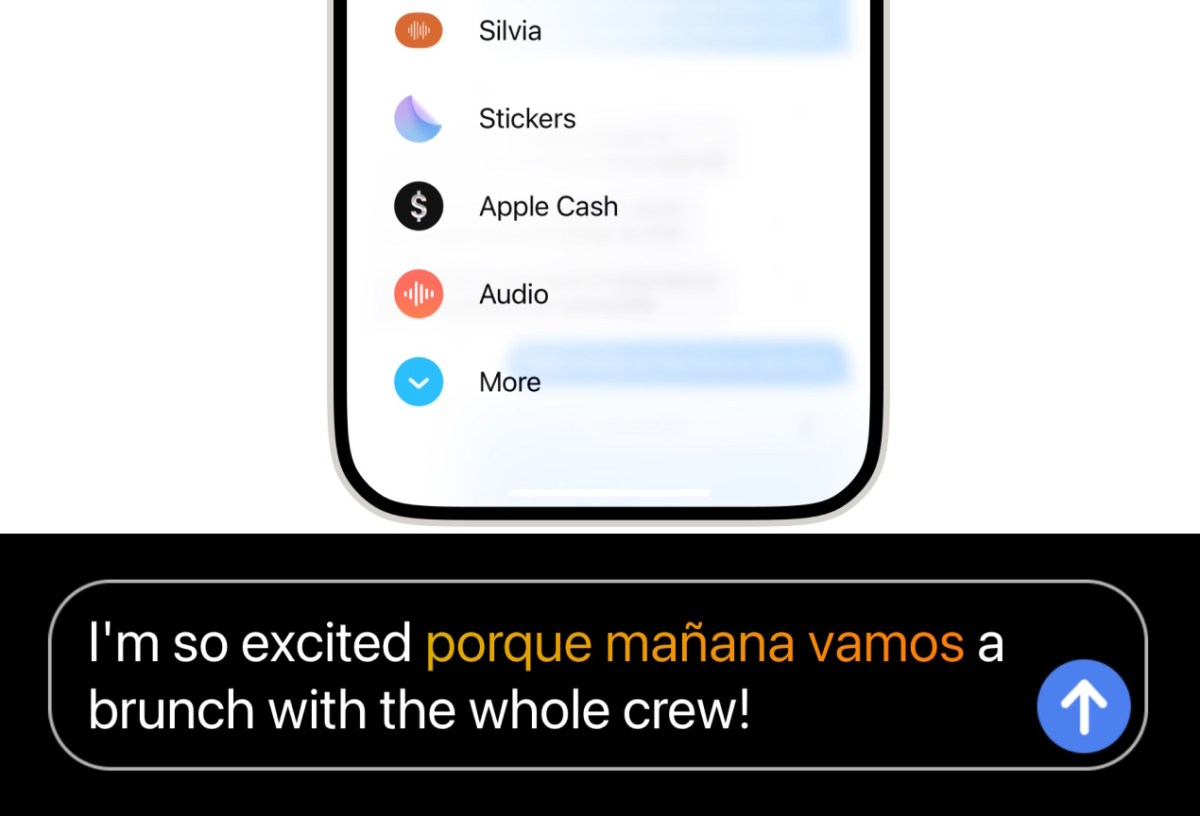
Language is fluid, and nowhere is this more evident than in the speech patterns of bilingual individuals. For those who effortlessly blend English with another language, most AI language assistants fall short, unable to keep up with the mixed linguistic flow. Enter Silvia, a groundbreaking AI assistant that bridges this gap by understanding “Spanglish” and paving the way for other mixed-language support.
In a world increasingly defined by multicultural interactions, a product has emerged addressing the nuanced communication styles of bilingual speakers. Created by a product engineer (name not disclosed for privacy), who also contributes to AI projects during the day, Silvia is designed to cater to the subtleties of language blending, something that conventional AI systems have historically overlooked.
The need for such an AI assistant was highlighted during a social encounter where the product engineer learned about the challenges bilingual individuals face when their devices can’t process mixed languages. Recognizing the prevalence of this issue, particularly among the Latin American community, work began on a solution that would embrace, rather than reject, linguistic diversity.
Silvia functions as a handy app that integrates with your keyboard. Simply tapping on it allows you to dictate in your preferred language mix. Initially, it will support English mixed with Spanish, with plans to extend support to a range of languages, including French, Romanian, Ukrainian, German, and Dutch. Moreover, users can anticipate a custom keyboard version for enhanced compatibility across various apps.
One might wonder why Germanic languages with Roman alphabets are the initial focus. This is due to the nature of the current technology, which is fine-tuned to handle these specific linguistic characteristics effectively. There’s excitement about possible expansions, but as of now, languages such as Hindi, which do not fit this description, fall outside the scope of the immediate plan.
The secret to Silvia’s rapid development is the clever use of robust APIs by an engineer already versed in the field. By harnessing the power of the new Translation API in the latest iOS, the app separately processes Spanish and English. This is then complemented by the use of OpenAI Whisper for a seamless cleanup, ensuring prompt and accurate dictations.
Privacy-conscious users can rest easy knowing that Silvia doesn’t store any data; it’s designed with privacy in mind and has received Apple’s stamp of approval.
Silvia isn’t trying to revolutionize the AI landscape; it’s here to serve as a mirror to the linguistic realities of its users. It’s set to be available for download at the end of the month, and for those who tend to be forgetful, there’s an option to sign up for notifications when Silvia goes live.
For bilingual individuals, Silvia may just be the tool that brings a touch of personalization and recognition to everyday digital interactions, finally acknowledging the fluidity and hybrid nature of modern language use.