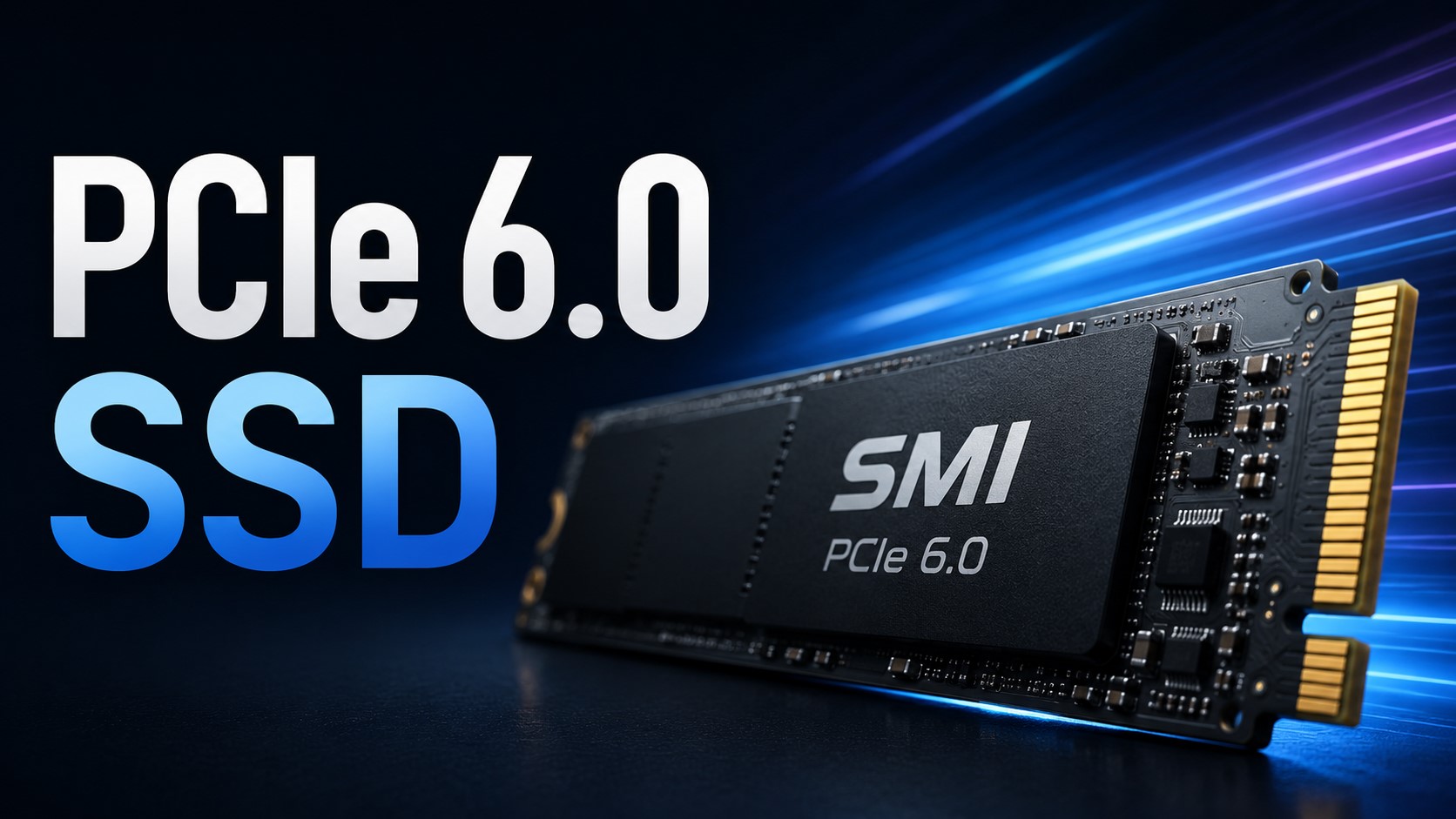
PCIe 6.0 SSDs Are Coming Next Year, but AI Demand Could Keep Storage Prices High for Years
The consumer storage market is heading into a complicated phase. Faster SSD technology is on the way, with Silicon Motion preparing its first consumer PCIe 6.0 SSD controller for release next year. However, while next-generation drives promise major performance gains, buyers may face a much less exciting reality: higher prices and tighter availability.
The pressure is coming from the explosive growth of artificial intelligence infrastructure. AI data centers and servers are consuming huge amounts of memory and storage, pulling NAND flash and DRAM supply away from the consumer market. This shift has already contributed to rising RAM and SSD prices, and the situation has not stabilized after months of market disruption.
Silicon Motion’s upcoming PCIe 6.0 SSD controller, reportedly codenamed Neptune, is expected to power a new wave of high-speed consumer solid-state drives. PCIe 6.0 offers double the bandwidth of PCIe 5.0, meaning future SSDs could deliver significantly faster read and write speeds for gaming PCs, workstations, and high-end desktops.
That performance leap sounds promising, but it may arrive during one of the most difficult periods for consumer storage supply. Nelson Duann, Senior Vice President at Silicon Motion, has indicated that NAND flash shortages could become more severe over the next few years. By 2027, data centers may account for as much as 70% to 80% of global NAND output.
If that forecast proves accurate, consumer SSDs could become more expensive and harder to find. PC builders, gamers, laptop buyers, and general consumers may all feel the impact as storage manufacturers prioritize enterprise customers with much larger orders and higher margins.
The growing demand from AI data centers is changing the entire memory and storage industry. Enterprise SSDs are now one of the most important growth areas, and companies that provide SSD controller technology are seeing stronger demand. Silicon Motion has benefited from this shift as more device makers and independent SSD brands look for third-party controllers for enterprise drives, PCIe 5.0 consumer SSDs, and UFS storage used in smartphones.
For the consumer PCIe 6.0 SSD market, Silicon Motion is reportedly evaluating eight-channel controller designs. These would be aimed at high-performance consumer drives while balancing cost, efficiency, and heat output. Enterprise PCIe 6.0 SSDs, on the other hand, are expected to use 16-channel designs to deliver maximum throughput for servers and data centers.
The result is a mixed outlook for consumers. On one hand, PCIe 6.0 SSDs could bring a major speed upgrade over today’s fastest PCIe 5.0 drives. On the other hand, these drives may launch into a market where NAND flash is expensive, supply is limited, and enterprise customers are taking priority.
For PC enthusiasts, this means storage upgrades may require more careful planning. Those hoping for cheaper high-capacity SSDs could be disappointed if AI-driven demand continues to absorb most of the available NAND production. Even mainstream consumer electronics, including laptops, handheld devices, and prebuilt desktops, could see higher prices if storage costs remain elevated.
The arrival of PCIe 6.0 SSD controllers marks an important step forward for storage performance. But for many buyers, the bigger question may not be how fast these new SSDs are. It may be whether they can afford them when they finally reach store shelves.