Samsung Warns Memory Shortages Could Worsen in 2027 as AI Demand Consumes HBM Supply
Samsung says the global memory shortage is far from over. In fact, the company expects supply pressure to intensify in 2027 and continue into 2028, driven by explosive demand for AI hardware, high-bandwidth memory, advanced DRAM, and enterprise SSDs.
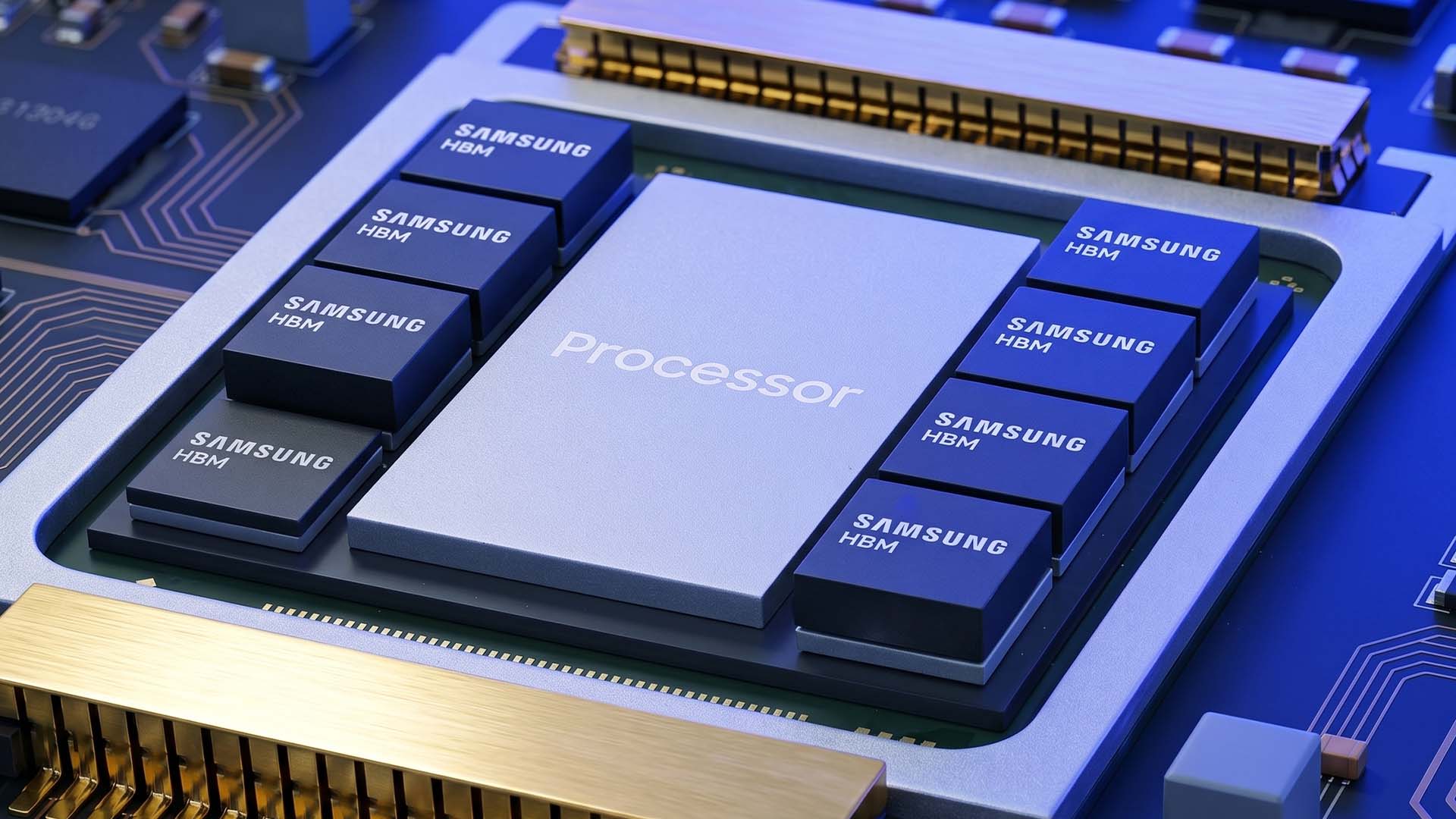
During its latest earnings call, Samsung revealed that its entire 2027 supply of HBM has already been sold out. The announcement highlights just how aggressively AI companies, cloud providers, and chip developers are securing next-generation memory capacity years in advance.
The company reported record revenue of 195.3 trillion Korean won, around $146.3 billion, marking a 14% increase from the previous quarter and a 127% jump from the same period a year earlier. Samsung also said it became the first global technology company to surpass 100 trillion Korean won in operating profit, with operating profit rising 20% quarter over quarter and 783% compared with the prior year.
AI demand is reshaping Samsung’s memory business
Samsung’s semiconductor division was one of the biggest winners in the latest quarter. The Device Solutions business posted 15% growth, while operating profit climbed 72%, supported by strong demand for HBM, DRAM, and SSD products.
The company continues to pour money into research and development as it prepares for the next stage of the AI memory boom. Samsung’s R&D spending has reached 14.4 trillion Korean won, up 63% from the previous year. These investments are being directed toward expanding capacity, developing next-generation memory technologies, and building new production facilities.
High-bandwidth memory remains the center of attention. Samsung said HBM4 supply for 2027 is already fully booked, while mass production of HBM4E is expected to begin in the first half of 2027. Volume production is then planned to ramp up in the second half of the year.
HBM has become essential for AI accelerators and data center processors because it delivers the massive bandwidth needed for training and running large AI models. As demand for AI servers grows, companies are moving quickly to lock in long-term memory supply.
DDR5 and AI-focused SSDs are also seeing strong demand
Samsung is not only benefiting from HBM demand. The company also sees strong momentum for high-speed DDR5 memory, especially server-grade products running at 8,000 Mbps and above.
On the NAND side, Samsung is focusing on products designed for artificial intelligence and data center workloads. This includes PCIe Gen6 server SSDs, enterprise SSDs, high-density QLC SSDs, and other storage solutions built for large-scale AI infrastructure.
These products are becoming increasingly important as AI systems require not only faster compute chips but also faster storage and larger memory pools. The rapid growth of AI data centers is creating demand across nearly every part of the semiconductor supply chain.
Samsung expects tight memory supply through 2028
Despite increasing capital spending, Samsung warned that supply will remain constrained. The company said higher investment alone will not necessarily translate into strong bit production growth.
One reason is the shift from conventional DRAM to HBM. Advanced HBM products such as HBM4E and future HBM5 are expected to feature larger die sizes and more complex manufacturing requirements, including an increase in metal process layers. That makes them more difficult and more expensive to produce, limiting how quickly supply can expand.
As more wafer capacity is used for HBM instead of traditional DRAM, the broader memory market could face additional pressure. Samsung expects these physical production limits to keep supply tight into 2028.
Long-term memory deals are becoming more common
Samsung also confirmed that it has signed long-term supply agreements with 10 major customers. These agreements are expected to account for roughly 60% to 70% of the company’s total production capacity.
Demand for long-term memory contracts is expanding beyond hyperscale cloud companies. Samsung said customers in mobile, automotive, and networking markets are also seeking more stable memory supply as advanced chips become more important across industries.
This shift shows that the AI memory boom is not limited to data centers. As AI features move into smartphones, vehicles, edge devices, and networking equipment, more companies are competing for the same limited supply of advanced memory.
Foundry business gains from AI chip demand
Samsung’s foundry business is also benefiting from the AI wave. The company expects orders for its 2nm process to more than double compared with the previous year, while growing AI demand is expected to support revenue from both 2nm and 4nm chip production.
The 4nm node is becoming a key revenue driver after being adopted by major AI customers in the United States. Samsung also plans to begin mass production for major 2nm customers in the second half of the year.
In addition, Samsung is working to strengthen its advanced packaging capabilities, including the development of 3D stacking technology. Advanced packaging is becoming critical for AI chips, where performance increasingly depends on how processors, memory, and chiplets are integrated.
Samsung enters 2027 with strong momentum
Samsung’s latest results show how dramatically AI is changing the memory industry. With its 2027 HBM supply already sold out, the company is entering the next phase of the semiconductor cycle from a position of strength.
At the same time, the outlook points to continued pressure for customers. Memory shortages are expected to worsen in 2027 and remain a challenge into 2028 as AI demand grows faster than supply can expand.
For Samsung, the combination of HBM4, HBM4E, high-speed DDR5, AI-focused SSDs, 2nm manufacturing, and advanced packaging could help extend its record performance. For the wider technology industry, however, the message is clear: advanced memory is becoming one of the most important and limited resources in the AI era.