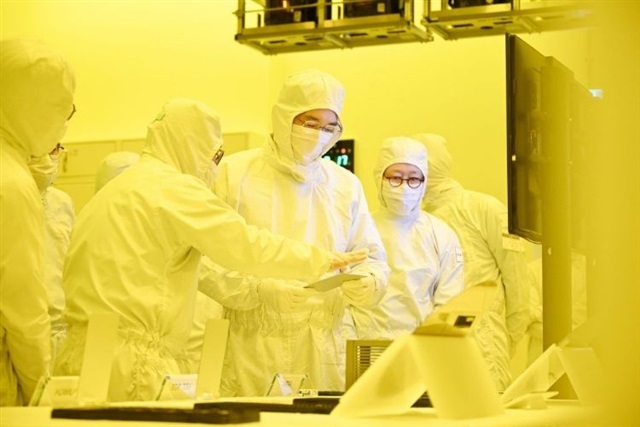
Samsung is expected to confirm by late September 2025 that its 12-layer fifth‑generation high‑bandwidth memory (HBM3E) has successfully cleared customer validation, according to reports from South Korea. The move would end months of quiet from the company and signal that its most advanced AI memory is ready for prime time in next‑generation accelerators and data center GPUs.
Why this matters
HBM3E is the cutting edge of high‑bandwidth memory, designed to feed AI processors and high‑performance computing chips with massive data throughput while keeping power use in check. A 12‑layer stack increases capacity and bandwidth per package compared with 8‑ or 10‑layer designs, enabling larger models, faster training, and more efficient inference. For hyperscale AI, this is the difference between squeezing into memory limits and running at full stride.
What “customer validation” means
Clearing customer validation is a critical milestone. It indicates that top chipmakers have tested the memory for reliability, thermals, signal integrity, and interoperability under real workloads. It also suggests Samsung has overcome the toughest hurdles of ultra‑tall stacking, such as yields, heat dissipation, and through‑silicon via (TSV) reliability. In practical terms, validation opens the door to design wins and volume shipments in flagship AI platforms.
Competitive and market impact
The green light on 12‑layer HBM3E puts Samsung in a stronger position in the high‑bandwidth memory race, where demand has far outstripped supply due to the AI boom. It intensifies competition with other leading DRAM makers and could help ease supply bottlenecks for advanced GPUs and AI accelerators through 2025 and beyond. More validated suppliers generally mean better availability, potentially faster system rollouts, and a healthier balance between performance and efficiency across the AI stack.
Technical significance
– Higher capacity per stack helps accommodate larger AI models and longer context windows without offloading to slower memory tiers.
– Increased bandwidth per package reduces stalls and improves utilization of expensive compute, boosting performance per watt.
– Advances in packaging, bonding, and thermal management are essential to keep 12‑high stacks cool and reliable under heavy AI loads.
What to watch next
– Official confirmation and timing of mass production ramp.
– Which AI platforms adopt the 12‑layer HBM3E first, and at what capacities.
– How Samsung’s roadmap evolves toward even denser stacks and future standards.
– The broader impact on AI hardware availability and data center build‑outs heading into 2026.
Bottom line
If Samsung confirms customer validation for its 12‑layer HBM3E by late September, it will mark a pivotal moment for the AI memory ecosystem. The milestone signals more high‑capacity, high‑bandwidth memory coming to market—a crucial lever for accelerating training, scaling inference, and unlocking the next wave of AI performance.