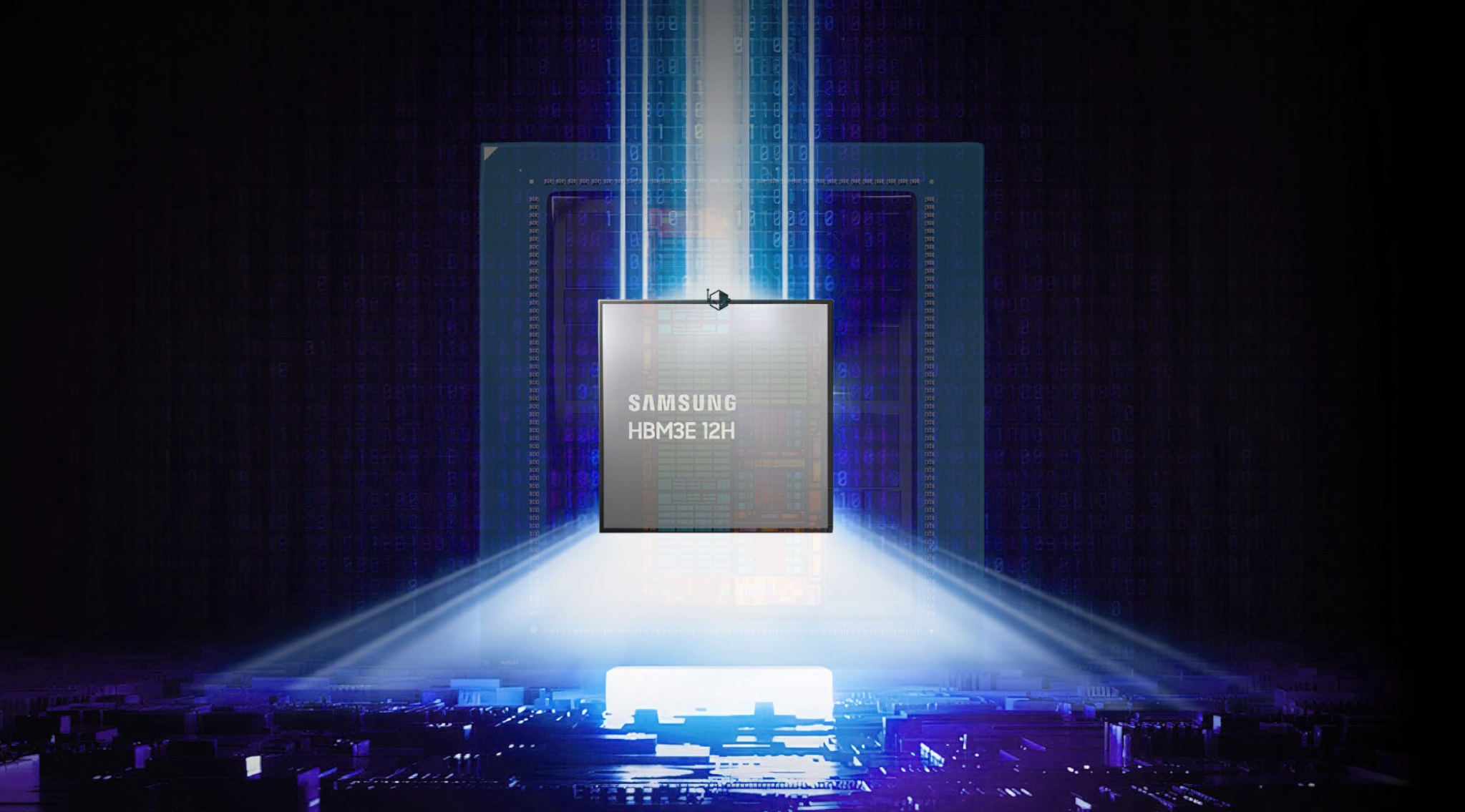
Samsung Struggles with HBM3E Memory Qualification for NVIDIA Collaboration
Recent industry indications reveal that Samsung has encountered a stumbling block in its development of HBM3E memory. It appears that the company has not successfully completed the qualification tests required by NVIDIA, potentially hampering its progress in the memory sector.
Samsung’s Challenges with HBM3E Memory Qualification
Reports emerging from the Korean media suggest that Samsung’s efforts to qualify its HBM3E 8-layer memory have hit a snag. This situation raises concerns for Samsung’s memory division, which had been on the trajectory of economic recovery in recent quarters.
The challenges faced by Samsung stem from the stringent standards set by competitors such as SK Hynix, who have adopted different manufacturing techniques. Some reports are labeling Samsung’s HBM3E memory as “defective.” Yet, other industry insiders attribute the failed verification tests to the high benchmarks SK Hynix has established.
Mixed Reactions and Industry Dynamics
Amidst the mix of accusations and speculations, some sources have pointed out TSMC’s hesitation to include Samsung as an HBM partner. Given TSMC’s strategic relationship with NVIDIA, Samsung’s current quandary could have broader implications within the semiconductor industry.
Samsung, on the other hand, remains steadfast in its dedication to providing optimal products to NVIDIA and its other partners. Collaboration with entities such as AMD, which utilizes Samsung’s HBM3E for its Instinct AI accelerators, is evidence that the issues with the HBM supply may not be as dire as some rumors suggest.
Interestingly, there have been whispers of TSMC and SK hynix forming a so-called “One Team” alliance, which could be perceived as a countermeasure against Samsung’s emerging dominance in the memory and semiconductor markets. It underscores the intense competition and strategic maneuvering within the industry, as players vie for leadership positions.
Rapid Growth and Competition in the HBM Market
The High Bandwidth Memory (HBM) market is experiencing swift growth, spurred on by increasing demand and the subsequent competition between industry heavyweights. This environment fosters a race for innovation and collaboration, as companies like Samsung, SK hynix, and TSMC strive to cement their standing.
Samsung’s current situation affords an intriguing view into the landscape of technological collaborations and competition. As these companies navigate their relationships and technical challenges, the advancements in memory technologies will undoubtedly have significant impacts on the broader electronics and computing sectors.
In conclusion, Samsung’s dedication to overcoming the qualification hurdles and cementing its role in the collaboration with NVIDIA is a testament to the fierce commitment prevalent in the tech industry. As the story unfolds, it will be fascinating to watch how Samsung and its rivals continue to innovate and adapt in the ever-evolving realm of memory technology.