ASUS ROG Crosshair X670E Hero Reportedly Kills Ryzen 9 9950X3D and Ryzen 5 8500G After BIOS Memory Preset
A high-end ASUS ROG Crosshair X670E Hero motherboard is drawing attention after a PC builder reported that two AMD Ryzen processors stopped working after being installed in the same system. The case involves a powerful Ryzen 9 9950X3D upgrade that failed to boot, followed by an older Ryzen 5 8500G that also appeared to become unusable after being tested in the board.
According to the user’s account, the trouble began after replacing a Ryzen 5 8500G with AMD’s flagship Ryzen 9 9950X3D in an attempt to gain better gaming and compute performance. Instead of reaching Windows 11, the system refused to boot. The motherboard’s onboard diagnostic display immediately showed the “00” code, a sign that the system was failing at a very early stage of initialization.
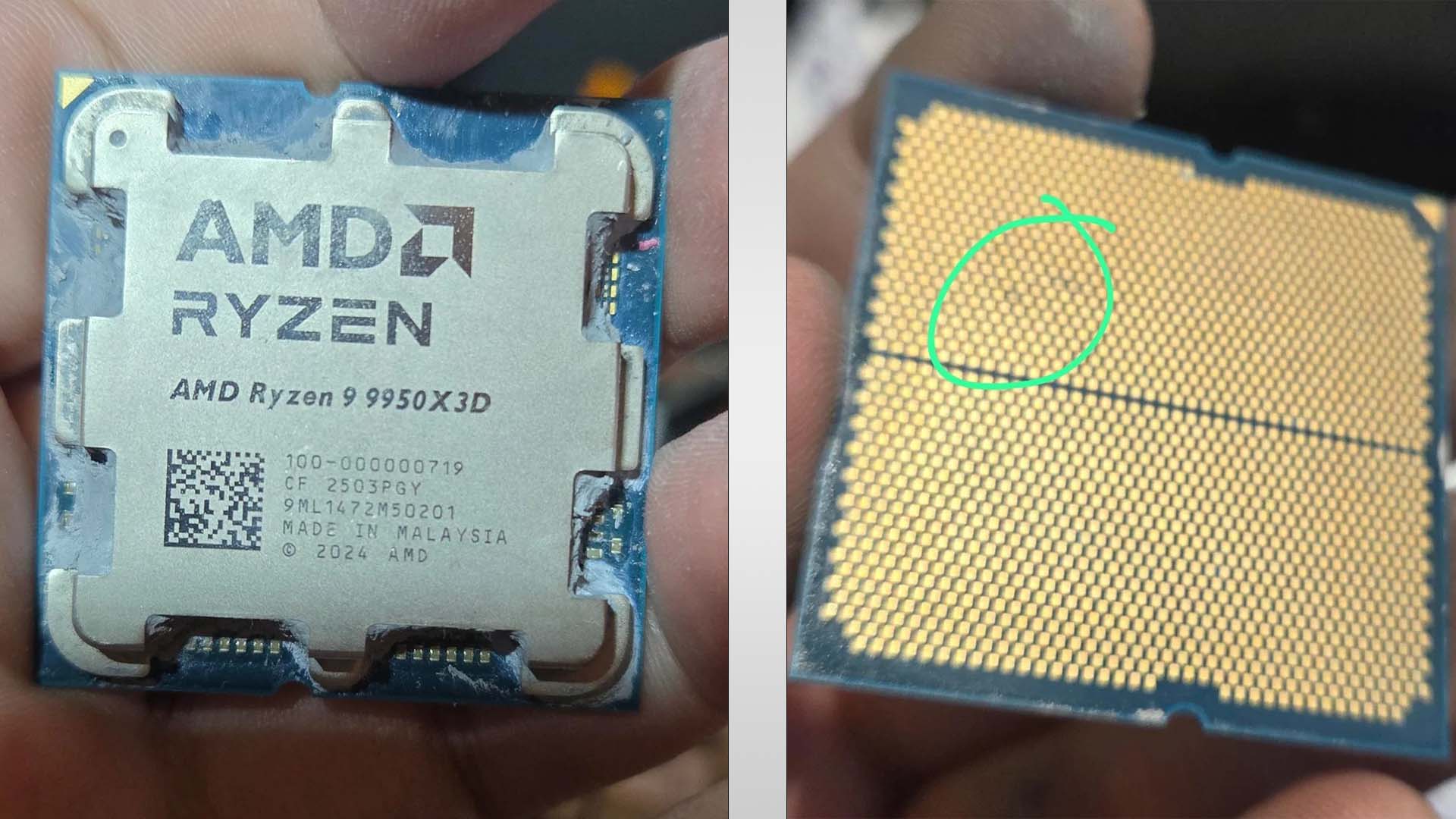
The user later removed the Ryzen 9 9950X3D and noticed two brown marks on the processor. That discovery raised concerns that the chip may have suffered electrical or thermal damage while installed in the ASUS motherboard.
What makes the incident more concerning is that the user says no manual CPU or RAM overclocking was applied. There were reportedly no custom voltage adjustments either. Instead, the user selected one of the built-in memory presets available in the ASUS UEFI BIOS for a 64GB DDR5 kit made up of SK Hynix 2x32GB dual-rank 6200MHz modules.
After applying the preset, saving the BIOS settings, and restarting the PC, the motherboard immediately displayed the “00” error code. The ASUS ROG Crosshair X670E Hero was reportedly already running the latest BIOS version, which makes the situation even more troubling for users who rely on official firmware and built-in presets rather than manual tuning.
The owner then attempted to troubleshoot the system by reinstalling the older Ryzen 5 8500G, which had been working previously. However, that CPU also failed to boot in the same motherboard. This time, the diagnostic display showed a “4D” error code.
The user also stated that there were no bent pins visible on the motherboard socket, suggesting the issue may not be related to simple physical damage during installation. While the exact cause remains unknown, the fact that two processors reportedly failed after being used in the same board points to a possible motherboard-related fault or firmware-level problem.
Adding to the mystery, the Ryzen 9 9950X3D was said to have worked without issues in an ASRock X670E Taichi Carrara system before being moved to the ASUS Crosshair X670E Hero. The user indicated that the memory configuration may have been similar, making the sudden failure after switching motherboards especially alarming.
AMD’s latest high-performance Ryzen processors, especially X3D models with 3D V-Cache, are popular among gamers and workstation users because of their strong performance and efficiency. However, previous reports have highlighted isolated cases of Ryzen chips failing on AM5 motherboards, often raising questions about voltage behavior, BIOS tuning, EXPO memory profiles, and motherboard safeguards.
In this case, the most important detail is that the user claims they did not manually push unsafe voltages. If the failure occurred after selecting a BIOS-provided memory preset, it raises concerns about how motherboard vendors validate these settings and whether enough protection is in place to prevent damage to expensive CPUs.
The Ryzen 9 9950X3D is not a budget processor, and pairing it with a premium X670E motherboard is exactly the kind of setup many enthusiasts would expect to be reliable. When a flagship CPU and a backup processor both stop working in the same motherboard, it naturally fuels frustration and concern among PC builders.
At the moment, there is no confirmed technical explanation for what happened. It could involve a defective motherboard, a BIOS issue, memory training behavior, voltage mismanagement, or another hardware fault. Until the board and processors are inspected through an official RMA process, the full cause cannot be verified.
Still, based on the user’s description, a refund or replacement would seem reasonable if the components were being used within normal operating conditions and only official BIOS presets were selected. Enthusiast PC hardware is designed to support memory tuning and platform upgrades, but those features should not put processors at risk when used as intended.
For AM5 users, the incident is a reminder to be cautious when applying memory presets, even those built into the BIOS. Keeping motherboard firmware updated, monitoring CPU voltages, using stable EXPO profiles, and avoiding aggressive presets can help reduce risk. However, users should not have to fear hardware damage from standard BIOS options on premium motherboards.
The reported ASUS Crosshair X670E Hero incident is now another example of why motherboard BIOS behavior remains a critical topic for Ryzen 7000, Ryzen 8000, and Ryzen 9000-series systems. As AMD’s AM5 platform continues to mature, users will be watching closely to see whether motherboard makers improve safeguards, memory preset validation, and voltage control for high-end Ryzen processors.