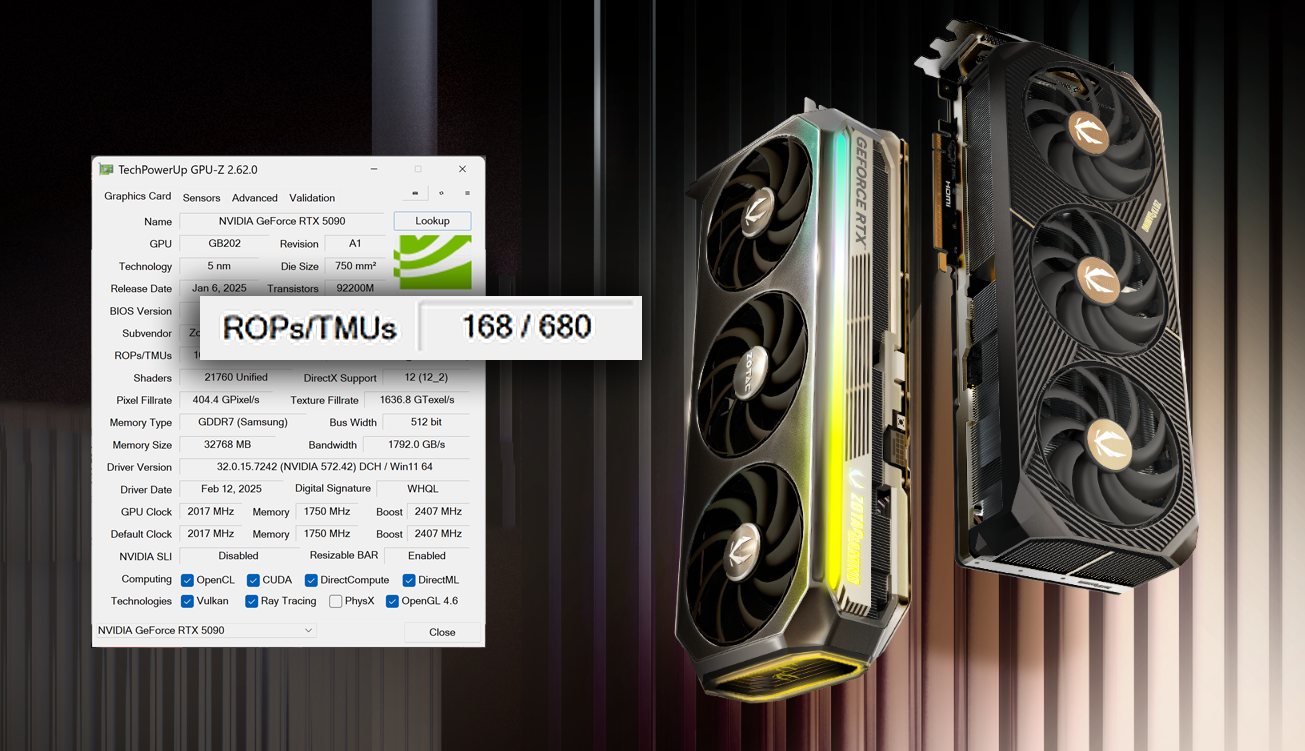
Custom RTX 5090 editions from ZOTAC are making waves in the gaming community for all the wrong reasons. Recent reports have unveiled that certain ZOTAC RTX 5090 GPUs come equipped with a surprising reduction—eight fewer Raster Operations Pipelines (ROPs) compared to their counterparts from other manufacturers. This startling news has been confirmed through GPU-Z findings, sparking a mix of intrigue and concern among tech enthusiasts.
ROP count plays a critical role in rendering complex graphics, impacting everything from antialiasing to depth testing in visually demanding games. The ZOTAC RTX 5090’s missing ROPs directly translate to diminished raster performance, which has been substantiated in tests showing these cards performing below the expectations set by not only the Founders Edition but also other premium models.
The discrepancy in ROP count has caught the gaming world by surprise, with the Founders Edition boasting 176 ROPs while ZOTAC’s version shows just 168. Even after exhaustive measures like driver reinstallation and BIOS adjustments, the ROP count stubbornly remains lower. This variance, while noted, does not affect all ZOTAC models, but the ones impacted see a noticeable drop in performance in game titles like Elden Ring, Starfield, and Doom Eternal, where ROPs play a significant role.
What remains a mystery is why these inconsistencies appear only in ZOTAC’s versions of the RTX 5090, given that GPUs from other manufacturers adhere to the expected specifications. While some hope this could be a software glitch that’s fixable, the possibility of a hardware-level issue looms large, potentially leaving affected gamers with no remedy.
This revelation has undoubtedly tarnished the reputation of both ZOTAC and NVIDIA, as consumers feel misled by the promise of top-tier performance that these products were meant to deliver. It underscores the need for both companies to urgently address the problem, providing clarity and solutions to restore user confidence in their flagship GPU offerings.