PNY RTX 5070 Owner Says Warranty Dispute Remains Unresolved After Crashing and Artifact Issues
A PNY GeForce RTX 5070 owner says he has been stuck in a frustrating warranty dispute for nearly two months after his graphics card reportedly began showing serious stability problems, including checkerboard artifacts, black screens, and repeated system crashes.
According to a Reddit user posting under the name u/Weird_Cat_422, the RTX 5070 appeared to fail during everyday Windows 11 use rather than only under heavy gaming or benchmark loads. The user claims the issue was most likely to happen when Hardware-Accelerated GPU Scheduling, commonly known as HAGS, was enabled. With HAGS turned on, the card allegedly crashed during light workloads, desktop activity, and moments when the GPU shifted between idle and active states.
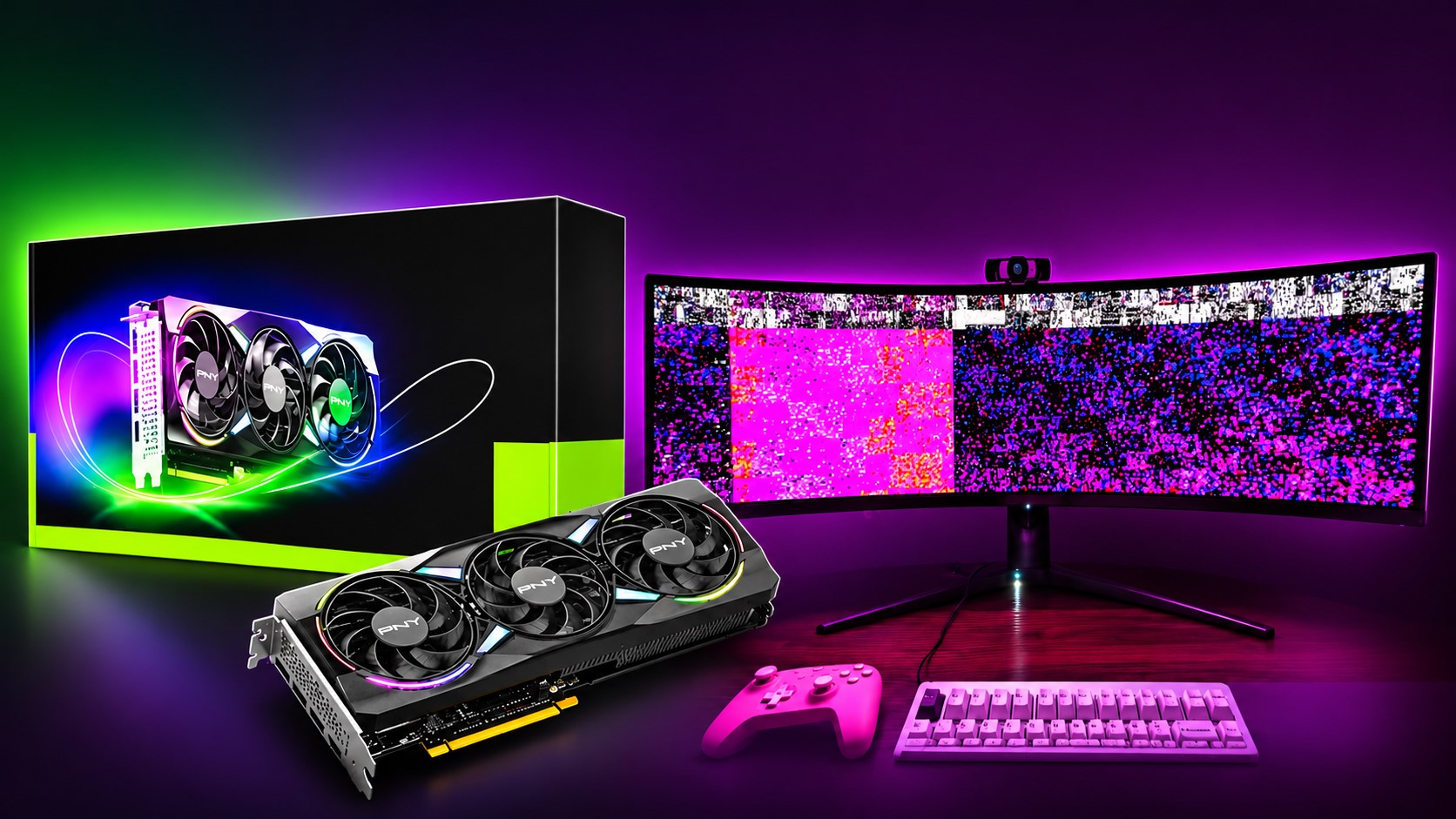
The owner says the problem was not just occasional instability. He reports visible checkerboard-style artifacting, black screen events, system hangs, and blue screen crashes. Windows Event Viewer reportedly logged a repeated NVIDIA driver-related “nvlddmkm” sequence, including Event ID 13 with a “Graphics FECS Exception: UCODE Fatal Error,” followed by Event ID 14 and multiple TDR-related Event ID 153 entries. The system also allegedly produced 0x133 DPC_WATCHDOG_VIOLATION blue screen errors.
The user says he sent the graphics card to PNY through the RMA process, but the company reportedly found no fault with the hardware. After the card was returned, the owner continued to argue that the testing did not reflect the real-world conditions that triggered the failures on his system.
As part of the case, the RTX 5070 owner claims he provided PNY with Windows minidump files, event logs, and photos showing the visual artifacts. He also asked whether the company tested the card with HAGS enabled and under the same type of workload that caused the crashes. According to the user, a PNY representative could not confirm whether the company’s standard test procedure reproduced that exact HAGS-enabled scenario.
Instead, PNY reportedly tested the GPU by running 3DMark Steel Nomad and Unigine Superposition at the same time across two 4K displays for 24 hours. The card allegedly completed that stress test without failure. Because no hardware fault was found during testing, PNY reportedly declined to approve another RMA request.
The dispute highlights a common challenge in diagnosing modern GPU problems: a graphics card may survive extended stress testing but still fail in very specific software or power-state conditions. Heavy benchmark loads can expose overheating, power delivery, or silicon stability issues, but they may not always replicate crashes that happen during low-load transitions, driver scheduling changes, or Windows-level GPU management features such as HAGS.
For PC builders and gamers, the case is a reminder that GPU troubleshooting can involve more than simply running a benchmark. When crashes happen only under certain Windows settings, driver states, or idle-to-load transitions, reproducing the issue can be difficult for both the user and the manufacturer. Detailed logs, crash dumps, videos, photos, and exact reproduction steps can become essential when filing a warranty claim.
At the moment, the RTX 5070 owner says the issue remains unresolved, with PNY reportedly standing by its test results and the user maintaining that the company’s testing did not match the conditions under which the card failed.