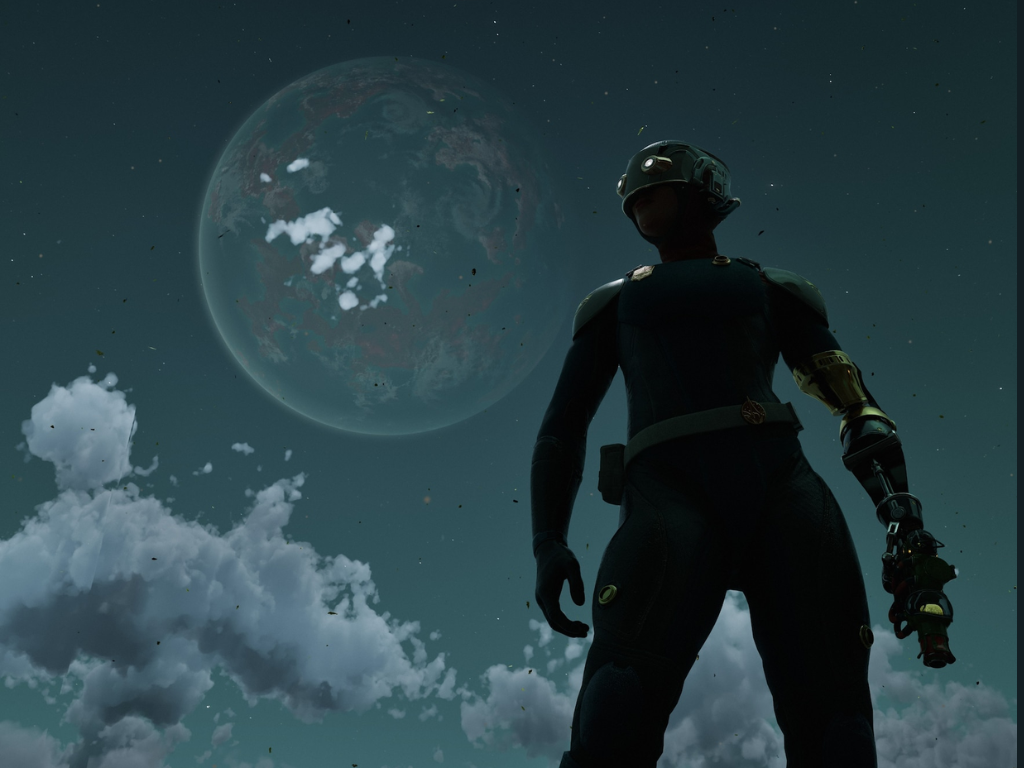
Kingdom Come: Deliverance 2 director Daniel Vavra has sparked a heated debate by criticizing Obsidian Entertainment’s The Outer Worlds 2 for what he sees as a lack of innovation. In a candid post on X, Vavra rated the sequel a 7 out of 10 and argued that, even with years of experience and backing from Microsoft, the studio didn’t push the genre forward with new mechanics or a more dynamic world simulation.
Vavra praised Obsidian’s legacy with Fallout: New Vegas, calling it one of his favorites, but questioned whether The Outer Worlds 2 introduces anything genuinely new. He lamented what he described as a reliance on familiar systems—looting, corridor crawling, loading screens, and XP grinding—over deeper simulation and true non-linearity. His call was clear: bring on living worlds that react and change in meaningful ways, not just scripted quests in static environments.
He further suggested that his own team achieved a complex, immersive simulation in Kingdom Come: Deliverance 2 on a smaller budget, implying that scale and funding aren’t excuses for playing it safe. When challenged by players about whether KCD2 itself innovates, Vavra pointed to thousands of NPCs following intricate daily routines as a defining difference—an example of systemic depth he feels The Outer Worlds 2 lacks.
The reaction from players and developers has been mixed. Many fans pushed back, noting that Obsidian dramatically improved The Outer Worlds 2 over the 2019 original, particularly around player choice and role-playing flexibility. Others referenced recent successes like Baldur’s Gate 3, which earned universal acclaim not because it reinvented role-playing mechanics from scratch, but because it refined and executed existing systems to a near-perfect degree. Similarly, Clair Obscur: Expedition 33 has been highlighted for smartly modernizing turn-based combat with an engaging real-time twist, showing that innovation isn’t always about brand-new mechanics—it can be about elevating what already works.
Despite the controversy, The Outer Worlds 2 is performing well with critics. It holds a Metacritic score of 83/100 based on dozens of reviews, while user impressions are more mixed, averaging in the mid-sixes at the time of writing. Praise has centered on stronger writing, expanded choices, and a more confident identity than the original. Criticism tends to echo Vavra’s point: the game feels iterative rather than revolutionary.
Developer-to-developer critiques of this kind are rare—and polarizing. On one hand, Vavra’s willingness to publicly challenge a peer invites a valuable conversation about where RPGs go next. On the other, it risks overshadowing real progress made by teams who choose refinement over reinvention. It also surfaces a broader industry tension: are players craving radical systemic simulation and unpredictable worlds, or do they prefer crafted, story-first adventures with reliable mechanics, polished writing, and tight pacing?
That tension sits at the heart of The Outer Worlds 2’s reception. Obsidian opted to sharpen the franchise’s core—satirical sci-fi storytelling, role-playing flexibility, and player agency—without attempting a full-blown simulation of an evolving world. Vavra, by contrast, champions emergent design where AI-driven routines, dynamic systems, and unscripted outcomes transform every playthrough. Both philosophies have passionate followings, and both carry risks: deep simulation can introduce instability and design complexity, while safe iteration can feel predictable.
What’s undeniable is that the conversation is healthy for RPGs. When prominent creators challenge each other, players win—either through bold leaps into systemic gameplay or through impeccably executed traditional design. If The Outer Worlds 2 represents the high-polish, choice-driven RPG refined to a shine, Kingdom Come: Deliverance 2 positions itself as a gamble on simulation that aims to make worlds feel truly alive.
As the dust settles, the debate raises a simple question for studios and fans alike: in the next wave of role-playing games, will the market reward daring, simulation-heavy sandboxes, or meticulously crafted narratives built on tried-and-true mechanics? The answer may not be either-or. The most exciting future could blend both—pairing the reliability of polished systems with the unpredictability of living worlds. For now, The Outer Worlds 2 stands as an accomplished sequel, and Vavra’s critique stands as a challenge to push further.