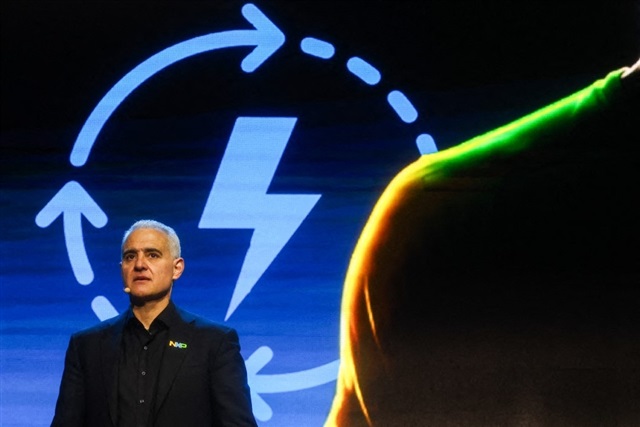
NXP Semiconductors is expanding its physical AI strategy beyond its familiar markets in vehicles, industrial automation, robotics and smart factories. The company is now positioning its control, connectivity and real-time processing technologies as an important part of the rapidly growing AI data center ecosystem.
As artificial intelligence workloads become more demanding, data centers are evolving far beyond traditional server rooms. Modern AI infrastructure depends on powerful accelerator platforms, high-speed networking, advanced thermal management, secure system control and efficient power delivery. While GPUs and AI accelerators often receive the most attention, the surrounding infrastructure is just as critical to keeping these systems fast, stable and energy efficient.
This is where NXP sees a major opportunity. The company’s expertise in embedded processing, secure connectivity and real-time system control can support the essential systems that operate around AI chips. These include network management, cooling systems, power monitoring, platform security and infrastructure control.
AI data centers generate enormous amounts of heat and require precise cooling to maintain performance and reliability. NXP’s real-time processing capabilities can help manage thermal systems more efficiently, allowing operators to monitor temperatures, adjust cooling performance and reduce wasted energy. As data center power consumption continues to rise, smarter cooling and power management are becoming key priorities for operators.
Security is another major focus. AI infrastructure handles valuable data and supports mission-critical workloads, making hardware-level protection increasingly important. NXP’s background in secure processing and trusted connectivity could help strengthen data center platforms against unauthorized access, tampering and system-level vulnerabilities.
Networking is also central to AI data center performance. Large AI models rely on fast communication between processors, memory, storage and networking hardware. NXP’s connectivity technologies can play a role in supporting reliable data movement and system coordination across complex server environments.
By targeting the systems that surround AI accelerators, NXP is broadening its role in the artificial intelligence market. Instead of competing directly in the race for the most powerful AI chips, the company is focusing on the infrastructure needed to make those chips work effectively at scale.
This strategy reflects a growing reality in the AI industry: performance is no longer defined by processors alone. Power efficiency, cooling, security, connectivity and real-time control are becoming equally important as data centers become larger and more complex.
For NXP, the rise of AI data centers opens a new path for growth. Its physical AI approach, already relevant in connected cars, industrial systems and robotics, now extends into the backbone of modern computing infrastructure. As demand for AI services continues to accelerate, the need for smarter data center control systems is expected to grow with it.
NXP’s move highlights the expanding role of semiconductor companies in the AI era. The future of artificial intelligence will depend not only on faster accelerators, but also on the intelligent systems that keep data centers connected, secure, cool and power efficient.