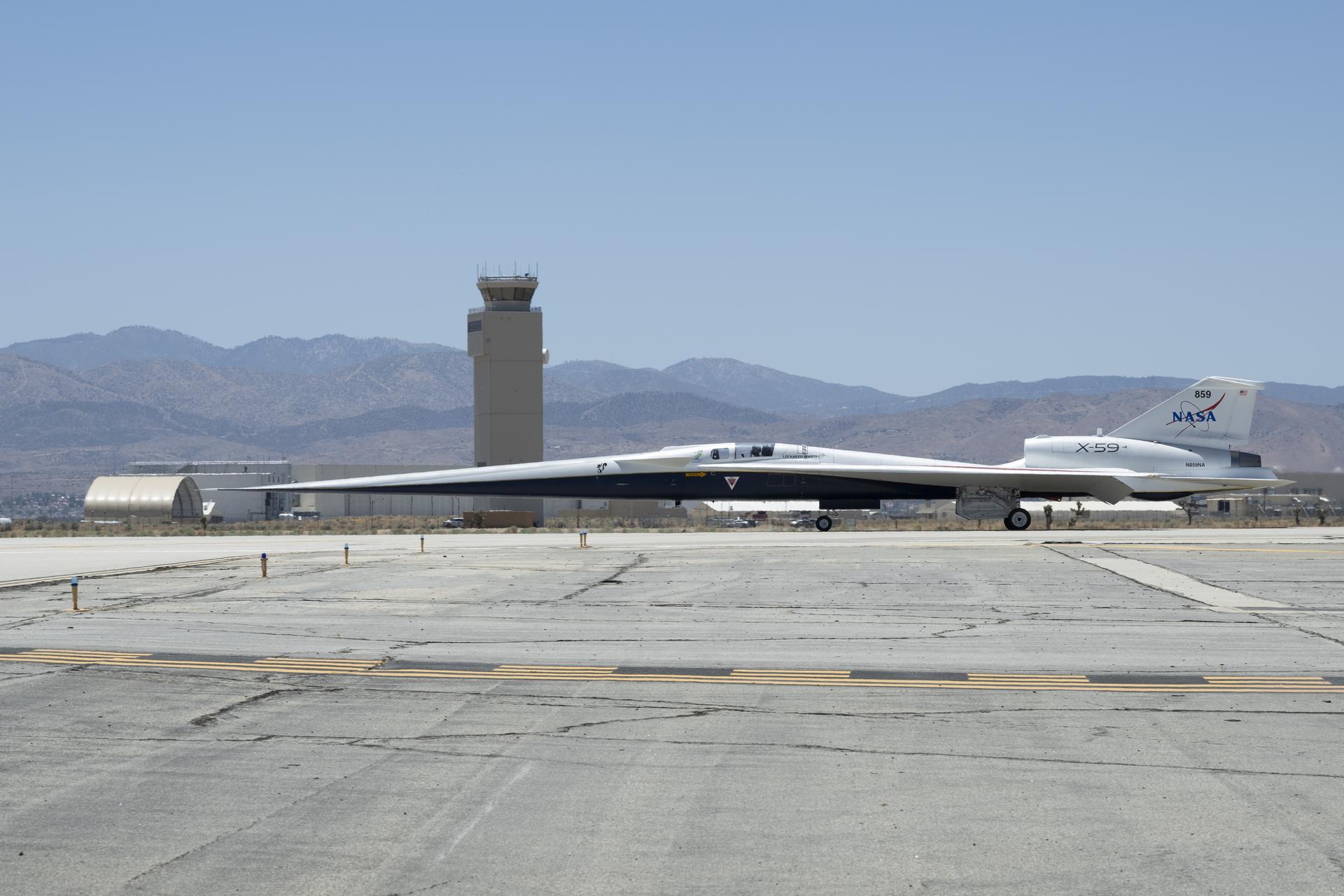
NASA’s groundbreaking X-59 demonstrator is moving closer to achieving its ambitious goal of flying at supersonic speeds with minimal noise. Recently, the aircraft underwent crucial taxi tests on runways, a fundamental step to ensure it can be safely maneuvered on the ground. While these initial tests may not be flashy, they are vital for the aircraft’s future success.
The X-59 project focuses on mitigating the notorious sonic boom, which historically restricted aircraft like the Concorde from reaching top speeds over populated areas. Current supersonic ventures, such as the potential Overture supersonic passenger jet, face similar constraints, being limited to certain timeframes for full-speed travel over land. NASA’s X-59 aims to transform the intense boom into a subdued thump, paving the way for quieter supersonic technology.
The test occurred on July 10, 2025, although NASA shared the news a week later. While the timeline for the X-59’s maiden supersonic flight remains uncertain, upcoming flights will primarily focus on ensuring the aircraft’s airworthiness before tackling more exciting challenges. The data from these tests will play a crucial role in helping international regulators establish noise standards for future commercial supersonic flights over land.
As the aviation industry eagerly watches, the success of NASA’s X-59 could revolutionize air travel, bridging the gap between speed and environmental responsibility.