Paper-Thin Biohybrid Robot Uses Living Muscle Cells to Swim Through Water
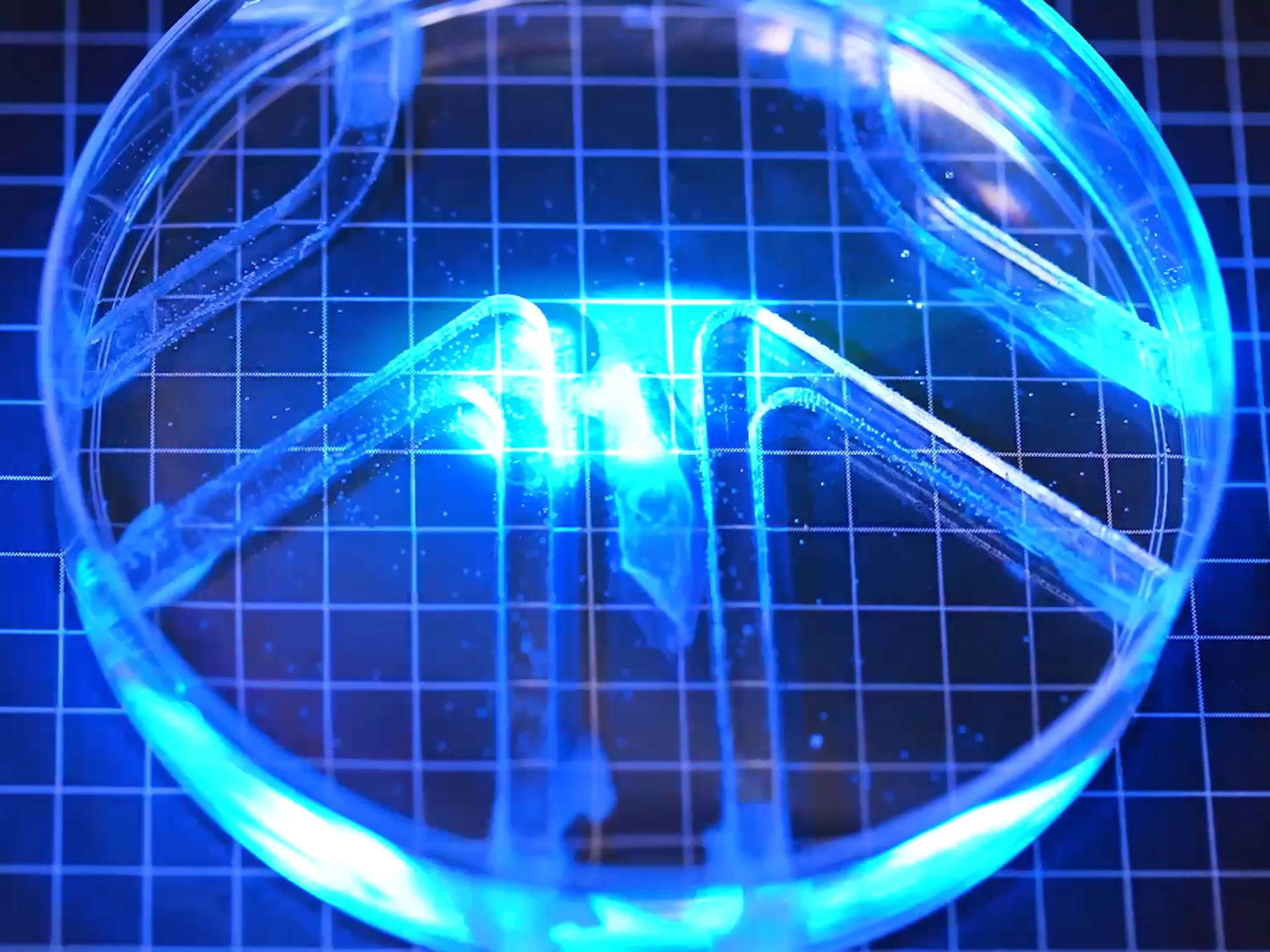
A new biohybrid robot is showing how living cells and soft materials could shape the future of tiny swimming machines. Built from a thin gel strip about the size of a stick of chewing gum, the robot moves through water using fins powered by living muscle cells.
The design is simple but impressive. The main body is made from a flexible gel layer, while both edges of the strip act as fins. Each fin contains an ultra-thin sheet of muscle cells that have been genetically engineered to react to light. When light shines on one of these muscle layers, the cells contract. When the light turns off, they relax.
By carefully flashing light on one fin or the other, researchers can control how the robot swims, turns, and changes direction. This allows the tiny machine to move through water and even navigate a small obstacle course. Instead of relying on motors, batteries, or mechanical propellers, it uses biological muscle movement to propel itself forward.
The robot is not built for speed just yet. Its maximum pace is around four body lengths per minute. For comparison, an Olympic swimmer can reach about 65 body lengths per minute. Interestingly, the robot’s slow cruising speed is closer to the relaxed movement of a large sixgill shark exploring the ocean.
For now, the project remains a proof of concept, but it highlights a major step forward in biohybrid robotics. The experiment shows that a very thin layer of living muscle cells can produce enough force to move a small robot through water.
In the future, this type of soft, light-controlled robot could have valuable real-world uses. Tiny biohybrid swimmers may one day help monitor delicate aquatic environments without disturbing wildlife. They could also be developed for medical exploration inside the human body, where soft and flexible machines may be safer than traditional robotic tools.
The breakthrough points to a future where robots are not only built from metal, plastic, and electronics, but also from living tissue. By combining biology with engineering, researchers are opening the door to a new generation of machines that move more naturally and interact more gently with their surroundings.