Shigeru Miyamoto Says the GameCube Taught Nintendo a Crucial Lesson Before the Wii and DS
Shigeru Miyamoto has reflected on one of the most important turning points in Nintendo’s history: the disappointing performance of the Nintendo GameCube and how it helped shape the company’s wildly successful next era with the Nintendo Wii and Nintendo DS.
Miyamoto, the legendary Nintendo creator associated with iconic franchises such as Super Mario, The Legend of Zelda, Donkey Kong, and Star Fox, explained that the GameCube’s struggles pushed Nintendo to rethink what a video game console should be. Rather than simply chasing more power or competing directly with Sony and Microsoft, Nintendo began asking a bigger question: how could it make gaming feel natural and welcoming to everyone?
The answer eventually became the Nintendo DS and Nintendo Wii, two systems that dramatically expanded Nintendo’s audience and changed the way millions of people interacted with games.
According to Miyamoto, Nintendo’s leadership, including former company president Satoru Iwata, looked closely at why the GameCube failed to reach a broader market. The console sold 21.7 million units worldwide before being discontinued in 2007, a noticeable drop compared with the Nintendo 64, which reached nearly 33 million lifetime sales.
While the GameCube had a strong library and remains beloved by many dedicated fans today, Miyamoto admitted that it mainly appealed to existing gamers. For people who did not already play video games, the system did not offer a clear reason to jump in.
That was a major problem for Nintendo at the time. Gaming had not yet become the everyday mainstream activity it is today. Many households still saw consoles as devices for a specific type of person rather than something the whole family could enjoy together. Miyamoto suggested that, unlike reading books or watching television, playing games was still viewed by many as a niche hobby.
The GameCube also faced intense competition from the PlayStation 2, which became one of the best-selling consoles of all time with more than 160 million units sold. One of the PlayStation 2’s biggest advantages was its built-in DVD player. At a time when DVD movies were booming, Sony’s console doubled as an entertainment device for the living room, giving it broad appeal beyond traditional gaming.
By comparison, the GameCube used Nintendo’s proprietary mini-discs and did not function as a DVD player. Its compact design, unusual disc format, and game-focused identity helped give it personality, but they also limited its appeal to mainstream consumers who wanted an all-in-one entertainment system.
Miyamoto’s takeaway was clear: Nintendo could not succeed by speaking only to people who already loved games. If the company wanted to grow, it needed to create systems that anyone could understand immediately.
That thinking led directly to the Nintendo DS and Nintendo Wii.
The Nintendo DS used a dual-screen design, touchscreen controls, and a stylus to make games feel more approachable. Players did not need to memorize complex button layouts to get started. They could tap, draw, write, and interact in ways that felt familiar. The handheld went on to sell 154.02 million units worldwide, becoming one of the most successful gaming devices ever released.
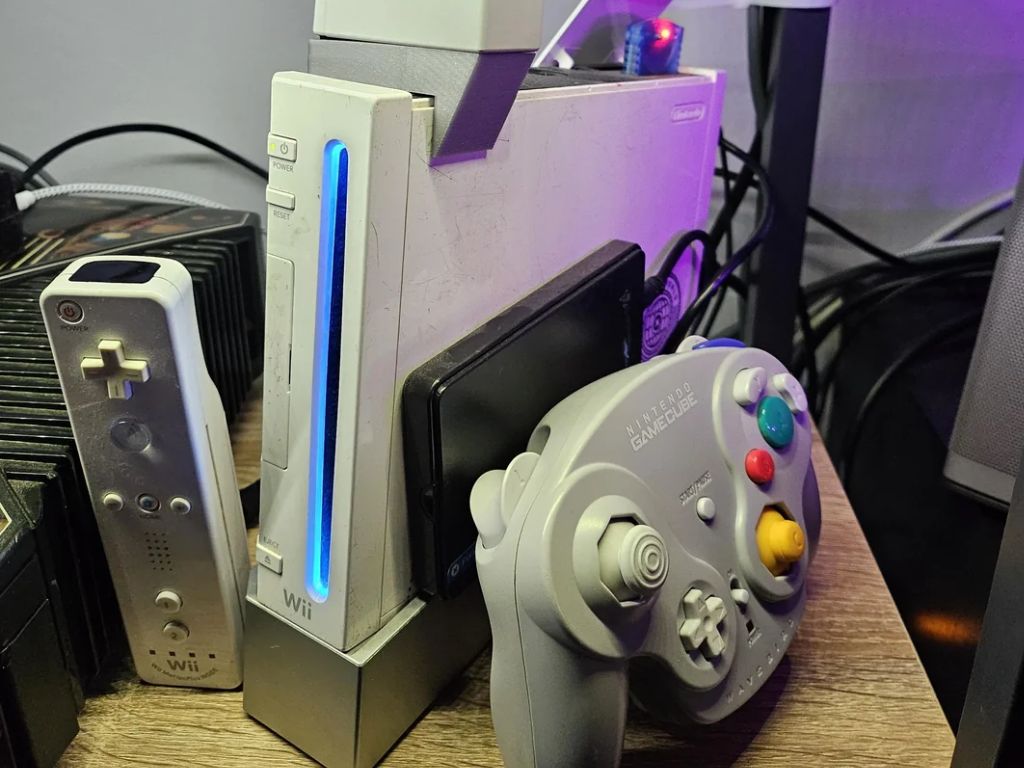
The Nintendo Wii took a similar philosophy into the living room. Instead of focusing on high-end graphics or traditional controller complexity, it introduced motion controls through the Wii Remote. With games like Wii Sports, players could swing, bowl, box, and play tennis using simple physical movements.
This strategy opened the door to people who had never considered buying a game console before. Families played together. Older adults joined in. Women, casual players, and social groups became a major part of the Wii audience. The console even found its way into retirement homes and community centers, where motion-based games became a fun way to encourage activity and social interaction.
The result was massive success. The Nintendo Wii sold 101.63 million units worldwide and became one of the most recognizable consoles in gaming history.
Miyamoto also reflected on how home consoles were once seen as less serious than computers. Computers were often treated as useful tools for work, education, and productivity, while consoles were viewed mainly as toys. The Wii and DS helped change that perception by proving that interactive entertainment could be simple, social, creative, and accessible to nearly anyone.
In many ways, the GameCube’s commercial disappointment became the foundation for Nintendo’s next breakthrough. It showed the company that strong games alone were not always enough. To reach a larger audience, Nintendo needed to rethink the entire experience, from the controller to the marketing to the way people understood gaming itself.
The GameCube may not have matched the sales of its competitors, but its legacy is more important than its numbers suggest. Its shortcomings helped Nintendo identify what was missing from the market: an easy entry point for people who did not think of themselves as gamers.
That realization changed everything. The DS and Wii did not just sell well; they helped redefine gaming for a broader generation. And according to Miyamoto’s reflections, that shift began with Nintendo learning from the GameCube’s failure to connect with the mainstream.