Microsoft 365 outage disrupts rail operations in Germany and affects operators abroad
A Microsoft 365 outage has caused disruption for rail operators in Germany and other countries, highlighting how heavily modern transport networks rely on cloud-based communication tools such as Outlook and Exchange Online.
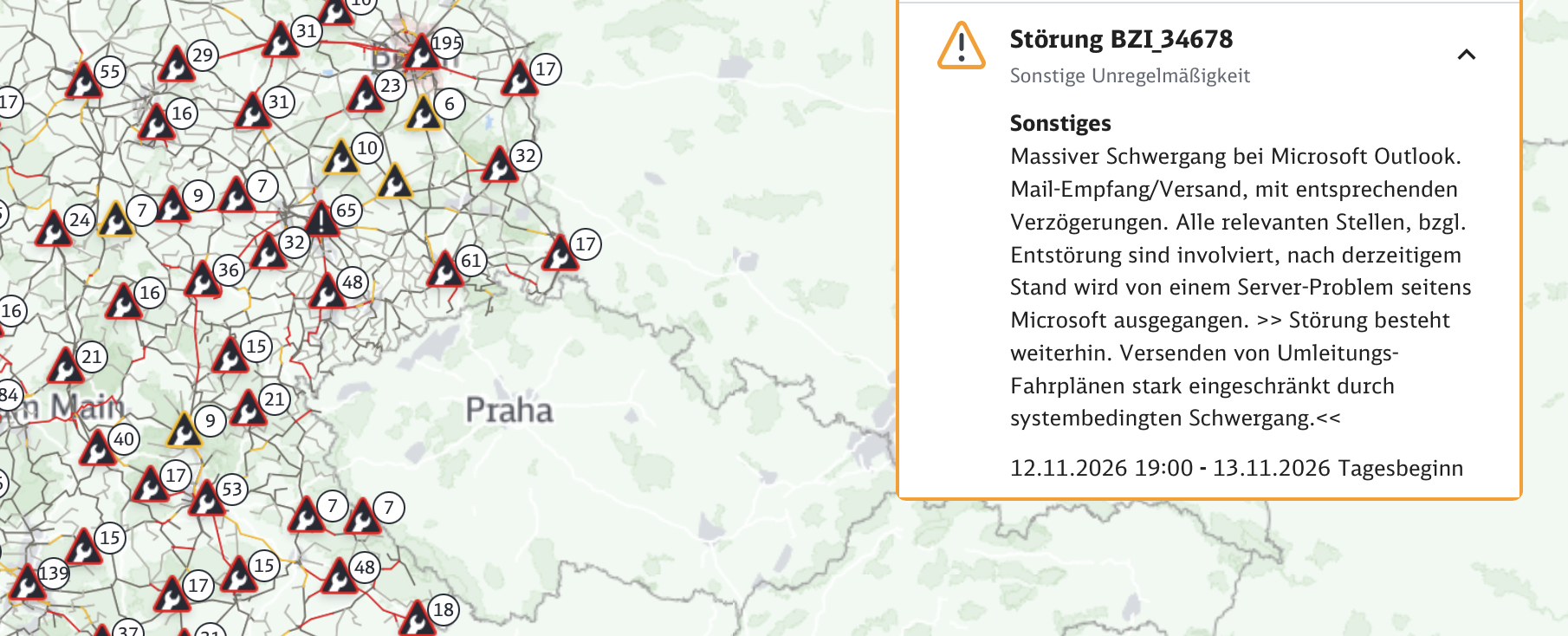
Germany’s national rail operator, Deutsche Bahn, reported a significant operational issue under incident number BZI_34678, stating that Microsoft Outlook was “running extremely slowly.” The company said it suspected problems with Microsoft’s server infrastructure, which made it difficult to send timetables for diverted train services.
The timing of the disruption is especially challenging for Deutsche Bahn because large sections of the German rail network are already affected by construction work. When routes are changed or trains need to be diverted, updated schedules and operational instructions often have to be distributed quickly. Slow or unreliable email access can therefore create serious complications behind the scenes, even if passengers do not immediately see the cause.
According to the incident notice, the disruption began at around 7 p.m. on November 12 and was expected to continue into the start of the following day. An update was reportedly issued shortly before midnight.
The immediate impact on passengers remains unclear. Much of the overnight rail traffic in Germany consists of freight trains, but passenger services typically begin increasing again in the early morning hours, around 4 a.m. to 5 a.m. local time. If communication problems continue into the morning peak, the outage could make it harder for operators to coordinate diversions, delays, and service changes.
The disruption appears to be connected to a wider Microsoft service degradation affecting Microsoft 365 business and enterprise users, as well as some consumer services. Microsoft’s Exchange Online service is among the most affected platforms, with users potentially unable to access mailboxes through Outlook on the web or the Outlook desktop app.
The outage is not limited to email. Windows 365 Cloud PCs are also listed among the affected services, meaning some users may experience problems accessing entire cloud-based workstations. For organizations that depend on Microsoft’s cloud ecosystem for daily operations, this can create a much broader productivity issue than a simple email delay.
Reports of rail-related problems have also surfaced outside Germany. In Australia, a rail operator was reportedly unable to send emails and was having trouble dispatching trains onto its network. In Canada, Via Rail said its train operations were not affected, but customer communications were disrupted, including delay notifications.
Microsoft has been working to restore services, but recovery appears to be uneven. Some servers that were brought back online reportedly froze again, leaving parts of the Microsoft 365 platform with limited availability.
The incident shows how a cloud service outage can quickly spread beyond office environments and affect critical infrastructure, including rail transport. While train signaling and safety systems are usually separated from standard business email platforms, communication tools remain essential for scheduling, dispatch coordination, service alerts, and passenger information.
For rail passengers in Germany and other affected regions, the most important advice is to check train status updates before traveling and allow extra time where possible. Even if core rail operations continue, delays in internal communication can slow down responses to route changes, diversions, and disruption notices.
The outage also raises broader questions for transport operators, government agencies, and large companies that depend on centralized cloud services. When platforms like Microsoft 365 experience widespread failures, the effects can reach far beyond inboxes, disrupting logistics, customer service, and real-time operational planning.