LG Display is embarking on a bold journey to reshape its future, committing an additional $1 billion towards its OLED module factory in Haiphong, Vietnam over the next five years. This ambitious move is a significant part of its pivot from the fading LCD technology to the more promising OLED landscape.
The investment will augment the total funding in the Haiphong factory, raising it from $4.65 billion to $5.65 billion by 2028. This capital infusion aims to maintain the stability of existing production lines, support new product launches for customers, and fulfill maintenance needs.
This strategic direction underscores a focused commitment to OLED technology. Although LG Display describes this as routine financial support, industry insiders believe the investment is poised to fast-track the company’s transformation into an OLED-centric operation.
This shift is crucial as the LCD market continues to be squeezed by fierce competition, particularly from Chinese manufacturers. In an effort to reposition itself, LG Display has closed its Paju LCD television panel factory and is divesting its Guangzhou-based large-size LCD panel facility.
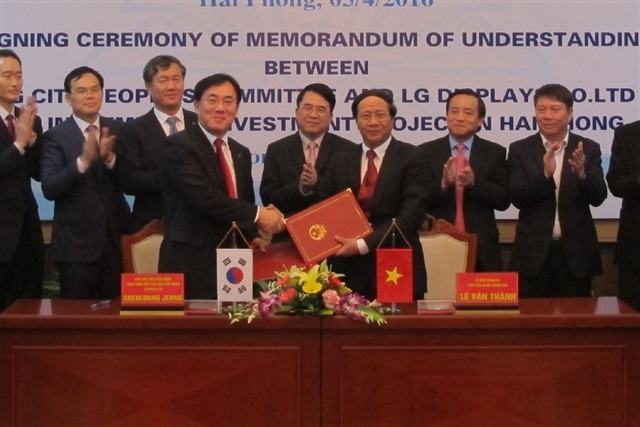
Vietnam has been an integral part of LG Display’s strategy since 2016, when it laid the groundwork for its OLED module production in Haiphong. The company has progressively bolstered its presence in the region, including a notable $1.4 billion injection in 2021, solidifying Haiphong’s role as a vital production hub.
On the home front in South Korea, LG Display’s investment in OLED technology is also noteworthy. A substantial $2.15 billion was dedicated in 2019 to advance its 10.5-generation OLED production capabilities in Paju, enhancing its competitive edge in the large-scale television market.
The push towards OLED is well-timed, aligning with soaring demand, especially as tech giant Apple is expected to integrate OLED panels into its iPad Pro lineup in May 2024. According to market research firm Omdia, OLED shipments for IT applications are poised for explosive growth, leaping from 9.5 million units in 2022 to an anticipated 72.3 million units by 2028.
In tandem with LG Display’s efforts, Samsung Display is also making significant strides in Vietnam, with plans to funnel up to $1.8 billion into its Bac Ninh operations. This expansion is part of a broader vision to position its Vietnam base as the world’s leading display module production center, underscoring the region’s increasing importance for Korean display manufacturers.
Together, these strategic advancements highlight the burgeoning role of Vietnam as a pivotal player in the global display manufacturing landscape, driven by the ambitious pursuits of industry leaders like LG Display and Samsung Display.


