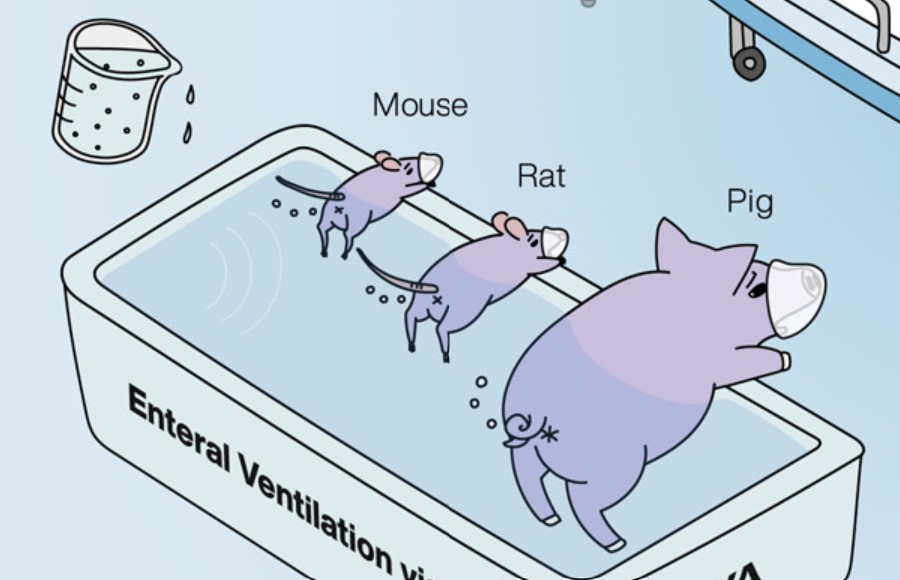
A team of Japanese researchers at the Tokyo Medical and Dental Institute has been awarded the Ig Nobel Prize for their unconventional yet groundbreaking discovery: using oxygenated fluids to ventilate animals through the intestines can maintain blood oxygenation, even when the lungs fail. This could signify a potential breakthrough in life-saving medical techniques.
The unusual idea revolves around flooding the intestines of animals with oxygenated perfluorodecalin fluid, effectively providing what is known as “anal ventilation.” Despite the method’s peculiar nature, the concept isn’t entirely new. Back in 1966, other scientists demonstrated that mice could survive being submerged in oxygenated perfluorodecalin. This fluid allows oxygen to permeate across the alveoli into the bloodstream, a function few liquids possess.
Breathing difficulties can arise from numerous health issues, ranging from asthma and fire-related lung damage to drowning. These issues prevent oxygen from entering the bloodstream, and a mere few minutes of oxygen deprivation can lead to fatal consequences. Typically, oxygen enters the bloodstream through the lungs’ alveoli, but severe respiratory issues can impede this natural process.
Interestingly, since the intestines are usually accustomed to liquid exposure, injecting oxygenated perfluorodecalin into this part of the body may cause less tissue damage compared to the lungs. The researchers experimented with oxygen-deprived mice and pigs, finding that although minimal amounts of perfluorodecalin entered the bloodstream, a significant amount of oxygen was transferred into the bloodstream. In their animal studies, this method managed to keep the subjects alive for up to a day, offering a glimpse into potentially revolutionary medical applications.
This research holds promise for new ways to deliver oxygen to patients suffering from severe respiratory problems. Although more research is necessary before testing on humans, the potential applications could be life-saving, especially for individuals affected by conditions like Covid-19.
The recognition of this imaginative but scientifically sound concept underscores the innovative spirit that continues to drive medical advancements. As we look forward to further studies, this discovery could pave the way for alternative treatments that could save lives in critical situations.