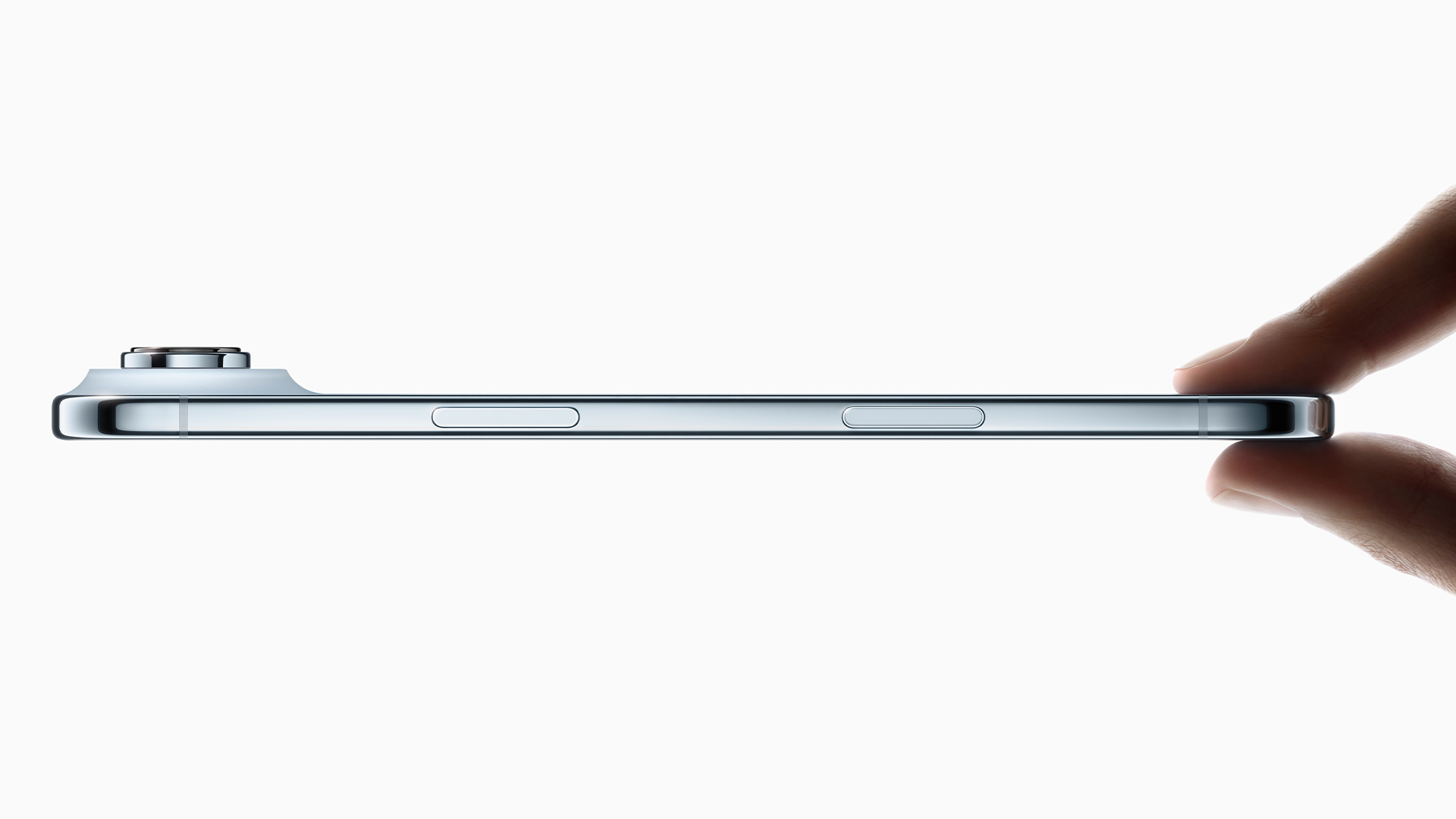
iPhone Air sells out in China within hours, proving ultra-thin phones can still win big—especially with an Apple logo. Despite trade-offs that come with compressing a device’s thickness, Apple’s latest slim flagship has ignited demand across the country, with all major online stores running out of stock shortly after pre-orders opened.
Momentum was helped by a high-profile visit from Apple CEO Tim Cook, who traveled to China this week to champion the product in the world’s largest smartphone market amid ongoing geopolitical tensions. According to South China Morning Post, the launch-day response was immediate: the iPhone Air sold out near-instantly on Friday, and online delivery estimates quickly slipped by one to two weeks.
Part of the delay stems from regulatory timing. The iPhone Air’s eSIM variant could not go on sale in China until it received local approval, which arrived more than a month after the device launched in other regions. Once the green light was given, crowds formed at Apple Stores across Beijing, Shanghai, and Tianjin, with buyers eager to secure the device in person while online stock evaporated.
This early surge also underscores Apple’s renewed push to chip away at the market share of local powerhouses like Xiaomi and Huawei. Whether demand keeps its pace is the next big question, especially with Huawei gearing up to launch the Mate 80 series next month. A high-profile rival release could siphon attention if Apple can’t maintain momentum through the crucial first few months.
What’s helping Apple’s case is that the broader iPhone 17 family is already building strong traction in China. The base model, now featuring a ProMotion display—a feature long reserved for higher tiers—was a headline-grabber and reportedly helped crash Apple’s China website amid overwhelming traffic during pre-orders. One major online retailer logged around 5 million reservations, and JD.com accounted for roughly 3.7 million of those alone. It’s a sharp contrast to earlier this year, when Apple leaned on substantial discounts to spur iPhone 16 sales. This time around, the iPhone 17 lineup and the iPhone Air appear to be selling themselves.
The contrast is even starker when set against the Android flagship landscape. Reports suggest the Galaxy S26 Edge has been canceled following tepid performance of the Galaxy S25 Edge, underscoring how difficult it remains to match Apple’s mindshare in China’s premium segment. While pricing, software longevity, camera prowess, and ecosystem lock-in all influence buying decisions, Apple’s brand leverage and consistency at the high end continue to pay off in the region.
Why is the iPhone Air resonating so strongly in China right now?
– Slim design without losing the “flagship” feel: Apple’s precision engineering sells the ultra-thin story credibly, even if it comes with compromises.
– A long-awaited eSIM green light: Delayed approval created a pent-up demand effect once sales began.
– Ecosystem advantage: Seamless ties across iPhone, Mac, iPad, and services keep high-value users in the fold.
– ProMotion trickle-down: Bringing high refresh rates to the base iPhone 17 model helps lift the entire lineup’s appeal.
– Scarcity signaling: Quick sellouts and delivery delays amplify desirability and social proof.
– Strong retail presence and marketing: Store lines in major cities deliver powerful visibility at launch.
The real test will come over the next few weeks. If Apple can accelerate shipments, sustain buzz through word-of-mouth, and weather the Mate 80 arrival, the iPhone Air could cement itself as the year’s breakout premium phone in China. If not, early heat could cool as buyers consider local alternatives with competitive specs and aggressive pricing.
What’s your take? Is the iPhone Air selling out because of its design and ecosystem, or is it more about timing, scarcity, and a broader iPhone 17 halo effect? Share your thoughts on why Apple’s slim flagship is soaring while some rivals struggle to get off the ground.
Source: South China Morning Post


