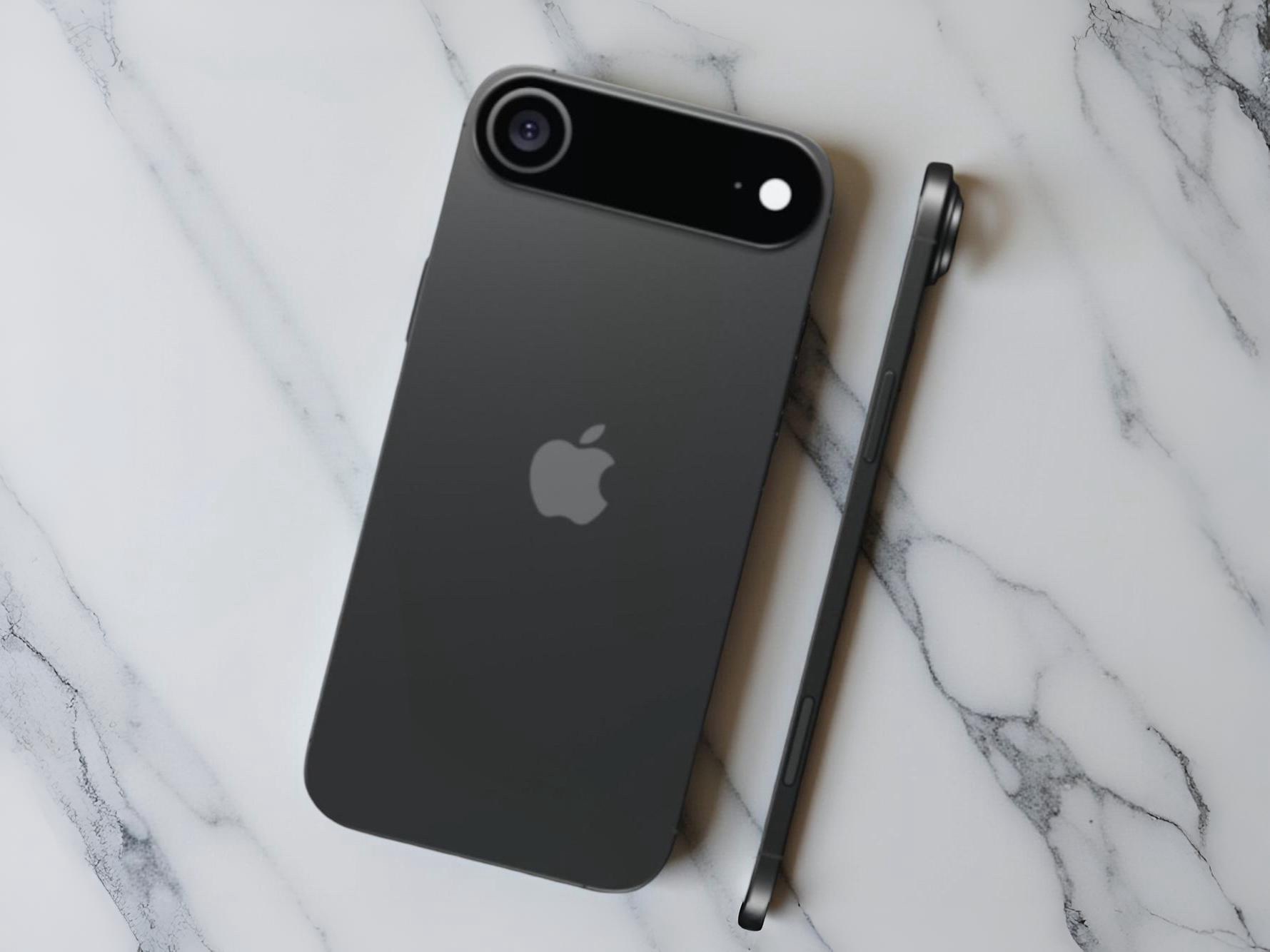
If the latest leaks are accurate, Apple is gearing up to unveil the iPhone 17 Air on September 9, 2025, and it could seize the title of thinnest premium smartphone. The device is tipped to measure just 5.5 millimeters in depth, undercutting the reportedly 5.8mm Samsung Galaxy S25 Edge.
A post on X from leaker @Jukanlosreve outlines a snapshot of how these two ultra-slim flagships stack up. On paper, the iPhone 17 Air trades absolute compactness for sheer thinness and low weight, while the Galaxy S25 Edge looks set to be the smaller-feeling phone in everyday use despite being a touch thicker.
Key rumored differences:
– Thickness: iPhone 17 Air at 5.5mm vs Galaxy S25 Edge at 5.8mm
– Weight: 145g for iPhone 17 Air vs 163g for Galaxy S25 Edge
– Battery: ~2,800mAh (iPhone 17 Air) vs 3,900mAh (Galaxy S25 Edge)
– Height: 163mm (iPhone 17 Air) vs 158.2mm (Galaxy S25 Edge)
– Width: 77.6mm (iPhone 17 Air) vs 75.6mm (Galaxy S25 Edge)
– Display size: 6.6 inches (iPhone 17 Air) vs 6.7 inches (Galaxy S25 Edge)
– Resolution: 2,740 x 1,260 (iPhone 17 Air) vs 3,120 x 1,440 (Galaxy S25 Edge)
– Refresh rate: Both reportedly support 120Hz
– RAM: 8GB (iPhone 17 Air) vs 12GB (Galaxy S25 Edge)
– Storage: iPhone 17 Air rumored to start at 128GB, with 256GB and 512GB options; the Galaxy S25 Edge is said to offer similar tiers
– Price: iPhone 17 Air tipped to start at around 1.4 million KRW (about $1,010). The Galaxy S25 Edge launched at a similarly premium price but now sees regular discounts at retailers
What this means for buyers:
– The iPhone 17 Air is shaping up to be an engineering showcase for ultra-thin, ultra-light design. Its svelte 5.5mm profile and 145g weight could make it one of the most comfortable large-screen phones to hold. The trade-off may be endurance, given the much smaller battery and 8GB RAM compared to its rival.
– The Galaxy S25 Edge, while marginally thicker, could feel more compact thanks to its shorter and narrower footprint. It also looks poised to deliver stronger battery life and a sharper display at 1440p, backed by more RAM for heavier multitasking.
Both phones are expected to offer smooth 120Hz displays, but they’re taking different routes to appeal to power users. One prioritizes featherweight design and thinness; the other leans into performance headroom and display sharpness.
As always, treat these details as preliminary. The specs come from leaks, including slides attributed to a Korean carrier, and final features could shift by launch day. If the rumored date holds, we won’t have long to see which brand nails the balance between breathtaking thinness and real-world practicality.


