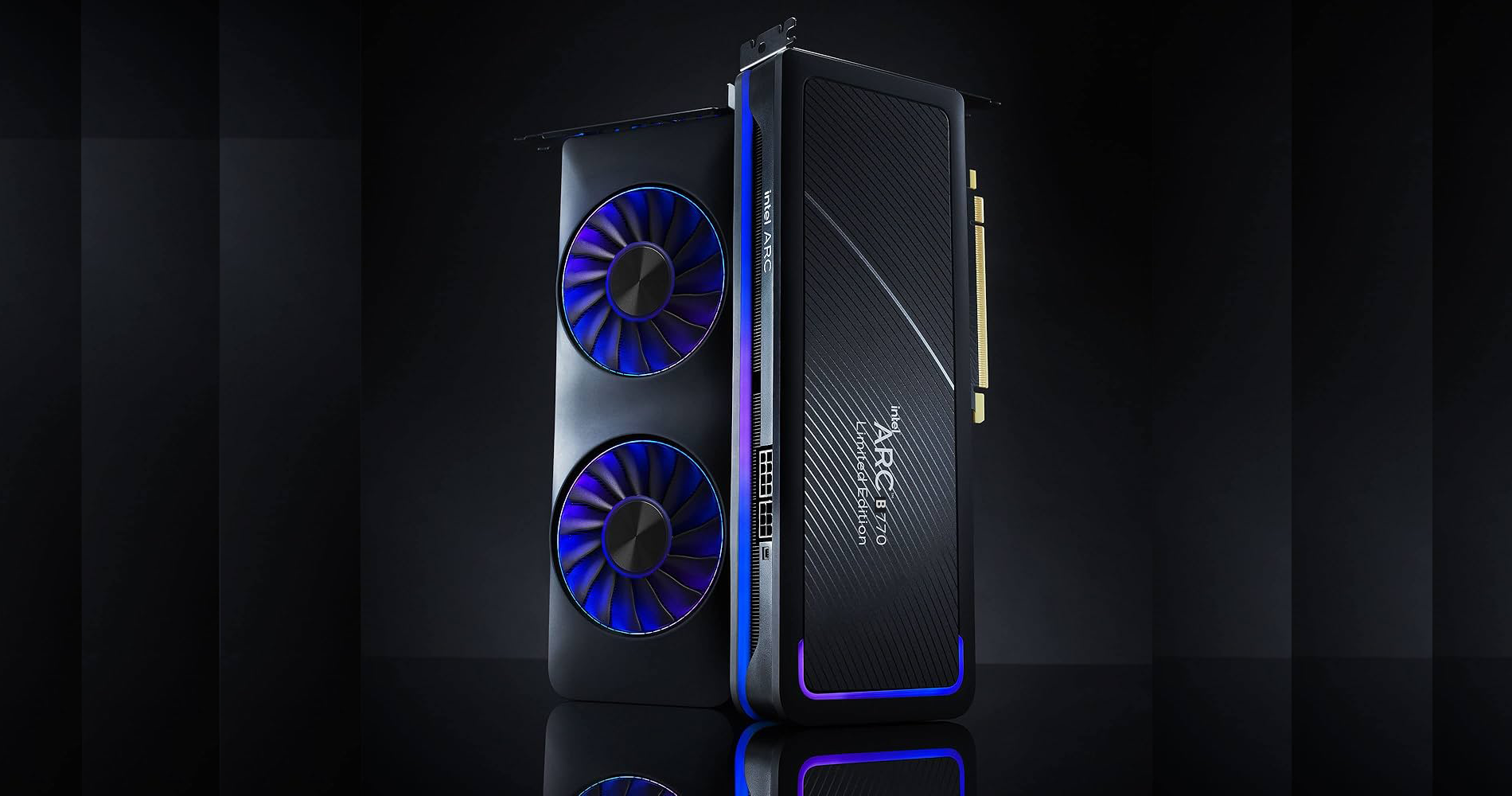
Intel’s Arc B770 has become one of the most talked-about graphics cards that still hasn’t actually shown up on store shelves. Leak after leak has pointed to its existence, yet Intel continues to keep its plans quiet. Even during major industry moments like CES, the company didn’t offer any clear mention of the Arc B770, and questions about it have largely been met with silence. For many PC gamers watching the GPU market, it’s starting to feel like Intel is either hesitant to commit—or simply not ready to reveal what’s next.
Adding fresh fuel to the speculation, a recently spotted Intel GPU firmware package included a reference to “BMG-G31.” The mention was found inside the firmware folder of an Intel driver package, suggesting early or preliminary software support for a consumer graphics card based on the BMG-G31 silicon. This isn’t the first time BMG-G31 has surfaced in Intel-related software either, as the chip has also been referenced in Intel’s profiling tools, which typically appears only when hardware support is being prepared behind the scenes.
Intel has also briefly acknowledged BMG-G31 in the past through official social media messaging, only to walk it back later. That pattern—hints followed by retractions—has only added to the mystery around where the Arc B770 fits into Intel’s roadmap, and whether the company intends to launch it broadly at retail.
Based on earlier leaks, BMG-G31 is expected to appear in both consumer and professional graphics cards. That keeps the door open for a true Arc B770 release, and potentially other variants as well. The issue is that Intel still hasn’t publicly confirmed the product—or provided any timeline for when gamers might actually be able to buy a BMG-G31-based Arc GPU.
This matters because Intel’s current Battlemage lineup on the consumer side remains limited. It has been about a year since the first Battlemage discrete GPUs launched, yet there are only two consumer models available. While the Arc B580 and Arc B570 offer options for certain buyers, they don’t fully cover the highly competitive mid-range GPU segment where many gamers shop for the best balance of performance and price.
That’s exactly why the Arc B770 is generating so much attention. If it arrives as expected with a more powerful chip and a larger 16GB VRAM configuration, it could become a compelling mid-range graphics card for modern gaming—especially for players who want smoother performance at higher settings, better longevity for new releases, and more headroom for demanding textures and workloads.
For now, the BMG-G31 firmware appearance is one more strong sign that something is in development. The big unanswered question remains the same: when, or if, Intel will finally bring the Arc B770 to market.