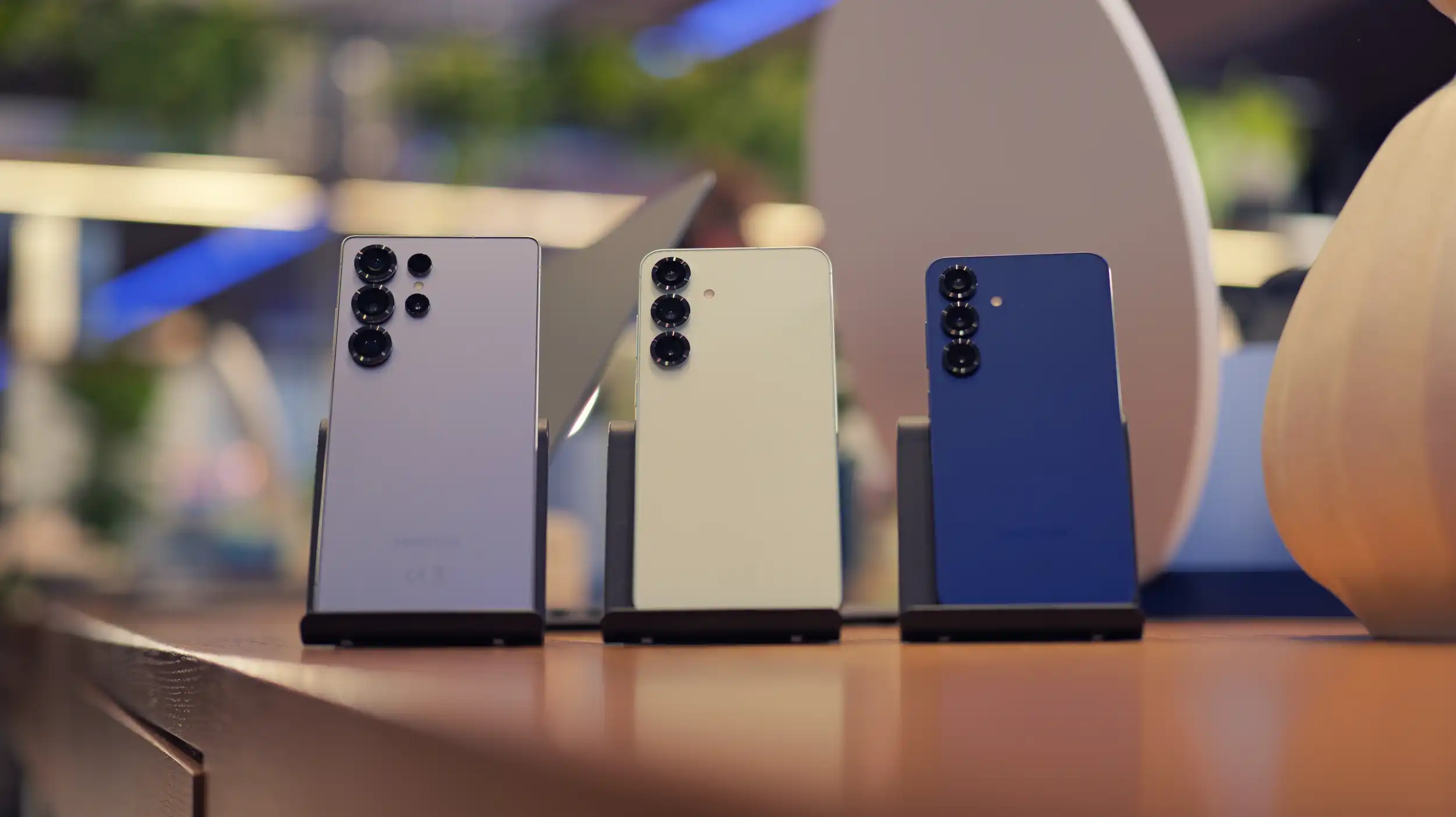
Samsung has a reputation for playing it safe with new features, often waiting until a technology feels fully proven before rolling it out broadly. But signs are starting to point to a more aggressive approach for the upcoming Galaxy S26 lineup—especially when it comes to charging, an area where many fans have been asking for meaningful upgrades.
New strings spotted inside Samsung’s One UI 8.5 firmware point to a new label: “super fast wireless charging.” That wording matters, because Samsung’s current One UI 8.0 typically splits wireless charging into simple tiers. A basic 5W to 10W charger is labeled “wireless charging,” while 15W is typically branded as “fast wireless charging.” Introducing a “super fast” tier strongly suggests Samsung is preparing to officially recognize faster wireless charging speeds on future Galaxy phones.
This lines up neatly with recent Galaxy S26 rumors. The expectation is that the Galaxy S26 and Galaxy S26+ could support wireless charging up to 20W, while the Galaxy S26 Ultra may push wireless charging as high as 25W. If accurate, that would be a real, noticeable improvement over the current 15W ceiling many users associate with Samsung’s wireless charging experience—and it would also help Samsung keep pace in a market where charging speed has become a major selling point.
On the wired side, leaks have also been painting a clearer picture of what to expect from the Galaxy S26 series battery and charging specs.
For the Galaxy S26 Ultra, a widely followed leaker continues to insist the phone will ship with a 5,000mAh battery and support up to 60W wired fast charging. That combination would be especially welcome if Samsung can deliver better real-world charging times without sacrificing long-term battery health.
The Galaxy S26+ is rumored to receive a battery bump as well, moving up to around 4,900mAh, along with 45W wired fast charging support.
Meanwhile, the base Galaxy S26 is said to be getting a 4,300mAh battery paired with 25W wired fast charging. That would be a notable step up in battery size compared to the 4,000mAh figure associated with the base Galaxy S25, though the wired charging speed on the entry model would remain more conservative than what many rivals now offer.
Even with these changes, Samsung still appears relatively restrained in the battery capacity race. While some Chinese smartphone brands are experimenting with dramatically larger batteries—figures that are starting to sound almost unbelievable—Samsung seems committed to more incremental increases. For users hoping for massive capacity leaps, that may feel underwhelming. But for those prioritizing slimmer design, predictable thermals, and steady longevity, Samsung’s approach may be exactly what it intends: meaningful upgrades, without going to extremes.
If the “super fast wireless charging” label is truly a sign of what’s coming, the Galaxy S26 lineup could finally deliver the kind of charging improvements Samsung fans have been waiting for—especially on the wireless side, where progress has felt particularly slow for years.