The quest for ultimate performance in portable computing can often lead to sacrifices in power when compared to their desktop brethren. This holds true especially in the case of gaming laptops, which have to strike a balance between size, cooling, battery life, and portability with the hardware capabilities. Even high-end laptop components like the Nvidia RTX 4090 tend to underperform compared to their desktop equivalents — as benchmarking scores show a 39% lower performance for the laptop version, with desktop GPU variants sometimes delivering over double the gaming performance.
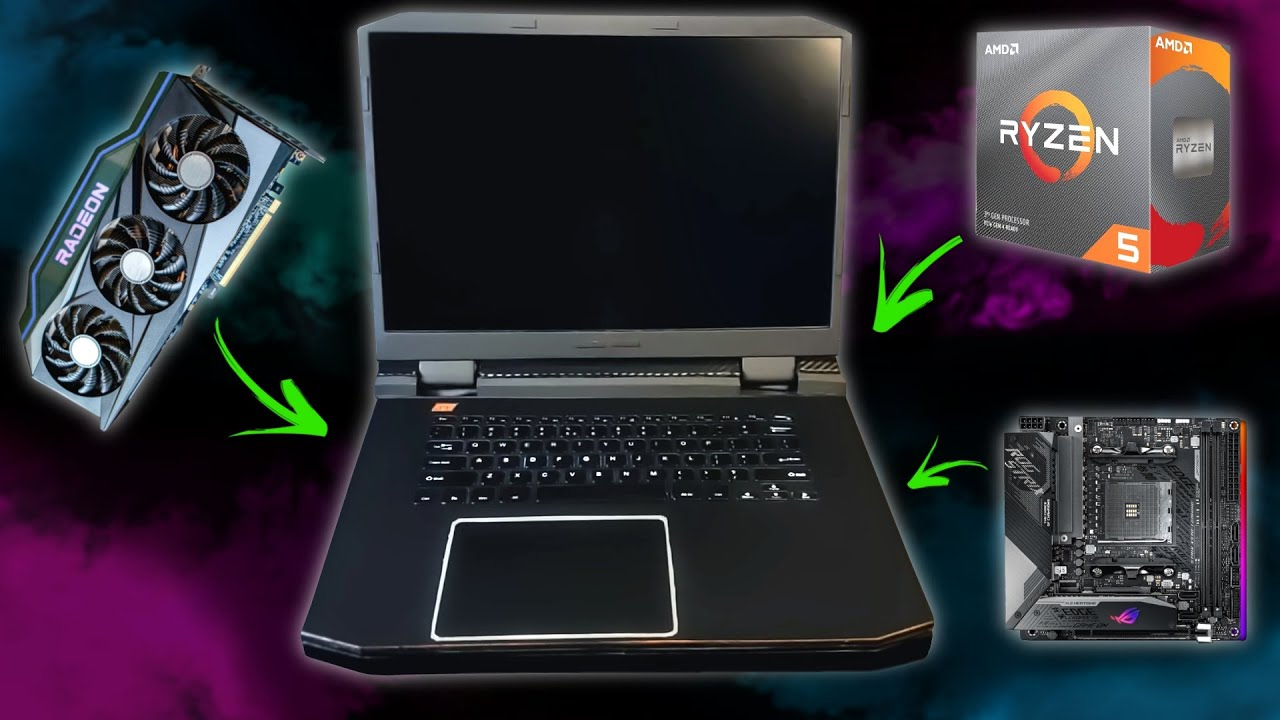
Dissatisfied with such compromises in gaming laptops, a creative YouTuber known by the moniker Socket Science embarked on an ambitious journey to fuse the power of desktop gaming into a laptop’s form. After a meticulous process of 14 months, this endeavor resulted in a truly unique, custom-built gaming laptop paralleling the prowess of powerful rigs like the 2024 Asus ROG Zephyrus G16.
For this project, the YouTuber handpicked robust desktop components, using an AMD Ryzen 5 5600X CPU along with a desktop-grade Radeon RX 6600 GPU. These were installed on an ITX motherboard complemented with low-profile RAM sticks and powered by a compact PSU. Crafting a unique housing for these components, Socket Science employed 3D printing to produce a tailor-made case, which was then equipped with a sleek keyboard, a portable gaming monitor, and a touchpad to mimic a traditional laptop layout.
One of the fundamental challenges in this DIY masterpiece was addressing the issue of heat dissipation, a common limitation that prevents desktop parts from being used in laptops. Innovatively, a system of heat pipes was created to lead heat away from the CPU and GPU efficiently. This setup was complemented by a combination of active cooling via fans and passive cooling through heat sinks.
The final creation, however, does not incorporate a battery, primarily due to the significant power demands of desktop components which would render any battery-equipped solution impractical regarding runtime. Thus, the result is akin to a highly portable desktop that assumes the guise of a laptop.
For more insights and a deeper dive into this impressive custom build, viewers are encouraged to check out Socket Science’s video for details and inspiration. This tale is indicative of modern tech enthusiasts’ drive to push the boundaries of conventional computing, blending the best of performance and portability in innovative ways.