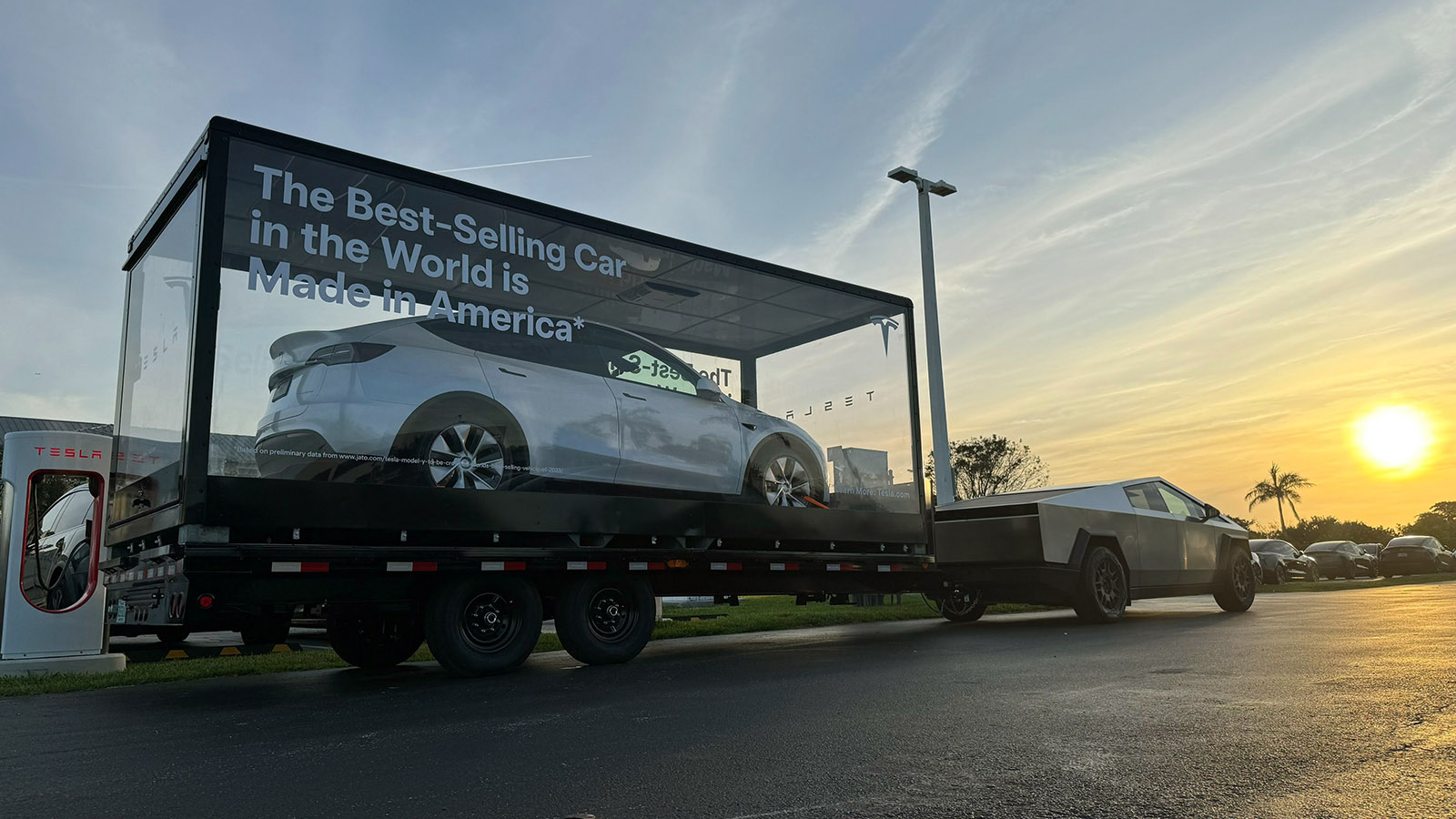
Tesla, renowned for its innovation in the electric vehicle market, is once again making waves by showcasing two of its most American vehicles in a stunning fashion. The company has strategically coupled the highly anticipated Cybertruck with the Model Y, emphasizing their significant American-made components and assembly—an aspect often overlooked in the EV conversation.
The Cybertruck, Tesla’s futuristic electric pickup truck, alongside the Model Y, a compact electric SUV leading in sales, boast impressive credentials when it comes to their American roots. According to lead Cybertruck engineer Wes Morrill, the Cybertruck is composed of around 65% US or Canadian parts, with an additional 25% sourced from Mexico. The Model Y claims a similar heritage, with 70% of its parts from the US or Canada and 20% from Mexico.
It’s not just about parts, however; the assembly of these electric vehicles also contributes to their Americanness. Both models are assembled in Texas, which, apart from strengthening their national identity, makes them eligible for federal tax credits—further enhancing their appeal to American consumers.
This emphasis on domestic production could be a strategic move on Tesla’s part to address misconceptions about the origin of electric vehicles. High-profile figures have mistakenly suggested that EVs are predominantly made abroad, specifically in China. Tesla counters this narrative by demonstrating that its Model Y and Cybertruck are, in fact, more American in terms of both parts and assembly than traditional internal combustion engine trucks.
In a visually captivating advertisement, Tesla has hitched a Model Y inside a transparent trailer to a Cybertruck, with bold lettering proclaiming that the “best-selling car in the world is Made in America.” This is a nod to the Model Y’s success in outselling even the most popular Toyota models.
Moreover, the introduction of pull-through trailer Supercharger locations is set to enhance the EV road-tripping experience. Tesla has recognized the challenge faced by drivers when towing: having to navigate traditional Superchargers can be cumbersome with a trailer in tow. By displaying the presence of trailer-friendly charging stalls directly on vehicle UIs, Tesla is streamlining the process for travelers. These pull-through stations are being integrated into new Supercharger locations, including the advanced V4 Supercharger stations, ensuring that the electric road trip is as convenient as it is eco-conscious.
In summary, Tesla continues to push forward with its commitment to American manufacturing, while simultaneously improving infrastructure to support the growing number of Tesla vehicles—and trailers—on the road. With their roots firmly planted in American soil, Tesla’s Cybertruck and Model Y are setting the standard for electric vehicles, not just in innovation but in celebrating national production and ease of use.