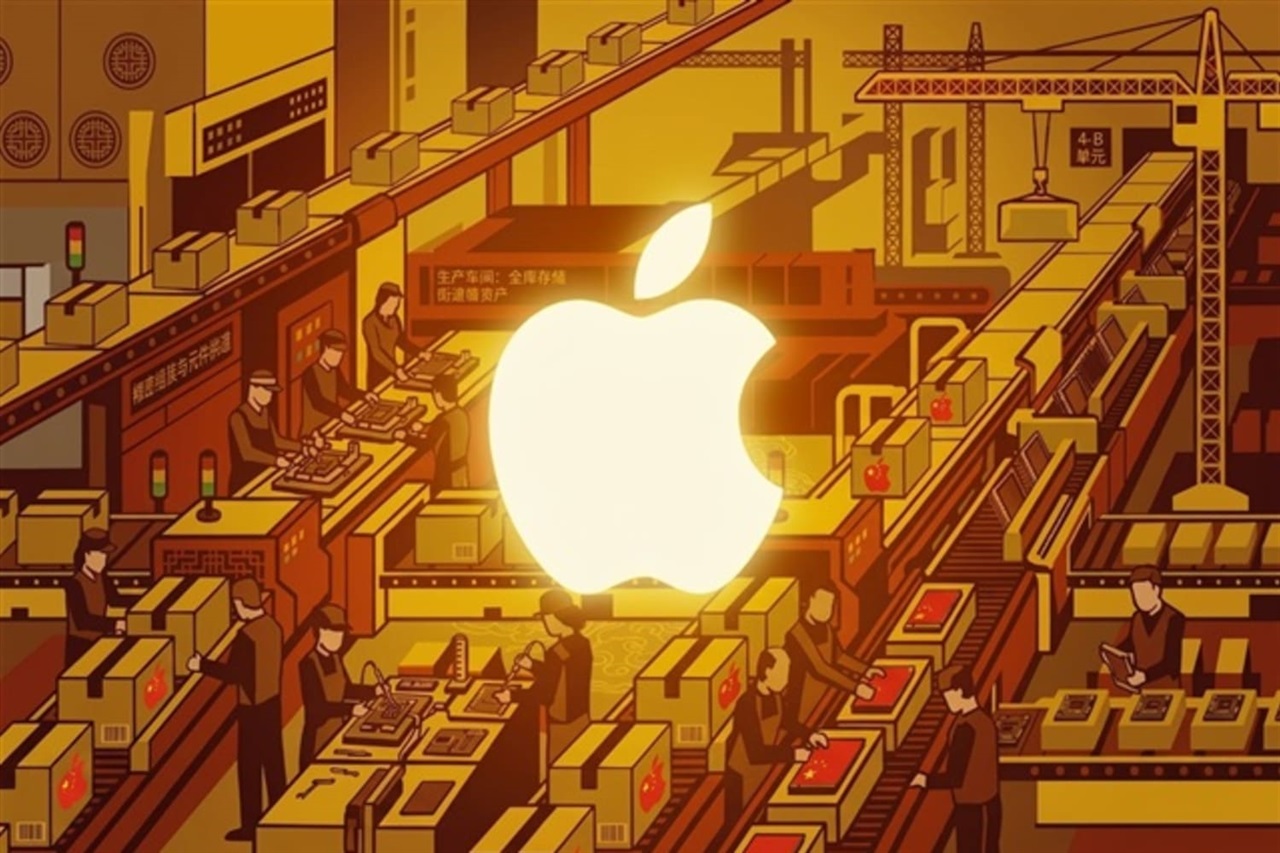
Tim Cook’s most important legacy at Apple may not be found in a quarterly earnings chart or a product launch keynote. It is drawn across a map.
When John Ternus steps into the spotlight on September 1, he inherits a company that is still one of the most powerful forces in consumer technology. But he also inherits Apple’s most complicated challenge: a manufacturing empire built around China and a supply chain that must now survive a more uncertain world.
Cook spent nearly three decades shaping Apple into a global production powerhouse. Long before he became CEO, he was the operations expert who understood how to turn ambitious product ideas into millions of devices shipped on time, at scale, and with remarkable consistency. His biggest achievement was not just making Apple efficient. It was building a manufacturing system so deep, fast, and disciplined that it became almost impossible for rivals to copy.
At the center of that system was China.
For years, China gave Apple exactly what it needed: vast factory capacity, skilled labor, experienced suppliers, advanced logistics, and the ability to scale production at a speed few other countries could match. The iPhone, iPad, Mac, Apple Watch, and AirPods all benefited from this tightly connected ecosystem. Apple did not simply assemble products in China; it helped shape an entire industrial network around its needs.
That decision helped create one of the most profitable companies in history. It allowed Apple to launch premium devices worldwide, meet enormous demand, and maintain strict control over quality. Cook’s supply chain strategy became a quiet engine behind Apple’s rise.
But the strength of that model also became its greatest vulnerability.
As political tensions increased and global trade became less predictable, Apple’s dependence on China turned into a strategic risk. Tariffs, export controls, pandemic disruptions, and rising pressure from governments forced the company to rethink how much of its future could remain tied to one country. What once looked like unmatched efficiency began to look like exposure.
Cook spent the later years of his leadership trying to make Apple’s China-heavy manufacturing base more politically survivable. The goal was not to abandon China, because that would be unrealistic and deeply disruptive. Instead, Apple began the slow process of spreading production across other regions while keeping its core supply chain stable.
That is the delicate balancing act Ternus now faces.
Apple must continue working with China, where its manufacturing depth remains extremely difficult to replace. At the same time, the company needs to keep expanding in places such as India and Vietnam, where production capacity is growing but still far from matching China’s scale. This is not a simple matter of moving factories. It requires rebuilding supplier networks, training workforces, securing components, managing logistics, and maintaining Apple’s demanding quality standards.
For Ternus, the challenge is not only operational. It is also political.
Apple’s products are global, but its manufacturing decisions are watched closely by governments, investors, suppliers, and consumers. Every shift in production sends a signal. Moving too slowly could leave Apple exposed to geopolitical shocks. Moving too quickly could disrupt the precision that makes Apple’s product launches so successful.
That makes Cook’s legacy unusually complex. He built the machine that made modern Apple possible, but he also leaves behind the hard work of adapting that machine for a new era.
The next phase of Apple’s supply chain strategy may define the company as much as the iPhone once did. The world is no longer built for maximum efficiency alone. It now rewards resilience, flexibility, and the ability to operate across political boundaries without becoming trapped by them.
Ternus will need to preserve what Cook built while carefully redesigning it. That means keeping Apple’s production engine running at full speed while reducing its reliance on any single region. It means finding new manufacturing partners without weakening long-standing relationships. It means protecting Apple’s margins without sacrificing reliability.
Most importantly, it means proving that Apple can remain Apple even as the world around it changes.
Cook’s era showed how powerful a perfectly tuned supply chain could be. Ternus’s era may be judged by whether that supply chain can evolve without breaking. The next great Apple story may not begin with a new device, but with where and how that device is made.
Apple’s future will still be shaped in design studios, software labs, and retail stores. But the company’s biggest test may come from factory floors, shipping routes, supplier agreements, and the shifting politics of global manufacturing.
Tim Cook built Apple’s China machine. John Ternus now has to build what comes next.