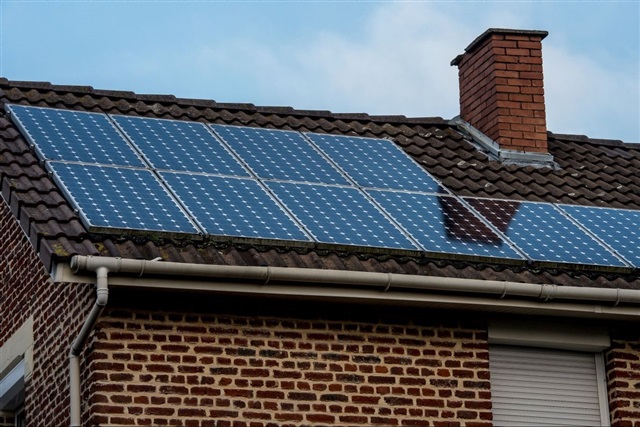
As the world shifts towards sustainable energy solutions, the residential energy storage market is experiencing an impressive surge in global interest. This growth is driven largely by a mix of government incentives, technological innovations, and an increasing desire among homeowners for energy independence. With rising incentives for rooftop solar solutions, companies are swiftly introducing new products to meet the soaring demand for home energy storage systems.
In the fourth quarter of 2023, Tesla’s Powerwall made its official debut in Taiwan. This move has ignited a wave of certification for installation partners on the island, signifying a strategic push into a promising market. Taking advantage of the momentum generated during Taiwan’s International Energy Week, various companies are aligning themselves with Tesla to thrive in this expanding sector.
Competing vigorously, a mix of local and international players such as Formosa Smart Energy, HD Renewable Energy, Tatung, and Delta Electronics are accelerating their efforts. Formosa Smart Energy has set its sights on extending its presence in Taiwan and Japan, while HD Renewable Energy plans to introduce new home storage solutions by 2025.
Currently, Taiwan’s storage landscape is dominated by large-scale grid solutions. However, as installations grow and distributed energy systems gain traction, residential storage is quickly becoming a focal point. Expanding rooftop solar incentives are encouraging more households to install storage systems, aiming to maximize the return on renewable energy investments.
The combination of home storage and time-based electricity pricing presents a substantial financial benefit for households. With residential electricity rates stable despite recent freezes, the prospect of future hikes looms large. The rise in electric vehicle (EV) ownership further amplifies the need for stable, daily power, making home storage an attractive option for supporting EV charging needs. As policies and regulations become more defined, industry experts anticipate a rapid acceleration in the residential storage market post-2025.
Worldwide, the home storage market is gathering momentum. Japan’s government is proactively encouraging the adoption of energy management systems through supply chain subsidies. In the United States, the Inflation Reduction Act (IRA) is fostering home storage growth, particularly in states such as California, where grid strain and blackout risks are prevalent. Homeowners are increasingly investing in storage solutions to enhance their resilience and ensure a reliable energy supply.
Reports from QPO Energy indicate that the growth of home storage is set to surpass both grid and commercial storage in the future. In Europe, projections from the German Energy Storage Systems Association (BVES) suggest that by the close of 2024, around 2 million German households will have adopted residential storage, with a capacity expected to surpass that of traditional pumped-storage hydropower.
Advancements in battery technology, especially the reduced costs of lithium batteries, further bolster the economic viability of home storage systems. The International Energy Agency (IEA) predicts that by 2030, the levelized cost of energy (LCOE) for solar-plus-storage will fall below that of coal and natural gas, positioning solar-plus-storage as one of the most cost-effective energy solutions available. This includes not only reduced energy costs but also enhanced energy independence and resilience for homeowners globally.