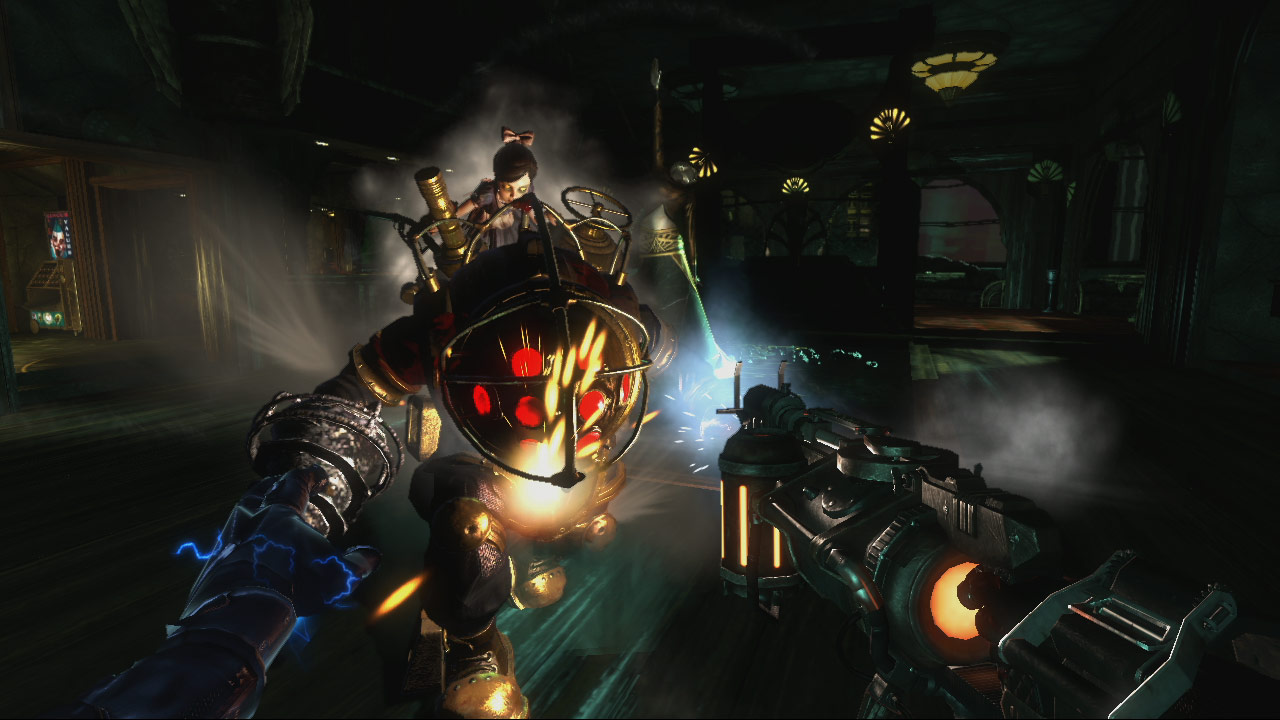
Netflix’s BioShock movie is back in the conversation again, after the streaming giant announced in 2022 that it was partnering with Take-Two Interactive and 2K Games to bring the eerie, underwater world of Rapture to live action. The announcement landed during a wave of video game adaptations racing toward theaters and streaming platforms, with audiences showing up in bigger numbers for game-to-screen projects than ever before.
But BioShock’s road to a live-action movie hasn’t been smooth, and it definitely isn’t new.
Long before Netflix stepped in, a BioShock film was announced back in 2008. The project spent years stuck in development limbo before ultimately being canceled. Now, filmmaker Gore Verbinski, who was once attached to direct that version, has been talking more openly about what his BioShock movie was supposed to be—and why it never happened.
During a recent AMA tied to his current film, Good Luck, Have Fun, Don’t Die, Verbinski explained that his approach was going to be unapologetically dark. He said he wanted to lean heavily into the story’s disturbing psychological themes, describing a plan to explore an “Oedipal” angle centered on Jack, the game’s protagonist. In his view, Jack’s journey is built around the illusion of free will—believing he’s steering his fate, while forces behind the scenes are shaping every step. That theme, paired with the moral choices BioShock is famous for, would have pushed the movie into uncomfortable territory by design.
Verbinski’s concept wasn’t just dark in theory, either. He intended to keep the film “hard R,” particularly because of the Little Sisters and the consequences tied to the player’s choices. That rating, according to him, became one of the biggest obstacles. In earlier comments, he recalled the studio hesitating at the idea of starting production on what would have been a massive-budget R-rated movie—reportedly around $200 million—before ultimately backing away. He also suggested the industry’s nervousness around expensive R-rated films at the time played a major role, especially after big-budget, adult-rated comic book adaptations delivered warning signs at the box office. The message from the studio side, as he portrayed it, was simple: if it costs that much, the movie needs to be PG-13.
Even so, the ideas Verbinski described are exactly what many fans associate with BioShock’s identity: grim atmosphere, moral discomfort, and a story that messes with your expectations. He also shared that he and writer John Logan had worked out a way to include both endings from the game in a single coherent film, which he was excited about because it could have toyed with audiences in a way rarely seen in mainstream movies. On top of that, he talked about having strong visual plans for the Big Daddies and Rapture’s twisted, underwater art-deco look—one of the most recognizable settings in gaming.
Today, the BioShock movie at Netflix is still said to be in development, but official updates remain scarce. Verbinski noted that he hears some version of “it’s happening” almost every year, yet he’s not convinced any studio is fully ready to push as far into the darkness as his version intended.
For fans of the BioShock games, it keeps the biggest question alive: can a live-action BioShock movie truly capture Rapture’s unsettling tone, the moral weight of its choices, and the psychological trick at the heart of Jack’s story—without sanding down the very elements that made the game unforgettable?


