Google has rolled out a major update to Veo 3.1, its AI video generation model, making it easier to create social-ready content without extra editing. The latest improvements introduce native vertical video generation in a 9:16 format and enhance how the model uses reference images, resulting in more expressive, dynamic clips designed for platforms like YouTube Shorts, Instagram Reels, and TikTok.
Native 9:16 vertical video is one of the most practical upgrades for creators. Instead of generating a standard horizontal video and then cropping it (often cutting off key parts of the scene), Veo 3.1 users can now choose vertical output from the start. This helps preserve framing, improves composition, and saves time for anyone producing short-form content at scale. Google is also integrating this capability directly into YouTube Shorts and the YouTube Create app, streamlining the workflow from generation to publishing.
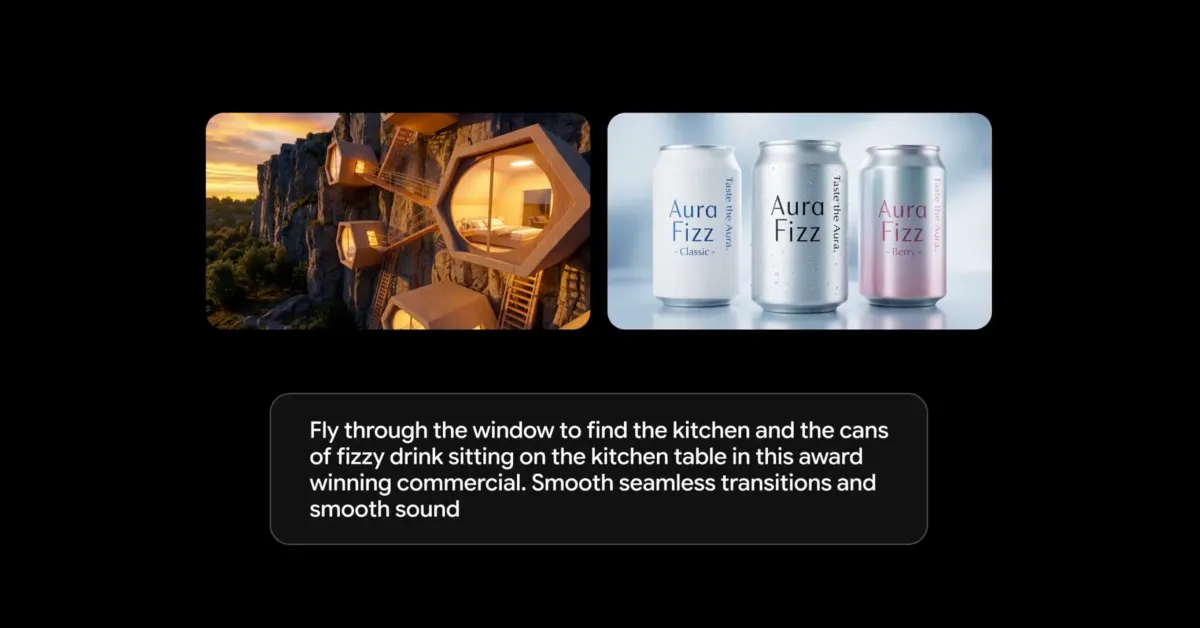
The update also improves video generation using reference images. When creators supply an image to guide the look of a character, scene, or style, Veo 3.1 is now better at producing consistent results across the clip. Google says videos made from reference images will show stronger character expressions and smoother movement, even when prompts are shorter. Along with more natural animation, the model aims to keep characters, objects, and backgrounds more consistent from frame to frame—an important step for anyone trying to avoid flickering details, shifting faces, or unstable environments in AI-generated video.
Another notable addition is the ability to blend elements together more cohesively. Creators can combine different characters, backgrounds, objects, and textures to produce a unified output that looks intentional rather than stitched together. That’s especially useful for storytelling, product concepts, stylized scenes, and branded content where visual continuity matters.
Veo 3.1 originally launched in October 2025, bringing improved audio output and more detailed editing controls compared to earlier versions. With this new update, Google is also expanding quality options for creators who want sharper final results. Upscaling has been improved and now supports higher resolutions, including 1080p and 4K, depending on where you access the feature.
These tools are available through multiple Google products and platforms. Regular users can access Veo features in the Gemini app. Professional users and teams can also use Veo through Google’s video editor Flow, the Gemini API, Vertex AI, and Google Vids, making it easier to incorporate AI video generation into creative pipelines, app experiences, and enterprise workflows.
With vertical video support, stronger reference-image performance, and higher-resolution output, Veo 3.1 is positioning itself as a more complete AI video generator for short-form content creators as well as professionals who need consistency, speed, and polish.