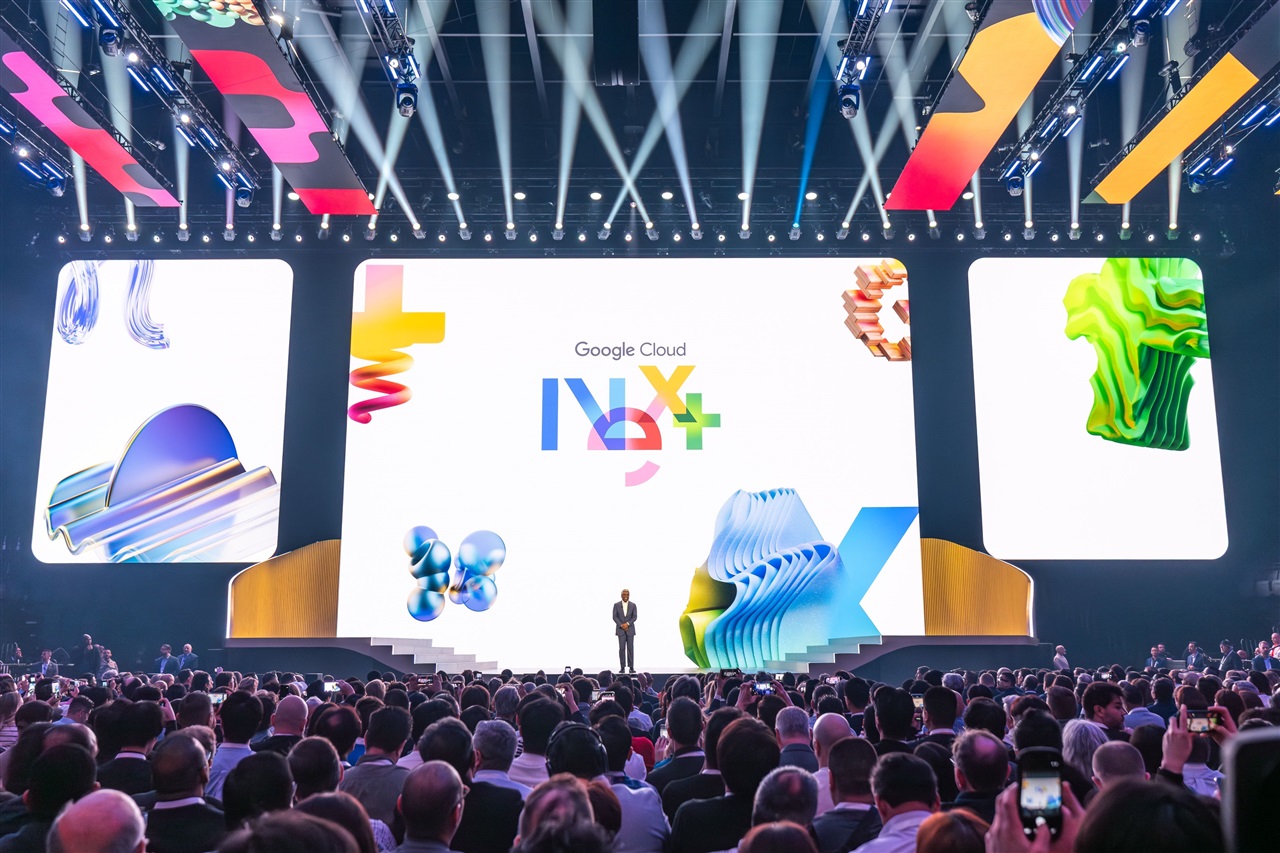
Google Cloud Next 2026 opened on April 22 in Las Vegas with a clear message from Google Cloud CEO Thomas Kurian: the “experiment” era of artificial intelligence is ending, and the industry has entered the phase where AI is expected to deliver real, measurable business results. Kurian pointed to rapid enterprise adoption as proof of that shift, saying that nearly three-quarters of Google Cloud customers are already running AI in production.
That change in mindset is driving a new reality for companies building and deploying AI: not every workload looks the same anymore. Training massive models, serving them to millions of users, running real-time inference, and supporting specialized agent-style applications all put very different demands on infrastructure. As AI usage expands across products and departments, organizations are increasingly looking for hardware options that match specific performance, efficiency, and cost needs rather than relying on one “best for everything” accelerator.
At the event, Google introduced new Tensor Processing Unit options aimed at this split in AI workloads: TPU 8t and TPU 8i. The announcement highlights how AI infrastructure is evolving to accommodate diverse needs, with different chips tuned for different phases of AI work. In practice, that means businesses can target the right compute for the job—whether they’re training, fine-tuning, or scaling inference—while keeping an eye on efficiency and total cost of ownership.
The broader takeaway from Google Cloud Next 2026 is that AI is no longer something enterprises are simply testing in labs or pilots. It’s becoming foundational to how cloud customers build products, automate operations, and analyze data at scale. With AI now firmly in day-to-day production, the cloud race is increasingly about offering the right mix of performance, flexibility, and purpose-built hardware to support everything from cutting-edge model development to reliable, cost-effective deployment.
If you share the rest of the post content (the full text after the excerpt), I can rewrite the complete article with the same message and intent, expand key details for readability, and further optimize it for search without adding links or using restricted terms.