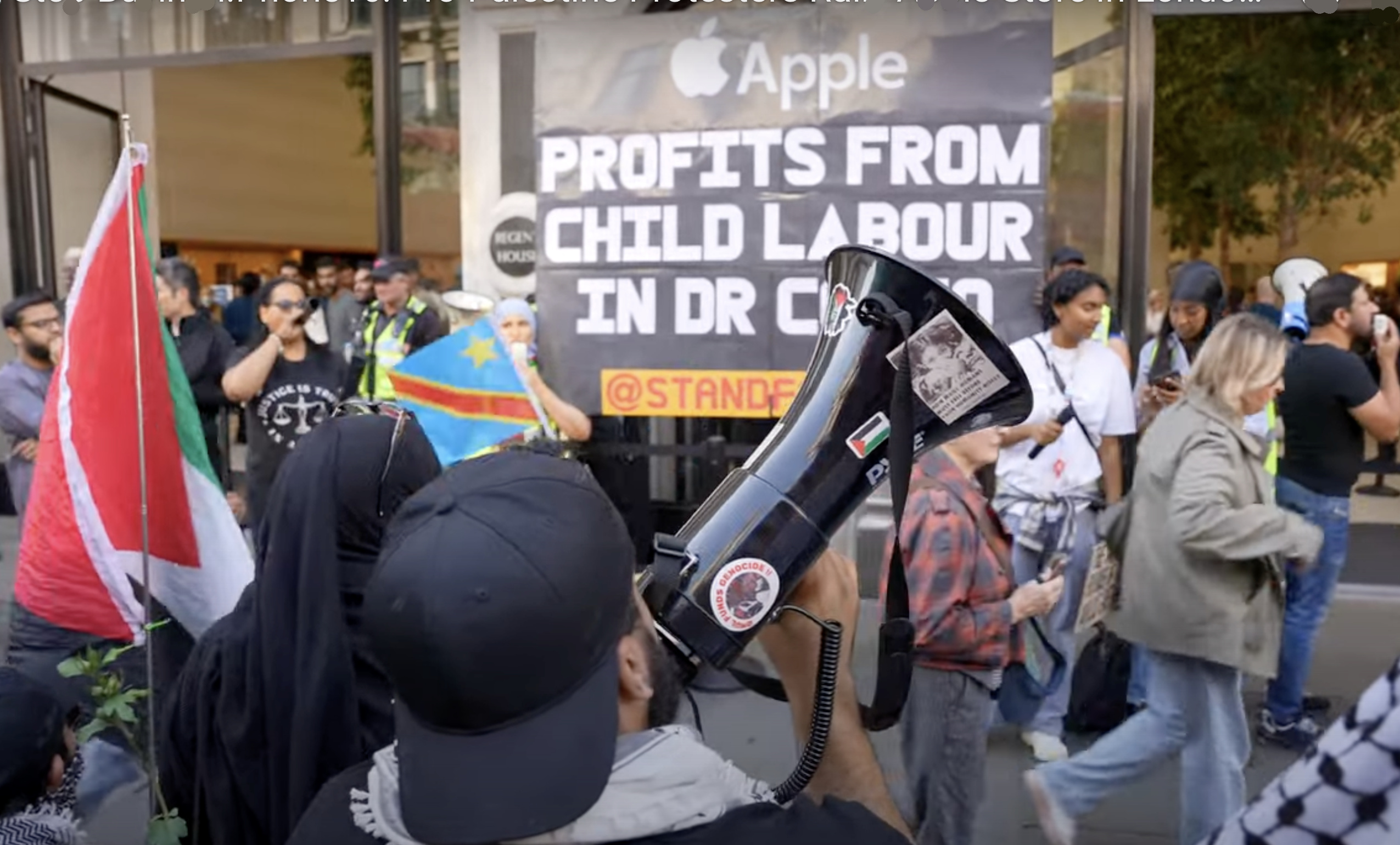
Apple’s iPhone 16 launch made headlines for more than just its cutting-edge technology. Protests erupted outside Apple Stores in over a dozen cities across ten countries, including hotspots like London, Tokyo, Brussels, Cape Town, Amsterdam, Mexico City, and Manhattan. The demonstrations were spearheaded by both current and former Apple employees, driven by a shared demand for ethical sourcing practices and a more vocal stance on international issues.
The protesters voiced concerns over Apple’s sourcing of cobalt and other minerals such as gold, tantalum, tin, and tungsten from regions plagued by human rights abuses, specifically citing the Congo. The fervor wasn’t limited to environmental and ethical mining issues—Apple’s silence on the Gaza war and its involvement in Israel also came under fire. Apple’s substantial R&D presence in Israel, the country’s second-largest, was a particular focal point of criticism.
Vivid banners bearing messages like “Apple profits from genocide” and “A child died in Congo for your iPhone” painted a harsh picture, while chants of “From Congo to Palestine, apartheid is a crime” echoed through the streets. Despite these criticisms, Apple has maintained that minerals for their products are not sourced from conflict zones and announced a commitment to using 100% recycled cobalt in all products by 2025. CEO Tim Cook emphasized their efforts, noting, “Today we’re using 100% recycled cobalt in the watch and 100% recycled gold, tin, tungsten, and other rare-earth materials. We’re proud of this, and we ensure rigorous supply chain tracing to avoid child labor.”
These protests were mainly orchestrated by “Apple Against Apartheid,” a coalition of present and former Apple employees, although the majority of demonstrators were independent activists. A video from the Oinat YouTube channel captured the relatively modest turnout in London, while Berlin saw more substantial crowds, where a few dozen protestors gathered, leading to five arrests as confirmed by organizer Tariq Ra’Ouf.
Back in March, the same group published a letter signed by around 300 former and current Apple employees, alleging that Apple would reprimand or fire employees supporting the Palestinian cause through symbolic acts like wearing pins.
This isn’t an isolated instance of tech employees taking a stand on international issues. Google employees have previously protested against Project Nimbus, a contract with Amazon and the Israeli government for cloud computing and AI services. Similar internal conflicts have also been seen at Amazon and Meta, showing a growing trend of tech workers holding their employers accountable for ethical stances and actions.
The iPhone 16 launch may signify another milestone in Apple’s innovation timeline, but these protests highlight an equally important moment—a call for ethical responsibility and global human rights advocacy from one of the world’s most influential tech giants.


