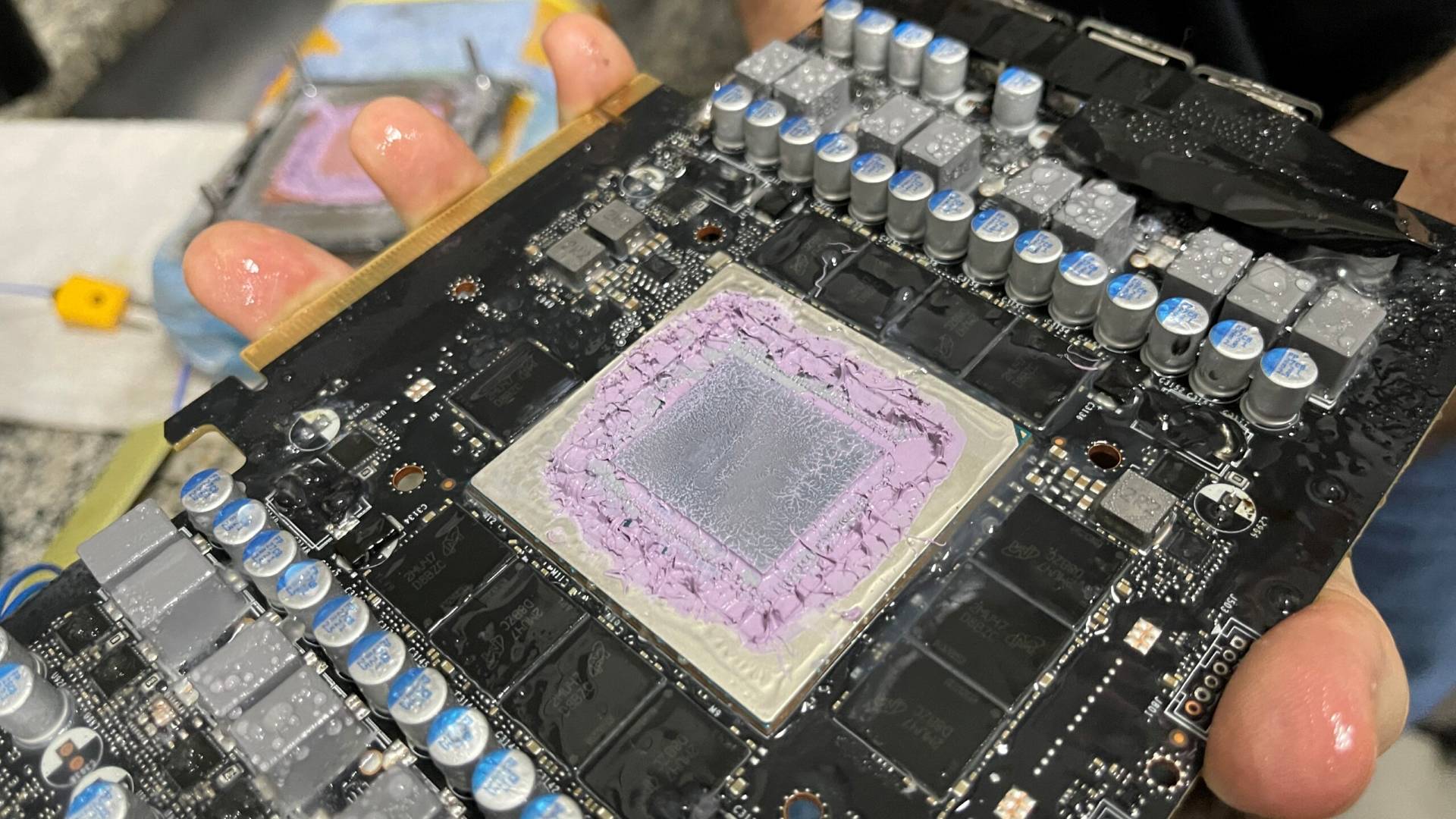
A GIGABYTE GeForce RTX 4090 WINDFORCE V2 owner is facing a frustrating warranty battle after reporting what appears to be progressive VRAM failure on the high-end graphics card. The GPU, purchased from an authorized Romanian retailer in November 2023, is still under warranty until November 2026, but the owner claims GIGABYTE has refused to replace it after multiple RMA attempts.
According to the user, who shared the case on Reddit under the name “Ok-Dimension-741,” the RTX 4090 began showing signs of memory degradation. Diagnostic data reportedly showed 33 remapped rows tied to uncorrectable memory errors. As a result, around 1.5GB of VRAM appears to be missing from the card’s total 24GB framebuffer.
That is a major concern for a flagship graphics card like the RTX 4090, especially one designed for demanding workloads such as 4K gaming, AI tasks, 3D rendering, and professional GPU-accelerated applications.
The owner says the issue is not just theoretical. Windows Event Viewer allegedly logged uncorrectable GDDR memory errors across three separate partitions. Even more concerning, OCCT’s VRAM test reportedly detected around 4.7 million errors in only 15 seconds.
Despite those findings, the card has allegedly been returned by GIGABYTE three times without a replacement. The company reportedly concluded that the GPU was functioning properly after running its own tests, including FurMark. However, stress tests like FurMark may not always expose specific VRAM-related failures, especially if the issue is tied to deeper memory error correction or row remapping behavior.
Instead of replacing the graphics card or performing a memory-related repair, the owner claims GIGABYTE only repasted the GPU and sent the same RTX 4090 back. Since the card still boots and can operate normally in some conditions, the company apparently does not consider it defective.
That response has left the owner in a difficult position. The RTX 4090 remains one of the most expensive consumer graphics cards on the market, and replacing it out of pocket would be costly. With the warranty still active, the user argues that the diagnostic evidence should be enough for GIGABYTE to acknowledge a VRAM fault and process the RMA accordingly.
The situation highlights a broader issue with modern graphics cards. Unlike standard system memory, VRAM chips are soldered directly to the graphics card PCB and cannot be replaced by most users. If GDDR memory begins to fail, customers usually have no realistic repair option other than sending the entire GPU back to the manufacturer.
VRAM degradation can also become worse over time. A card may appear stable in basic use while still showing memory errors under dedicated diagnostics. For gamers, this can lead to crashes, stuttering, corrupted textures, or instability in demanding titles. For professionals, it can create even greater problems, including failed renders, data corruption, or unreliable compute workloads.
The owner says a consumer protection complaint has now been filed. At this stage, the main request is for GIGABYTE to recognize the row remapper data and include it as part of the RMA evaluation rather than relying only on general GPU stress testing.
For RTX 4090 owners, this case is a reminder to monitor GPU health closely, especially when unexplained crashes, graphical glitches, missing memory, or system event errors begin appearing. Tools that specifically test VRAM may reveal problems that standard benchmark or stress-test utilities fail to detect.
The outcome of this case remains unclear, but it raises an important question for high-end GPU buyers: if a premium graphics card shows signs of failing memory while still under warranty, manufacturers need to ensure their RMA process is equipped to identify the problem accurately. For a product as expensive as the GeForce RTX 4090, customers expect more than a basic stress test when serious VRAM errors are being reported.