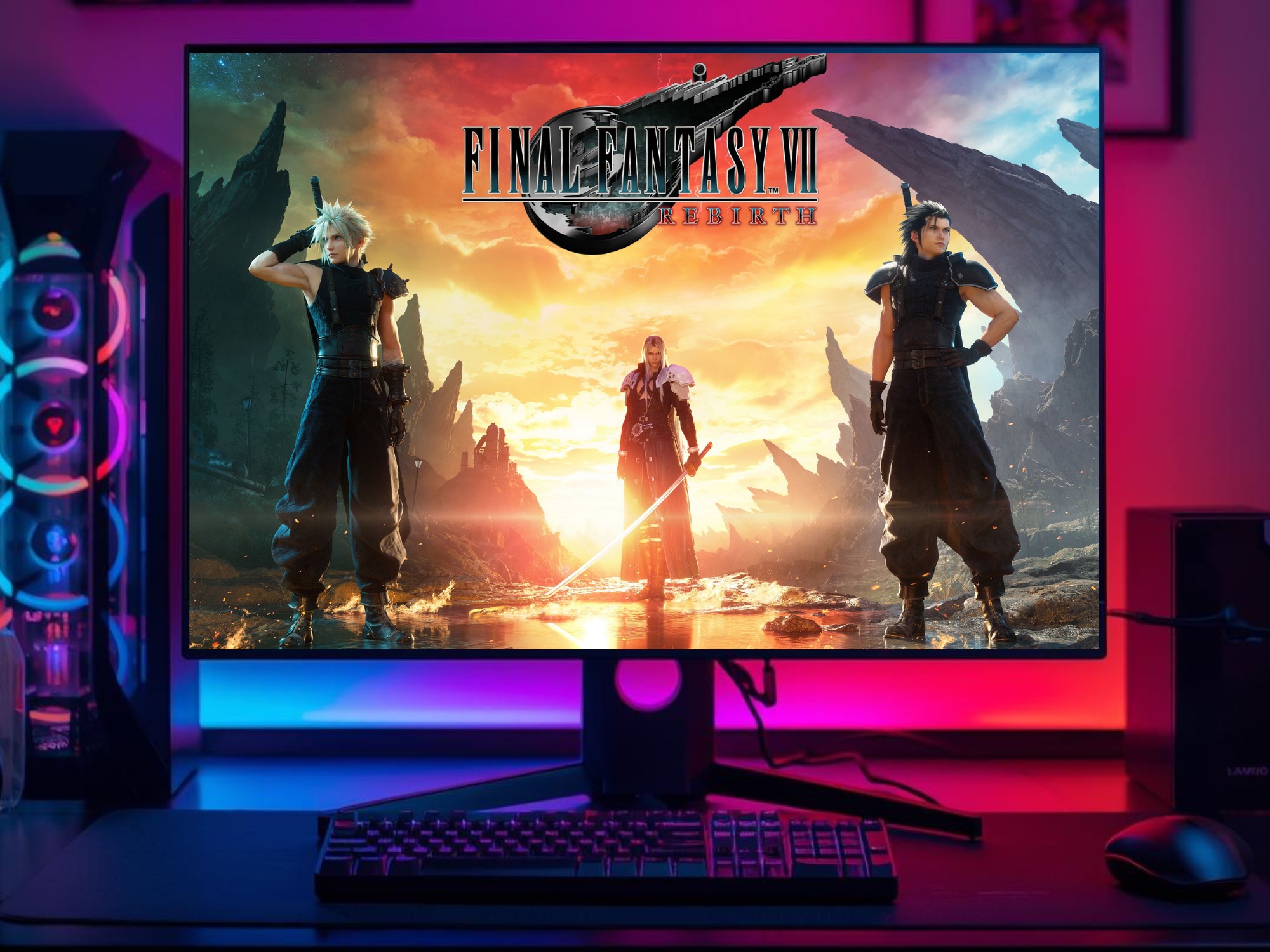
Square Enix is making a clear statement about where it believes the Final Fantasy series looks its best going forward: on PC. As the company moves further away from PlayStation exclusivity, Final Fantasy 7 Remake Part 3 is being built with high-end PC hardware in mind first, then scaled to fit consoles like the PS5 and PS5 Pro. That shift is great news for PC players chasing top-tier visuals, but it may also mean console versions have to make noticeable compromises in detail.
In a recent interview, Final Fantasy 7 Remake director Naoki Hamaguchi addressed worries about Square Enix’s broader multi-platform approach and what it means for the trilogy’s finale. His message was straightforward: development choices made for lower-end systems won’t hold back the best versions of the game on other platforms. At the same time, he made it equally clear that the studio views PC as the “highest-end gaming environment,” where the team can push image quality the furthest.
That philosophy already showed up with Final Fantasy 7 Rebirth on PC. According to Hamaguchi, many players felt the desktop and laptop version looked better than the PS5 release at launch—and that was by design. The studio created its core visuals and assets to target powerful CPUs and GPUs first, then adjusted them for other systems. In practice, that can mean richer textures, more detailed geometry, and denser scenes on PC, while console versions may use smaller texture sizes, lower polygon counts, or lighter environmental detail to maintain performance.
Interestingly, Hamaguchi doesn’t frame the PS5 or even the PS5 Pro as “top-tier” targets. He describes both as mid-range platforms in the larger development picture. While the PS5 Pro offers improvements—especially with advanced upscaling techniques like PSSR helping sharpen the image—the reality is that PC hardware can scale far beyond fixed console specs. And for devices that are even harder to optimize for, such as the Steam Deck or the rumored Switch 2, the game’s visuals would need to be reduced further to hit acceptable performance.
Technical ambition isn’t the only reason Square Enix is leaning harder into PC gaming. Hamaguchi also pointed to sales momentum. The Final Fantasy 7 Remake trilogy reportedly gained a meaningful boost from availability on major PC storefronts, and PC represents one of the biggest potential audiences. From a business standpoint, building for the largest player base and releasing across platforms sooner makes sense—especially as development budgets climb and publishers look to maximize day-one reach.
This strategy highlights how much has changed since the trilogy began. Final Fantasy 7 Remake launched in 2020 as a PlayStation exclusive on PS4. The expanded and upgraded version, Remake Intergrade, followed in 2021 on PS5 and later came to PC. With Rebirth, the exclusivity window was shorter before it arrived on PC, signaling a more aggressive multi-platform plan.
Now, speculation is growing that Final Fantasy 7 Remake Part 3 could launch day one across multiple platforms rather than waiting months or years to reach additional audiences. That would be a major shift for a franchise that has historically generated huge revenue on Sony hardware, and it may leave some long-time PlayStation fans feeling overlooked—especially if the PC version is treated as the visual showpiece.
Still, Hamaguchi emphasized that Square Enix isn’t abandoning console players. Dedicated teams are working on each version to ensure it meets expectations. For PS5 owners, a big hope is that Part 3 avoids common complaints that surfaced around earlier releases, such as unstable frame rates or softer, blurrier presentation. With the PS5 Pro’s added headroom and improved upscaling, the enhanced console version should look better than before, even if it can’t match the ceiling of a high-end gaming PC.
If Square Enix delivers on its plan, Final Fantasy 7 Remake Part 3 could become a true multi-platform release designed to scale: best-in-class visuals on powerful PCs, solid performance on PS5 and PS5 Pro, and carefully tuned settings for more limited hardware. For players, the biggest takeaway is simple: the next chapter is being built to shine brightest on PC, and everything else will be optimized to keep up as closely as possible.


