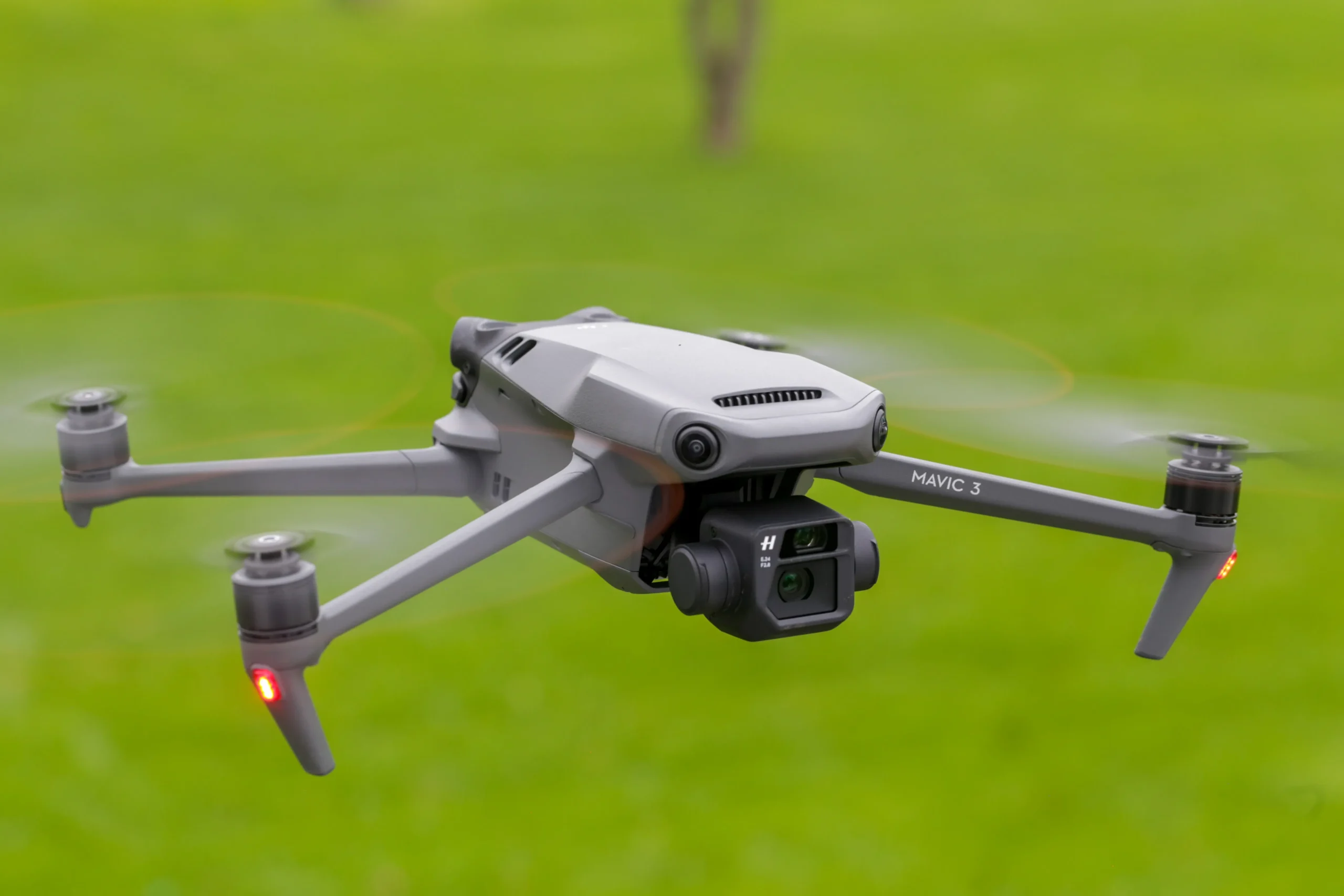
For months, the direction of U.S. drone policy has seemed increasingly unavoidable: Washington has been signaling that foreign-made drones, particularly those produced by China-based DJI, present risks that go beyond hobby flying and aerial photography. Now that shift has taken a major step forward, as the Federal Communications Commission (FCC) has formally added foreign-produced drones and key drone components to its “Covered List.”
The FCC’s Covered List is reserved for services and equipment the government deems an unacceptable risk to U.S. national security, or to the security and safety of people in the United States. With this latest update, the scope isn’t limited to complete drones. It also extends to foreign-made critical component parts, meaning the restriction reaches deeper into the supply chain—covering replacement parts and other essential hardware that keeps drones operational.
At the same time, the FCC also moved to include foreign-made communications and video surveillance equipment and services under the Covered List. This broader action effectively captures a wide range of products that rely on wireless radios, reinforcing an overall push to limit technology the U.S. government sees as vulnerable to misuse or exploitation.
What this means in practical terms is straightforward: DJI drones are expected to become effectively unavailable through legal U.S. sales channels, and importing DJI drones—as well as their components and replacement parts—will no longer be permitted. For consumers and businesses that rely on DJI hardware, that could translate into a rapid shift in purchasing decisions, maintenance plans, and fleet management strategies.
The FCC frames the measure as a way to reduce threats tied to drones operating within U.S. borders. Those concerns include the potential for direct attacks or disruptions, unauthorized surveillance, sensitive data collection and transfer, and other drone-related risks to homeland security. In recent years, government warnings about drone security and privacy have steadily intensified, with particular scrutiny placed on foreign-made platforms used widely across both consumer and professional markets.
DJI has drawn elevated concern in part because it has already been designated a “Chinese military company” by the U.S. Department of Defense. The company has also faced allegations tied to surveillance and human-rights abuses involving China’s Uighur minority—accusations that contributed to its placement on the U.S. Commerce Department’s Entity List in 2020. Those past actions have helped set the groundwork for stricter limits on where DJI technology can be used and how it can enter U.S. markets.
Importantly, this FCC measure does not apply to drones manufactured in the United States. Domestic drone makers, including companies such as Freefly Systems, are not part of the Covered List action described here. That carve-out could boost attention on U.S.-made alternatives as government agencies, critical infrastructure operators, and private-sector buyers look to future-proof their drone programs.
In effect, the U.S. is drawing a clearer line around drone procurement and drone communications technology, treating the category as strategically sensitive. For drone owners, commercial operators, and anyone considering a new purchase, the message is increasingly clear: compliance, supply availability, and long-term support are starting to matter just as much as camera quality, flight time, and price.