Factorial Energy and SK On Explore Solid-State Battery Production Using Existing Factories
Factorial Energy and SK On have signed an agreement to evaluate whether current battery manufacturing facilities can be upgraded to produce solid-state battery cells. The partnership highlights a major shift in the electric vehicle battery industry, where companies are looking for faster, more cost-effective ways to bring next-generation energy storage technology to the global market.
Solid-state batteries are widely viewed as one of the most important advancements for electric vehicles and clean energy storage. Compared with conventional lithium-ion batteries, they have the potential to offer higher energy density, improved safety, longer driving range, and faster charging performance. However, one of the biggest challenges has been scaling production in a way that is commercially practical.
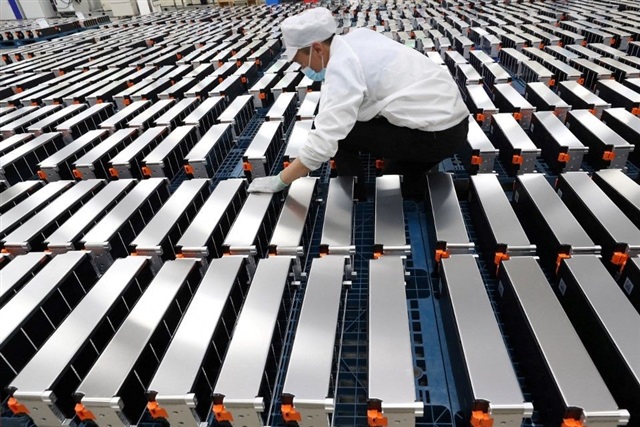
Rather than building entirely new factories from the ground up, Factorial Energy and SK On will study how existing battery plants could be adapted for solid-state cell manufacturing. If successful, this approach could reduce production costs, shorten development timelines, and help accelerate the arrival of solid-state batteries in electric vehicles and other energy storage applications.
The agreement also reflects growing competition across the global battery supply chain. Automakers and battery producers are racing to secure advanced technologies that can support longer-range electric vehicles while reducing safety concerns linked to traditional liquid electrolytes. Solid-state designs replace the liquid electrolyte found in many current batteries with a solid material, which may help improve stability and performance.
For SK On, the collaboration offers a pathway to strengthen its position in the evolving EV battery market. For Factorial Energy, the partnership provides an opportunity to test how its solid-state battery technology could fit into large-scale manufacturing environments. The study may play an important role in determining whether solid-state batteries can move beyond pilot projects and into mass production.
Adapting existing facilities could become a key strategy for the battery industry. Building new plants requires major investment, long construction timelines, and complex supply chain planning. By using established manufacturing networks, companies may be able to scale advanced battery production more efficiently while meeting rising demand from electric vehicle makers.
The move comes at a time when the world is pushing for cleaner transportation and more reliable energy storage. As EV adoption continues to grow, battery performance remains one of the most important factors for consumers, manufacturers, and governments. Longer range, better safety, and lower production costs could help make electric vehicles more attractive and accessible.
While the partnership is still focused on evaluation, it signals confidence that solid-state batteries are moving closer to commercial reality. If Factorial Energy and SK On can prove that existing factories can be modified for solid-state cell production, the impact could be significant for the future of electric vehicles and the broader clean energy market.
The study may not deliver immediate mass production, but it marks an important step toward making solid-state battery technology scalable. For the EV industry, that could mean a faster transition to safer, more powerful, and more efficient batteries without waiting for an entirely new generation of factories to be built.