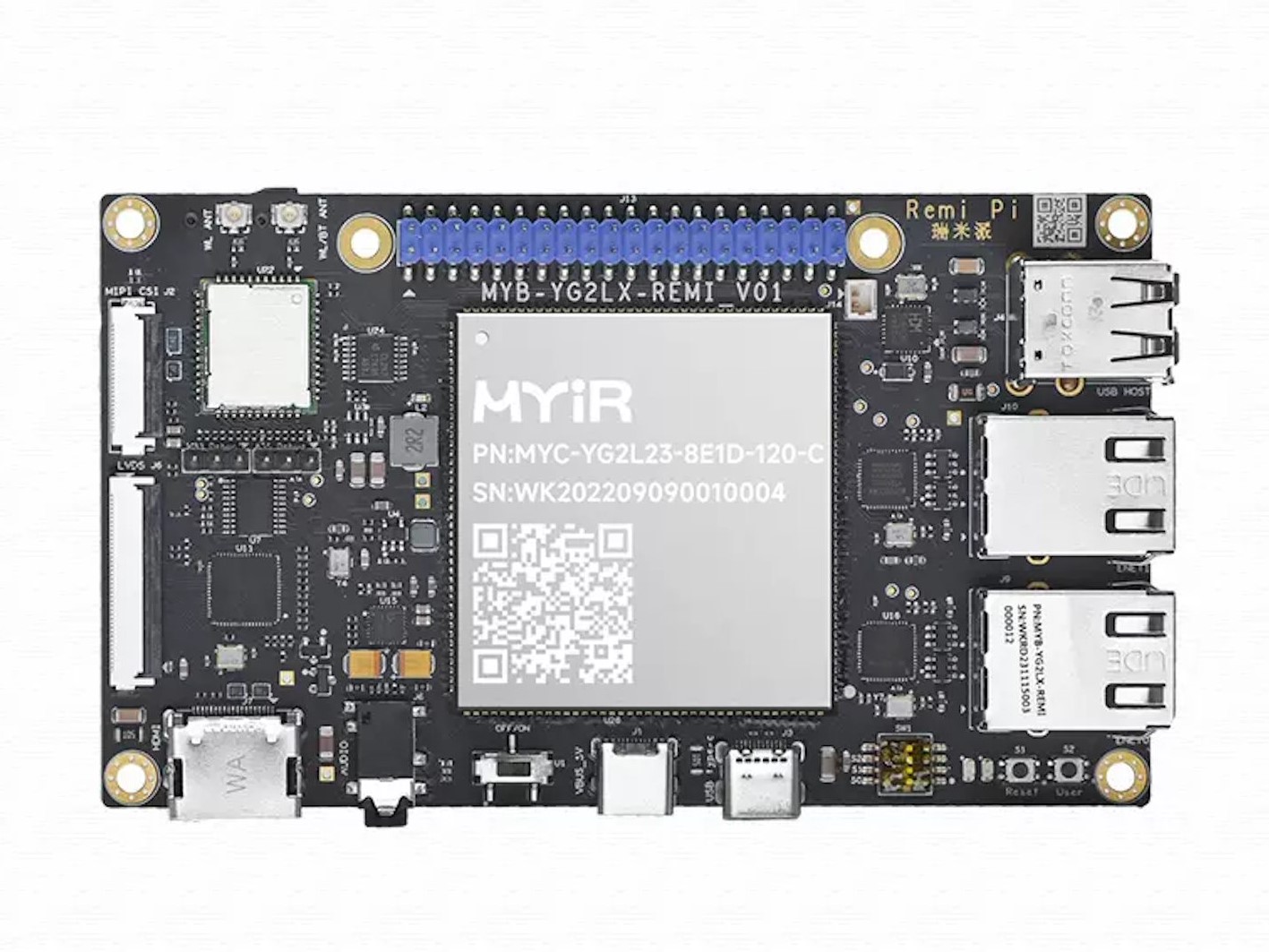
The single-board computer (SBC) landscape has witnessed the arrival of a new contender that might intrigue hobbyists and tech enthusiasts alike—the Remi Pi. Not only does it come with an attractive price point, but it also boasts compatibility with the Raspberry Pi, which is a significant plus for many users.
Introducing the Remi Pi: An Affordable SBC Choice
In the realm of single-board computers, the Raspberry Pi reigns as the most sought-after option, with a plethora of versions suited to various needs. However, the Remi Pi emerges as a close alternative, sharing a semblance in processor architecture and a compatible GPIO pin header, inviting a new level of versatility and functionality.
Hardware and Performance Highlights
At the heart of the Remi Pi is a Renesas RZ/G2L processor, comprised of dual Cortex-A55 computing cores. This setup is not designed for heavy computing demands but is apt for simpler applications that require reliable processing capabilities. Additionally, the inclusion of a Cortex M33 core enhances its utility. The computer’s memory is snug at 1 GB (RAM) with a solid 8 GB of eMMC storage, backed by the flexibility of an additional microSD card slot which simplifies operating system installations. Debian and Ubuntu fans will appreciate the support for these Linux distributions on the Remi Pi.
Connectivity and Expansion
The Remi Pi doesn’t skimp on connectivity, offering dual Ethernet ports capable of 1 GBit/s speeds alongside a pair of USB 2.0 ports. It also provides options for debugging both Cortex-A55 and Cortex-M33 cores. Wireless connections are possible through WiFi across both the 2.4 and 5 GHz bands, plus Bluetooth 4.2 support for peripheral devices such as keyboards and headsets.
Display and Camera Interface
For visual outputs, the Remi Pi includes HDMI, LVDS, and MIPI-CSI compatibility, making it a practical choice for projects that require camera integration or external displays.
GPIO Compatibility and Power
A distinguishing feature is the 40-pin header compatible with Raspberry Pi, enabling users to leverage a host of expansion boards designed for the Raspberry Pi ecosystem. USB-C power input and the board’s operating temperature range from 0 to 70 °C reflect the Remi Pi’s adaptability in different environments.
Availability and Pricing
Currently marketed in China for around $30, the Remi Pi stands out as a budget-friendly alternative to SBC hobbyists. Though there’s no confirmed news on worldwide availability, this pricing sets the stage for an enticing option for those on the lookout for a capable and inexpensive single-board computer.
Leveraging the Remi Pi in Everyday Applications
While not necessarily a powerhouse, the Remi Pi’s attributes make it a suitable candidate for educational purposes, DIY enthusiasts, or IoT projects. Its Raspberry Pi compatibility is particularly advantageous for leveraging existing accessories and resources. Whether it’s for home automation, building a media center, or crafting a customized computing solution, the Remi Pi offers a solid foundation to explore, create, and innovate.
With hands-on experimentation and creative thinking, the Remi Pi can be an excellent addition to one’s tech toolkit. Users should weigh its capabilities against their project requirements to determine if it’s the right fit for their pursuits. Keep an eye out for any updates on its broader release and consider how this cost-effective single-board computer might propel your personal or professional tech endeavors to new heights.