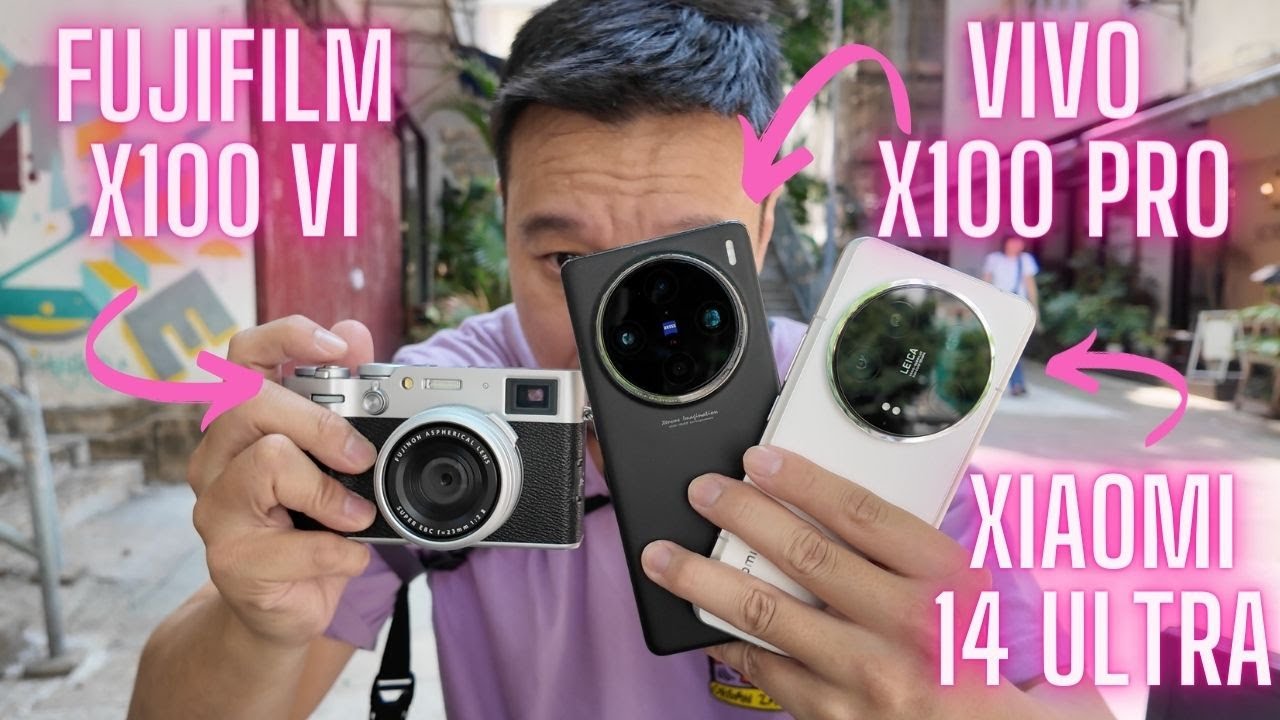
In the world of photography, there’s an ongoing battle for superiority, and that competition intensifies when it involves integrating high-quality camera technology into smartphones. Recently, Xiaomi introduced their 14 Ultra model, which competes with Vivo’s X100 Pro and the new star from Fujifilm, the X100VI camera. In this dynamic comparison, photographic technologies from Leica, Zeiss, and Fuji are put to the test.
The design of the Xiaomi 14 Ultra shows a resemblance to the Fuji X100 VI, diverging somewhat from the Vivo X100 Pro style. When it comes to High Dynamic Range (HDR) capabilities, each device brings something unique to the table. The Vivo X100 Pro stands out with its superior HDR algorithms, placing it in a higher category compared to its rivals in this respect. It sets itself apart by creating images that effectively balance light and dark, giving photos depth and detail without compromising the overall balance.
In contrast, the Fujifilm X100VI appears to take a more conservative approach in its auto mode, producing images with minimal HDR effects, which can be appealing for those who prefer a more natural look. Meanwhile, the Leica-inspired camera technology used in some smartphones finds a middle ground, offering a blend of modern HDR semblance paired with a touch of vintage camera charm.
Both the Xiaomi 14 Ultra and Vivo X100 Pro boast software features that allow users to mimic the retro aesthetic through various on-board filters, contradicting claims that the Xiaomi lacks such photo mode capabilities. This highlights the power and versatility that smartphone manufacturers are striving to offer, making advanced photography more accessible to users who appreciate the classic style.
Night photography reveals the true mettle of these devices. Despite having smaller sensors than the Fujifilm’s APS-C camera, the smartphones utilize a suite of software enhancements to illuminate the dark, resulting in intriguing night shots. However, as the tests disclose, Fujifilm’s night selfie emerges as the darkest, suggesting that the smartphone cameras may have an edge in low-light situations. Nonetheless, it’s noteworthy that Fujifilm’s standalone camera could potentially outperform with RAW shots and manual adjustments – a nod to its professional-grade capabilities.
The question for consumers then becomes whether the additional investment in a dedicated camera is justifiable. For casual photographers, the ease and convenience of smartphone photography are often enough, especially when phones are capable of such impressive results. However, professionals who demand the highest quality and control over their images may still lean towards specialized equipment.
As we consider the evolving landscape of photography, where smartphones challenge traditional cameras, it’s essential to recognize how these devices cater to different needs and preferences. From casual enthusiasts to professional photographers, the market offers a variety of options, ensuring that whether you prioritize portability, ease of use, or ultimate image quality, there’s a camera-equipped device ready to capture your vision.