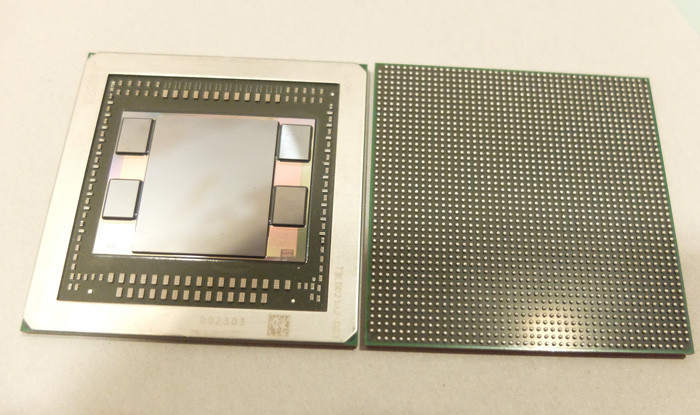
ChangXin Memory Technologies (CXMT), a leading Chinese memory producer, has recently made headlines by starting mass production of its High Bandwidth Memory 2 (HBM2). According to a report by DigiTimes, this significant achievement has been accomplished nearly two years ahead of the expected timeline, positioning CXMT as a pioneering force within China’s semiconductor sector.
The production initiative by CXMT necessitates sophisticated equipment which has been sourced from prominent suppliers in the USA and Japan. Companies including Applied Materials and Lam Research have been instrumental in this process by obtaining the essential export licenses required for the complex manufacturing endeavors.
HBM2 is widely recognized for its superior bandwidth performance. It comes with a broad 1024-bit wide interface and impressive data transfer speeds that range between approximately 2 gigatransfers per second (GT/s) to 3.2 GT/s per pin. This performance specification does not require the latest in lithography, but production does demand considerable manufacturing capacity due to the sheer size of HBM DRAM circuits relative to everyday commodity DRAMs.
One of the crucial challenges faced in the production of HBM is the advanced packaging technology. The production involves vertically stacking as many as eight or twelve memory devices, connected through minuscule through-silicon vias (TSVs). Although this sounds complex, forming a known-good stacked die (KGSD) module is reportedly easier than fabricating DRAM devices utilizing a 10nm process technology.
Notwithstanding its current success, CXMT is still trailing behind other major global players like Micron, Samsung, and SK Hynix. These companies not only have HBM3 and HBM3E memory in mass production but are also laying down plans for the introduction of HBM4 memory, which will incorporate a broader 2048-bit interface.
Despite being a few steps behind the international leaders, for China, the local production of HBM2 is seen as a vital technological leap forward. This type of memory is an essential component for cutting-edge AI and high-performance computing (HPC) processors—critical in sectors like Huawei’s Ascend 910-series—and symbolizes a step toward China’s goal of achieving greater independence in the realm of technology.
The production of HBM2 by a domestic firm like CXMT not only adds significant value to the Chinese semiconductor industry but also ensures that China remains competitive in an industry that’s closely linked to national security and economic growth. With such advancements, China continues to solidify its position as a robust player in the global technology landscape and makes strides toward self-reliance.