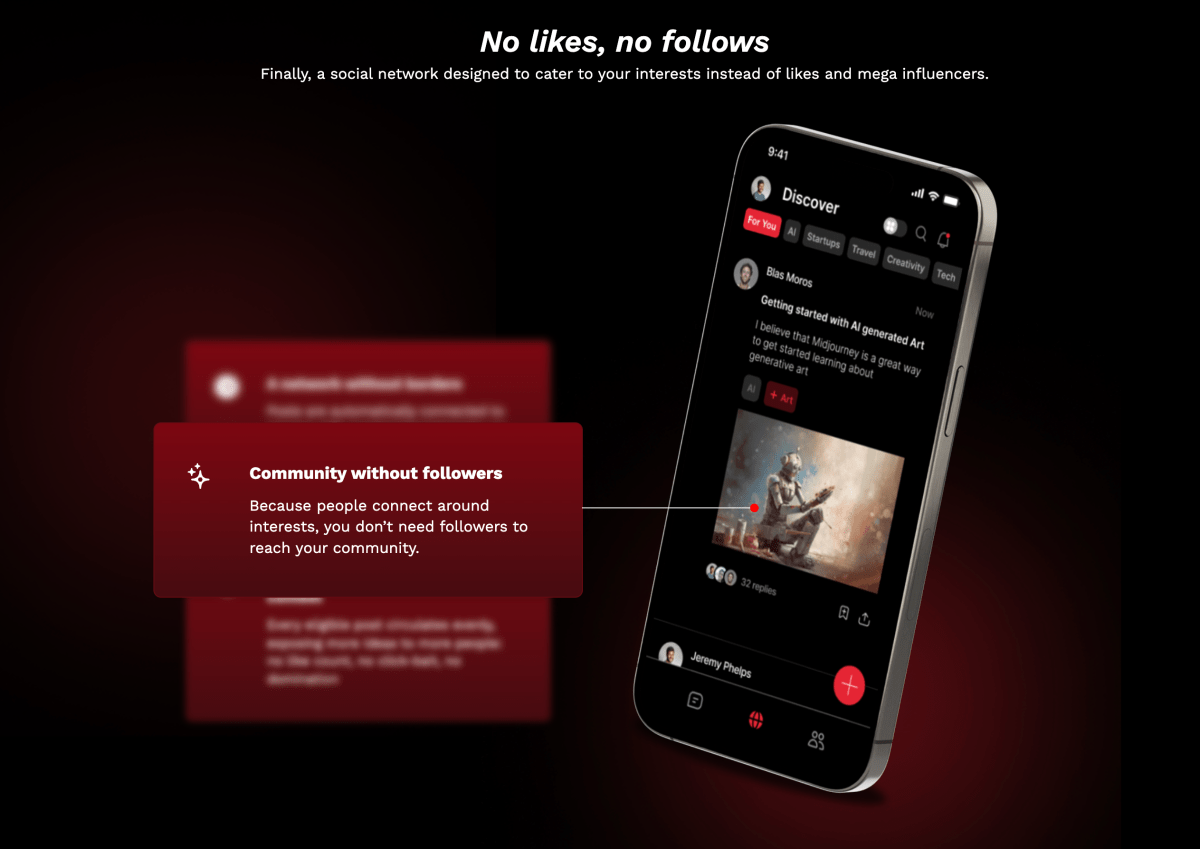
The newly launched social platform, Maven, has encountered a significant change in its leadership only three months following its introduction to the public. Kenneth Stanley, a former researcher at OpenAI and co-founder of Maven, announced his departure from the company. Maven was conceived as a platform intended to cultivate spontaneous connections and discussions among users.
Despite receiving an initial positive reception, Maven struggled to meet the growth expectations of its investors. As a result, Stanley, along with co-founder Blas Moros, opted to step down and seek other prospects to preserve the company’s resources. The platform, according to Jimmy Secretan, Maven’s chief technology officer, has enough capital to continue operations for a few more months.
Secretan emphasized the move as a strategic decision aimed at streamlining operations and ensuring the long-term viability of Maven. Stanley expressed his preference to have obtained additional funding to remain with the company but considered the decision necessary to keep the platform afloat. He also highlighted the importance of a platform like Maven, which prioritizes serendipity over the pervasive popularity contests common on other social media sites.
Jimmy Secretan remains committed to leading the technology aspect of Maven, a natural choice given his role in developing most of the application. Maven garnered attention during its soft launch in January, enjoying the backing of industry figures such as Twitter co-founder Ev Williams and OpenAI CEO Sam Altman, who contributed to a $2 million seed funding round earlier that year.
The unique approach of Maven, which omits standard social media engagement metrics like likes and retweets, represents both its allure and its challenge. The platform encourages users to engage in meaningful discussions on various topics without the incentives of content amplification. This design choice, aimed at reducing the toxicity frequently seen on social networks, also complicates the platform’s growth and user retention.
Maven’s path to financial sustainability remains a topic of consideration, with potential models including subscriptions or advertising. Secretan pointed out the challenges of monetizing a platform that specializes in fostering deep, non-viral conversations. Plans to enhance user engagement include hiring product design contractors, with the goal of balancing rich content without succumbing to the lowest common denominator approach prevalent on other social feeds.
The company has also been experimenting with spinoff applications like Ryff, a generative AI art app that assists users in discovering and engaging with new interests.
Stanley, after his departure, has expressed enthusiasm about returning to the field of AI, particularly exploring “open-endedness,” a segment of AI research that emphasizes algorithms capable of inventing and solving new tasks continually. This concept, as Stanley describes, serves as a counterpoint to optimization-focused AI, where specific outcomes dictate algorithmic paths.