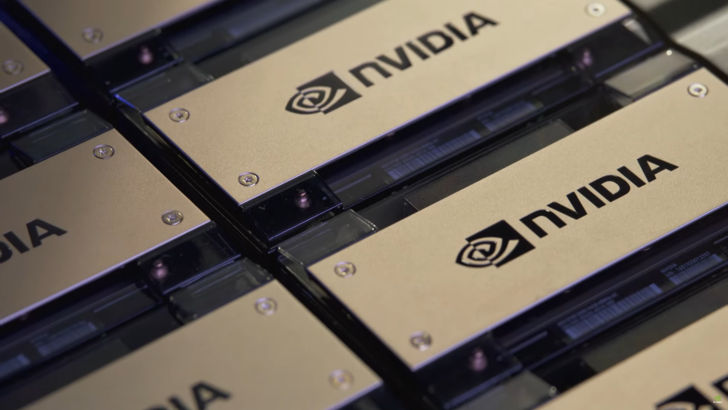
NVIDIA is reportedly seeing a surge of interest in China for its last-generation Hopper H200 AI GPU, following a recent change in U.S. policy that once again allows shipments of certain older AI accelerators to the Chinese market.
According to a Reuters report, demand for the Hopper-based H200 has spiked after the U.S. government lifted the ban on sales of older Hopper products to China. The restrictions still remain firmly in place for NVIDIA’s newer, current-generation AI hardware, including Blackwell and Blackwell Ultra, which means Chinese buyers looking for high-end NVIDIA performance have fewer options—and the H200 sits near the top of what’s now legally accessible.
One twist in this updated arrangement is the financial structure tied to each sale. Under the new terms, NVIDIA is expected to pay 25% of each H200 sale to the United States. That puts the company in a difficult position: either accept lower margins on Hopper sales or raise prices specifically for the Chinese market to offset the added cost.
What’s turning heads is that some earlier expectations suggested China might bypass the H200 entirely and lean harder into domestically produced AI hardware instead. The latest reporting indicates the opposite is happening. Interest appears strong enough that NVIDIA is weighing an increase in production capacity through its manufacturing partners to keep supply flowing and avoid bottlenecks.
The company is also trying to ensure that any renewed push to meet Chinese demand doesn’t create ripple effects elsewhere. NVIDIA has indicated it’s managing its supply chain so licensed H200 sales to authorized customers in China won’t reduce its ability to fulfill orders in the U.S. market. This matters because demand for AI GPUs remains intense globally, and NVIDIA is simultaneously ramping production of its latest platforms, including expanded Blackwell Ultra output, with Rubin planned to enter production next year.
Still, strong demand doesn’t automatically mean confirmed sales at scale. While Chinese companies may be eager to secure H200 units, the report notes that China has not fully finalized domestic approval for the chip’s sale. Chinese authorities are reportedly planning meetings next week to determine whether the H200 will be allowed for broader domestic market distribution.
Even though the Hopper H200 is not NVIDIA’s newest AI GPU, it remains extremely competitive—especially in an environment where cutting-edge options are restricted. Beyond raw hardware performance, the chip benefits from a mature software ecosystem and accumulated AI-focused optimizations that improve real-world results. For organizations that can’t access the newest accelerators, and for small to mid-sized AI deployments seeking proven performance with strong software support, the H200 stands out as one of the most desirable options currently on the table.