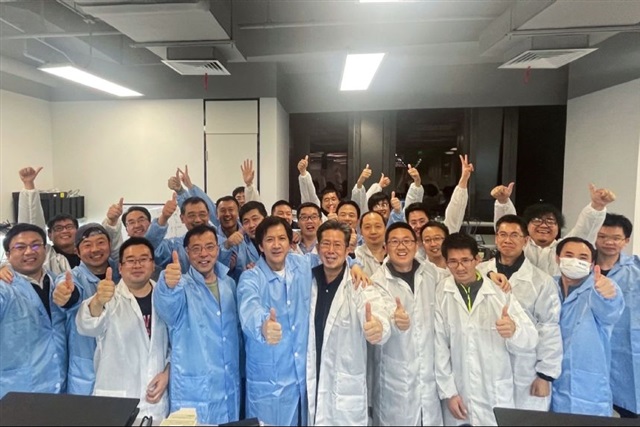
China’s GPU start-ups are once again setting off a capital-market rush, drawing intense investor attention even as many of these companies remain far from profitability. The latest flashpoint is MetaX, a five-year-old graphics chip designer that has just listed on Shanghai’s STAR Market. In a debut that underscored the current appetite for “homegrown computing” stories, MetaX’s shares jumped more than sevenfold on their first day of trading, briefly pushing the company’s market value to eye-catching heights.
MetaX’s explosive entrance follows the earlier market excitement around Moore Threads, reinforcing a simple reality: in China right now, GPU companies are being treated as strategic assets, not just ordinary tech stocks. Investors are pricing in the long-term importance of graphics processors across artificial intelligence, data centers, cloud computing, and advanced visualization—areas that are increasingly viewed as essential infrastructure for economic competitiveness.
Why are valuations so high despite losses? A major reason is that GPUs sit at the core of the AI boom. Modern AI systems rely heavily on parallel computing, and GPUs remain one of the most critical building blocks for training and running large models at scale. As demand for AI computing grows, the promise of a domestic GPU supply chain becomes more valuable, especially under conditions where access to leading-edge foreign chips and manufacturing ecosystems can be uncertain.
That “strategic autonomy” factor matters in capital markets. It transforms GPU start-ups from risky, cash-burning ventures into companies perceived as part of a national-level technology push. The STAR Market, often compared to a tech-focused exchange, has become a favored venue for these kinds of listings—providing a channel for high-growth, hard-tech firms to raise large sums while the market embraces the idea that losses today may translate into influence and market share tomorrow.
Another reason for the surge is scarcity and narrative. There aren’t many publicly traded, pure-play Chinese GPU designers accessible to local investors. When a name like MetaX becomes available, demand can be amplified by limited supply of similar opportunities. Combine that with strong momentum trading on debut, and valuations can detach quickly from near-term fundamentals.
Still, these sky-high market caps raise a key question: can enthusiasm outpace execution? Building competitive GPUs is notoriously difficult. It requires deep engineering talent, years of iteration, strong software ecosystems, and dependable access to advanced manufacturing and packaging. Even with major funding, the path from promising chip designs to broad commercial deployment can be long and expensive. In other words, blockbuster IPO day performance doesn’t automatically translate into lasting leadership.
MetaX’s listing—and the dramatic first-day surge—signals that the market is currently rewarding the strategic story: domestic GPUs as a foundation for AI growth, data-center expansion, and wider tech independence. Whether those billion-dollar valuations ultimately prove justified will depend on product performance, real-world adoption, and the ability to scale in one of the most demanding segments of semiconductors.
If you share the rest of the post content (the full text after “At its peak, the company’s market capitalization…”), I can rewrite the complete article more accurately and expand it with the same tone and SEO-friendly phrasing—without adding links or using any restricted terms.