Grindr’s Growth Plan: AI Matchmaking, Premium Subscriptions, LGBTQ Healthcare, and the “Gayborhood in Your Pocket”
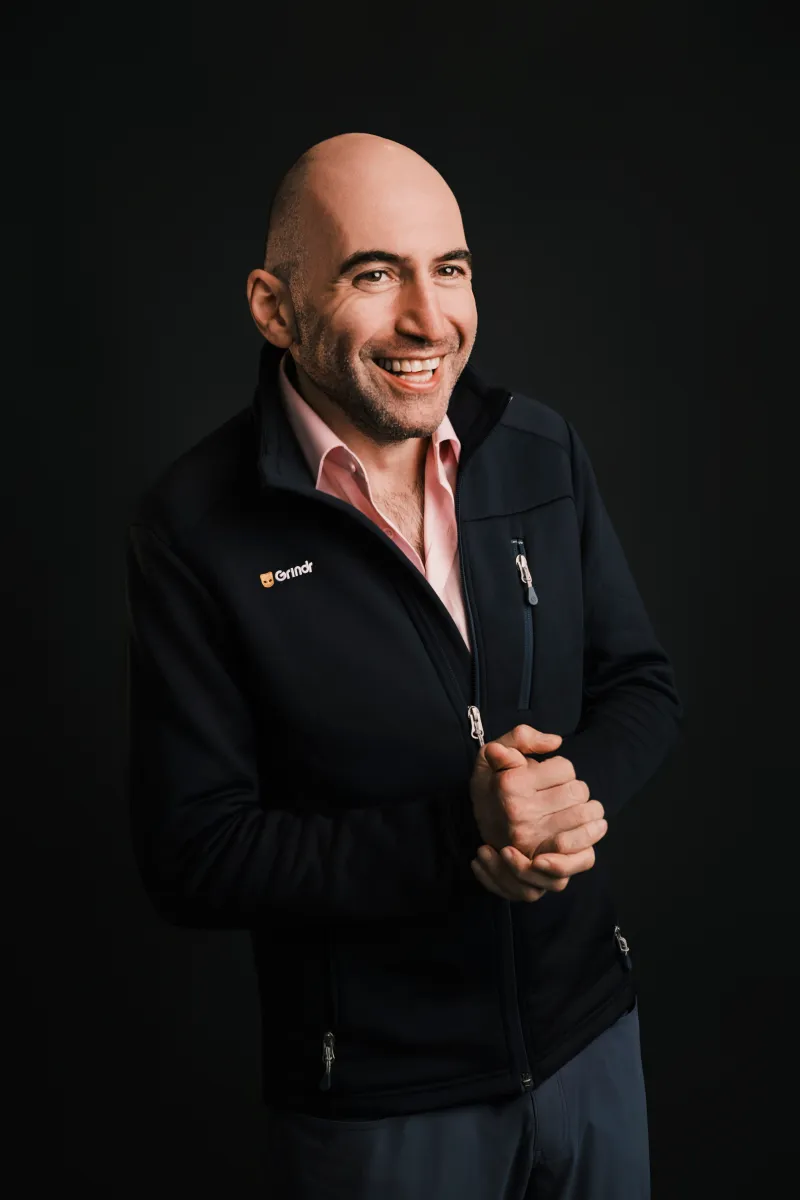
When George Arison became CEO of Grindr in 2022, he took charge of a company with enormous brand recognition, strong cash flow, and a complicated recent history. The business had passed through foreign ownership, a forced sale, and a private-equity-backed reset. It was profitable, but according to Arison, it lacked a clear product roadmap and long-term business strategy.
A few years later, Grindr looks very different. The LGBTQ dating app has become one of the more closely watched growth stories in consumer technology. Revenue has climbed sharply, rising from $195 million in 2022 to a company forecast of more than $540 million this year. At the same time, adjusted EBITDA margins have remained above 40%, giving Grindr a rare combination of fast growth and strong profitability.
What makes that growth especially notable is where it has come from. Grindr has not dramatically expanded its overall user base. Instead, it has become much better at converting existing users into paying subscribers and encouraging those subscribers to spend more. In the second quarter, Grindr had 1.4 million paying users, equal to about 9% of its total user base. That is up from less than 6% when Arison arrived. Average revenue per user has also increased significantly.
Now the company is trying to prove that it can become much more than a dating and hookup app.
Arison’s bigger vision is to turn Grindr into what he calls a “gayborhood in your pocket.” The idea is to create a digital hub for gay, bi, trans, and queer users that goes beyond meeting nearby people. Grindr wants to play a role in dating, social discovery, travel, healthcare, and community-building.
That strategy reflects a wider trend in consumer apps: platforms want to become daily-use ecosystems instead of single-purpose products. For Grindr, the opportunity is particularly specific. It already has a large, highly engaged audience with shared needs that are often underserved by mainstream platforms.
One of the most controversial parts of Grindr’s next phase is a new high-end subscription tier called EDGE. The product has not fully launched yet, but early pricing tests sparked criticism online after some users saw prices in Canada that translated to roughly $350 to $375 per month in U.S. dollars.
The reaction was immediate. Some users mocked the price as wildly unrealistic, while others complained that the app had moved too far from its earlier, simpler form.
Arison says those prices were part of testing, not a final decision. Grindr was measuring how much demand might exist at different price points. EDGE is expected to launch toward the end of this year or early next year, and the company will settle on final pricing closer to release.
The new tier will sit above Grindr’s existing paid plans, including XTRA at $23.99 and Unlimited at $44.99. But Arison says EDGE is not simply about selling artificial intelligence as a novelty. Instead, Grindr wants to use AI-powered features to improve the quality of matches, recommendations, and user experience.
The company believes it can understand user intent better by analyzing behavior, preferences, and interactions, with user consent. That could allow Grindr to suggest better potential matches than a traditional profile-based system.
According to Arison, early retention for these AI-driven features has been stronger than anything Grindr has previously seen. He compares EDGE to a luxury flagship product: expensive at first, but with technology that may eventually become part of the broader app experience.
AI is also playing a major role inside the company. Grindr’s technical team is surprisingly lean, with roughly 94 or 95 people across engineering and related roles. Arison says the company is using artificial intelligence to do work that might previously have required several hundred employees.
He claims around 80% of Grindr’s code is now written with AI assistance, helping drive a 2.5x increase in engineering productivity over the past year. That efficiency has allowed Grindr to operate with a relatively small team while still shipping new products and features.
The company itself also became leaner after a controversial return-to-office policy in 2023. Grindr required employees to come into the office two days a week, a move that drew public criticism and resulted in a sharp reduction in headcount. The company dropped to around 70 employees at one point. Today, Grindr has about 175 U.S. employees, along with a team in Colombia.
Arison argues the restructuring was necessary to rebuild the company’s culture and raise productivity. Only about 25 employees who were at Grindr before he arrived are still with the company today.
Beyond subscriptions, Grindr is looking at healthcare as one of its biggest long-term opportunities.
The company has already started with cash-pay health products through a service line called Woodwork. Offerings include erectile dysfunction medication, GLP-1 drugs, peptides, and similar products. Grindr has also launched an AI bot that allows users to complete health-related transactions inside the app instead of being sent elsewhere.
Another major focus is HIV prevention and treatment. Grindr says it has committed to giving 10 million people direct access to information about where to get PrEP. In the U.S., this information is already available through the app’s in-app health center, and the company wants to expand similar access internationally.
The more ambitious healthcare goal is still years away: connecting users with LGBTQ-friendly doctors through telehealth. Arison says Grindr is not building that full clinical-care model yet, but he believes healthcare could eventually become a major revenue stream, possibly even larger than the company’s current core business over the next decade.
For now, subscriptions remain the engine of Grindr’s revenue. Paid plans account for about 83% of revenue, down slightly from around 86% in 2022. That does not mean subscriptions are shrinking; they have grown substantially. It simply shows that advertising and newer business lines are beginning to contribute more, even if they are still small today.
Travel is another area Grindr wants to expand into. The company sees an opportunity to help users find community wherever they go, whether they are visiting a major city, moving to a new country, or looking for LGBTQ-friendly spaces while traveling.
This fits into the “gayborhood in your pocket” concept. In many cities, physical gay neighborhoods have become smaller, more expensive, or less central than they once were. Grindr believes it can offer a digital version of that community layer, helping users connect not just for dating, but also for friendship, safety, local recommendations, and belonging.
AI matching may also push Grindr beyond location-based discovery. Arison has suggested that geography can be a major limitation in gay dating, even in cities with large LGBTQ populations. A place like San Francisco may have a higher concentration of gay men than most U.S. cities, but the actual dating pool is still limited compared with mainstream heterosexual dating markets.
Grindr is exploring whether AI can help users find compatible people outside their immediate area. Instead of only showing who is nearby, the app could eventually surface someone in another city who better fits a user’s preferences and behavior.
The company does not track whether those matches turn into long-term relationships, and Arison says that would cross a privacy line. But he argues that many gay men still struggle to find compatible partners, especially younger users who increasingly say they want long-term relationships, monogamy, and children.
That shift is important for Grindr’s future. The app has long been associated with casual encounters, but younger LGBTQ users may expect a wider range of experiences from the platform. If Grindr can serve both casual and relationship-focused users, it could expand its relevance without abandoning its core identity.
Investors are paying closer attention. Grindr’s stock has risen strongly in recent months, helped by optimism around the EDGE subscription tier, AI features, and healthcare expansion. Several major financial firms have raised their price targets, and the company is increasingly being viewed as a profitable growth business.
Still, Arison believes Grindr continues to face a valuation discount because it is a gay dating app. He has said some institutional investors remain uncomfortable with the company’s identity, even though mainstream dating platforms do not receive the same level of scrutiny.
Grindr trades at a discount to some comparable companies based on future EBITDA estimates, though the gap has narrowed as the company’s financial results have improved. Arison says the market is beginning to recognize Grindr’s performance, but he believes stigma still plays a role in how the company is valued.
The central question now is whether Grindr can successfully evolve without alienating the users who made it essential in the first place.
Its business is stronger than it was in 2022. Revenue is growing, margins are high, paid conversion is improving, and the company is shipping more products with a smaller team. But the next stage is more complicated. Premium pricing, AI-powered matchmaking, health services, and travel tools could unlock new revenue streams. They could also test how much users are willing to accept from an app that has always been valued for its immediacy and simplicity.
Grindr’s challenge is to become bigger without becoming less useful. If Arison’s strategy works, the app may no longer be seen only as a dating platform. It could become a broader LGBTQ lifestyle network, combining connection, healthcare, travel, and community in one place.
For a company that was once viewed as profitable but strategically adrift, that is a major shift. Grindr is betting that its future is not just about who is nearby tonight, but about how LGBTQ people connect, live, travel, and take care of themselves in the years ahead.