Amy Wu, the visionary behind the AI-driven mental health app Manifest, foresees a revolutionary shift in technology aimed at addressing the growing concern of loneliness, particularly among Generation Z. “Aside from the AI trend,” Wu mentions, “many are witnessing a loneliness epidemic affecting Gen Z. It’s clear that unicorn companies will emerge to tackle this issue.”
Manifest, still in its early stages, recently secured $3.4 million in funding from investors like a16z Speedrun. While it’s not a unicorn yet, Wu believes Manifest is part of a new generation of products designed to counteract rising loneliness.
Wu, herself on the border of Millennials and Gen Z, is in tune with the unique challenges facing younger generations. According to a Cigna report, 3 in 5 adults sometimes or always feel lonely, with that number reaching a staggering 73% among 18-22-year-olds. Manifest is the app Wu wished for during her time at Stanford, where she faced the harsh realities of independence in a high-pressure environment.
“The real world was a shock,” Wu states. “Education teaches you how to land jobs at big firms but falls short on building an emotional toolkit.”
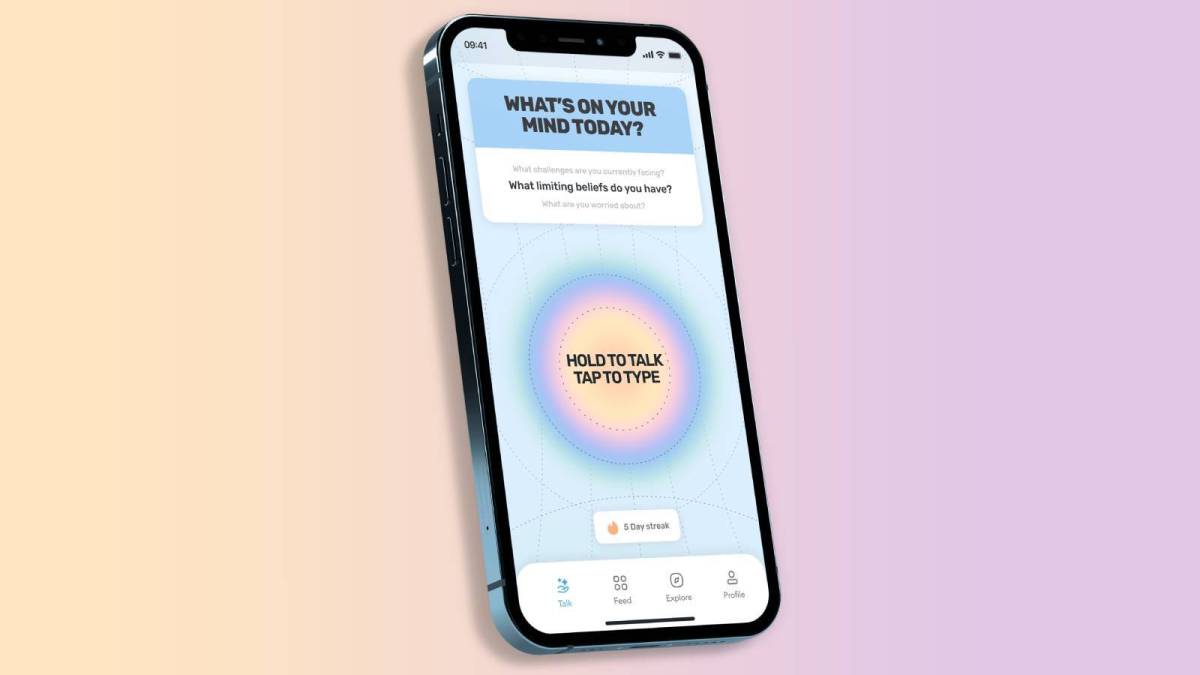
When users open the Manifest app, they encounter a serene pastel gradient orb on the screen. It offers prompts like “What’s on your mind?” encouraging users to either speak or type their thoughts. The app’s AI then mirrors the user’s language and transforms it into empowering affirmations, resulting in customized audio meditations.
Consider someone expressing disappointment after finishing last in a 5K race despite their effort; the app might respond with affirmations such as, “I strive to appreciate my progress, no matter how small,” or “I trust that my commitment to this process will lead to growth in both my physical and mental health.”
While AI-generated affirmations might not be a comprehensive solution, Manifest isn’t intended as a substitute for professional mental health care. Instead, it’s designed as a quick, daily wellness practice.
“We aim to be a wellness app that resonates with Gen Z,” Wu explains. “Manifest was conceived to make wellness interactions simple and enjoyable, without feeling like a burdensome task.”
In today’s world, where social media often isolates rather than connects, using technology like AI to fight loneliness might appear paradoxical. However, Wu argues that since Gen Z is already digitally immersed, wellness solutions should also be part of that digital experience.
“Gen Z is less inclined to meet face-to-face,” she notes. “Suggesting going outside to meet friends can seem daunting, so we’re providing a solution in the space they’re already comfortable with.”
Launched in stealth this summer, Manifest has already seen users generate 18.7 million “manifestations.”
Creating a consumer mental health app presents ethical challenges, and Wu acknowledges that Manifest’s AI integrates safeguards. For example, if the app detects a mention of self-harm, it will redirect users to appropriate support resources, steering clear of engaging with such critical topics directly.
This approach contrasts with some companies like Nomi AI, which prioritize maintaining dialogues with users facing difficult emotions. Alex Cardinell, founder of Nomi AI, stresses the importance of making users feel heard, especially in their darkest moments.
While Wu emphasizes that Manifest is not a medical tool for serious situations, she recognizes that young people often turn to such tools when accessing traditional care is not an option. As the landscape shifts and unicorn startups seek to address the loneliness epidemic, responsible innovation will be key to their success.


