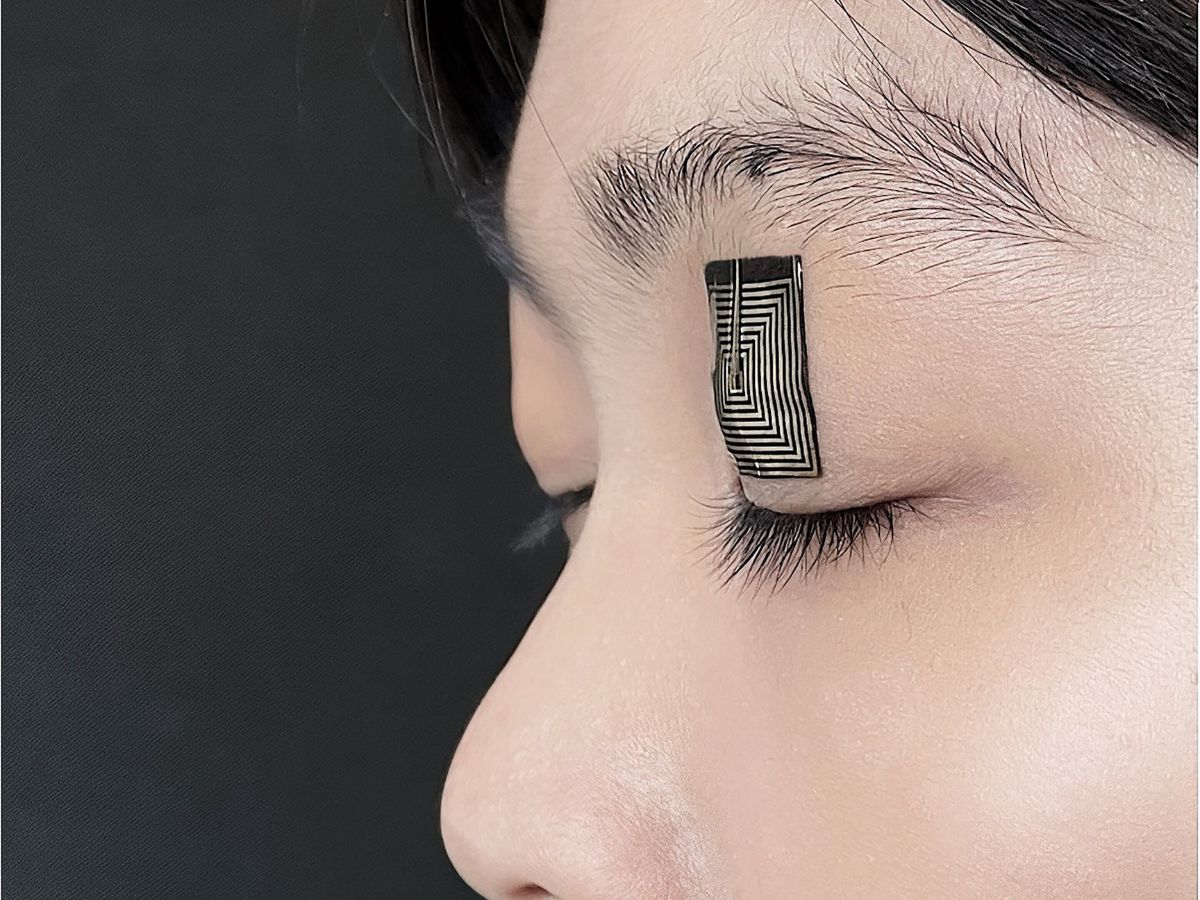
UCLA’s eyelid-mounted sensor reads fatigue in real time with 96.4% accuracy
A team at the University of California, Los Angeles has unveiled a soft, self-powered wearable that sits on the eyelid and translates blinking patterns into a real-time fatigue score. Detailed in the journal Nature Electronics, the sensor blends a novel waterproof bioelectronic design with an AI model that interprets eyelid movements to gauge how tired someone is, achieving a reported accuracy of 96.4%.
At the heart of the device is a breakthrough the group first reported in 2021: a giant magnetoelastic effect in soft materials. By embedding micromagnets into a flexible polymer, minute mechanical changes from eyelid motion are transformed into magnetic fluctuations and then into electrical signals. This approach enables precise, continuous monitoring without rigid components.
The sensor is constructed from a silicone rubber layer seeded with micromagnets and a thin, conductive gold coil patterned onto a thermoplastic elastomer. The result is a stretchable, waterproof patch designed to be worn on the eyelid, capable of capturing high-fidelity signals from every blink. A neural network then analyzes six distinct blink parameters from those signals to classify fatigue levels in real time.
Because the system is self-powered, it reduces reliance on bulky batteries or frequent charging, a common barrier for long-term wearables. Its soft, conformable build is engineered for comfort and resilience, while the on-body sensing approach offers a privacy-friendly alternative to camera-based fatigue detection.
Potential applications span safety-critical fields and everyday wellness. Drivers, pilots, and heavy machinery operators could benefit from early fatigue warnings; clinicians might use continuous monitoring to support sleep health; and productivity, esports, and extended reality users could tap into real-time biofeedback to optimize performance. The underlying material platform also opens the door to other soft, skin-like sensors that read subtle biomechanical cues across the body.
“In a broader view, the giant magnetoelastic effect in soft systems represents a transformative scientific discovery, yet its full theoretical and experimental potential remains to be unlocked,” said Dr. Chen, who leads the research.
Looking ahead, the team’s work points toward miniaturized, comfortable wearables that decode nuanced human states directly from motion—without cameras—while advancing a new class of soft magnetoelastic electronics powered by our own movements.