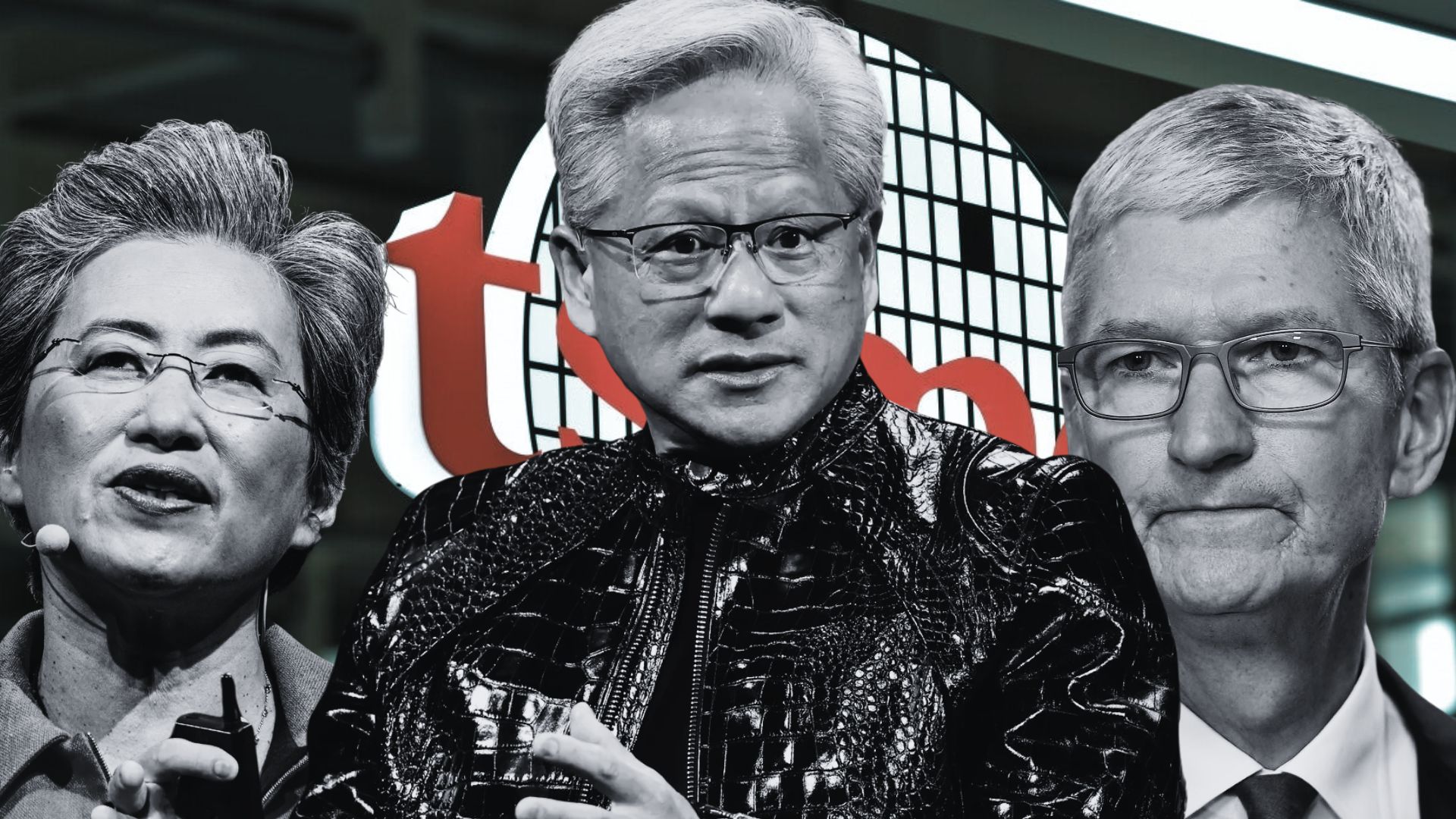
Concerns about the future of Taiwan’s semiconductor industry are back in the spotlight, but for many of the world’s biggest chip designers, the preparation phase has been underway for a while. Behind the scenes, fabless companies that design chips but rely on outside manufacturers have been pushing hard to reduce how exposed they are to a single region—especially one sitting at the center of rising geopolitical tension.
What’s driving the latest wave of urgency is the growing belief among top tech leaders that Taiwan’s chip supply could be disrupted far sooner than many expected. In 2023, executives at major companies including NVIDIA, Apple, and AMD were reportedly caught off guard by warnings that a Chinese invasion could realistically threaten Taiwan’s supply chains as early as the following year. Whether or not that timeline proves accurate, the shock appears to have had a real impact: it accelerated pressure on TSMC to diversify production beyond Taiwan and build a larger manufacturing footprint elsewhere.
TSMC’s expansion into the United States began gathering momentum during the CHIPS Act era, but the pace has intensified significantly as political pressure and customer anxiety have increased. With tariff threats looming and large customers demanding more geographic flexibility, TSMC’s strategy has shifted toward a much larger American presence—one that reportedly scales up to as much as $250 billion in planned spending. That figure includes new chip fabrication plants, advanced packaging facilities, and research and development centers.
The key issue many are now asking is straightforward: will these enormous investments meaningfully strengthen American semiconductor manufacturing, or will the US still remain far behind Taiwan in real production capability when it matters most?
On the political side, there have been demands that Taiwan move a substantial share of chip production—figures as high as 40%—into US-based facilities. TSMC and Taiwanese officials have pushed back hard, signaling that such expectations are unrealistic. And from an industry perspective, that skepticism isn’t surprising. Chip manufacturing isn’t something you relocate simply by building a single factory. It requires a dense ecosystem of specialized suppliers, equipment support, materials logistics, engineering talent, and packaging and testing partners—exactly the kind of network Taiwan has built over decades through its science parks.
Trying to recreate that full semiconductor ecosystem in places like Arizona is possible, but it’s a long game. It may take years to mature and potentially decades to match the efficiency and scale Taiwan has already perfected.
TSMC’s current roadmap for the US reportedly includes a major buildout that could involve eight to twelve facilities, spanning both front-end manufacturing and back-end services such as packaging. Company leadership has indicated it is aiming to replicate the “mega-fab cluster” approach that has been central to TSMC’s dominance in Taiwan—essentially building not just factories, but an interconnected manufacturing hub that can support high-volume, advanced-node production.
Even with aggressive investment and a fast construction pace, expectations should be tempered. Projections suggest that by 2030, TSMC’s US expansion may shift only around 15% of production away from Taiwan—far below what some policymakers want. That gap isn’t necessarily about hesitation; it’s about the sheer complexity of building a full-capacity semiconductor base from the ground up.
This matters because the core risk hasn’t disappeared. Even if US fabrication ramps quickly, a major disruption in Taiwan would still create a massive supply shock. If a conflict were to occur later this decade—some scenarios point to 2027—fabless companies could be hit especially hard. Many of them depend on TSMC for the bulk of their most advanced chips, in some cases more than 80% of their needs. If Taiwan’s production ecosystem were suddenly constrained, Arizona simply couldn’t replace the missing volume overnight. The result would be difficult tradeoffs: lower output, delayed product launches, constrained supply for everything from smartphones to servers, and ripple effects across global electronics.
Because of that, major chip designers are increasingly looking beyond just “more TSMC outside Taiwan.” The conversation is also turning to alternative foundry partners, with Intel and Samsung frequently mentioned as potential options.
Both Samsung and Intel are expanding in the US, with Intel placing particular emphasis on next-generation manufacturing nodes such as 18A and 14A. For companies that rely on steady advances in transistor density and performance, Intel Foundry could become an important strategic alternative—if it can prove consistency at scale. The biggest question hovering over Intel’s foundry ambitions is execution: can it deliver the volumes, yields, and reliable customer experience needed to compete as a true second source for leading-edge chip production?
The takeaway for the semiconductor industry is becoming clear. Fabless manufacturers can’t assume that tomorrow’s chip supply will look like yesterday’s. Rebalancing chip sourcing strategies is now urgent, and it will likely involve a mix of approaches: encouraging faster expansion of advanced manufacturing in the US, diversifying production across multiple foundries, and accelerating the broader supply chain shift from East to West before a crisis forces the issue.